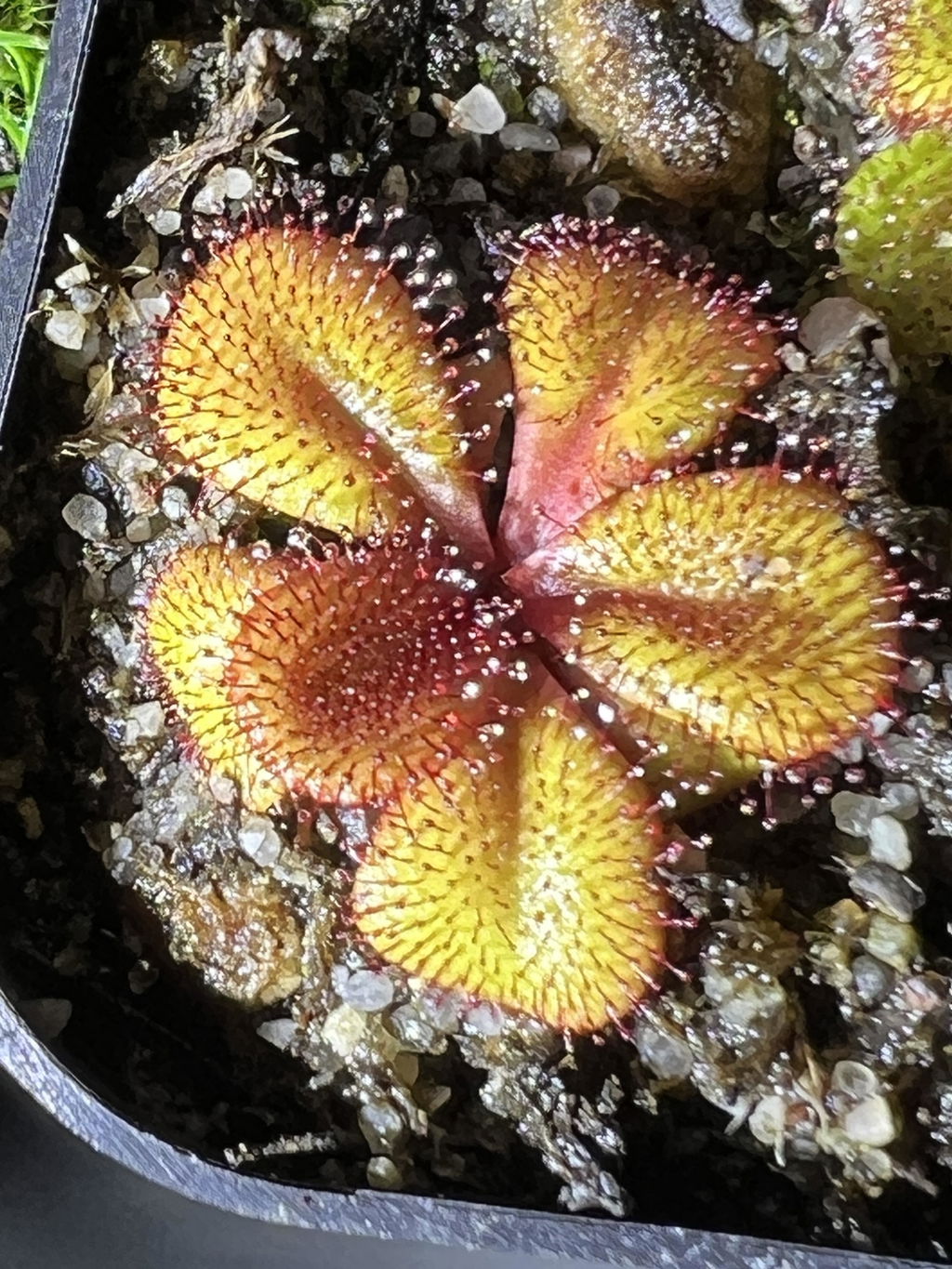
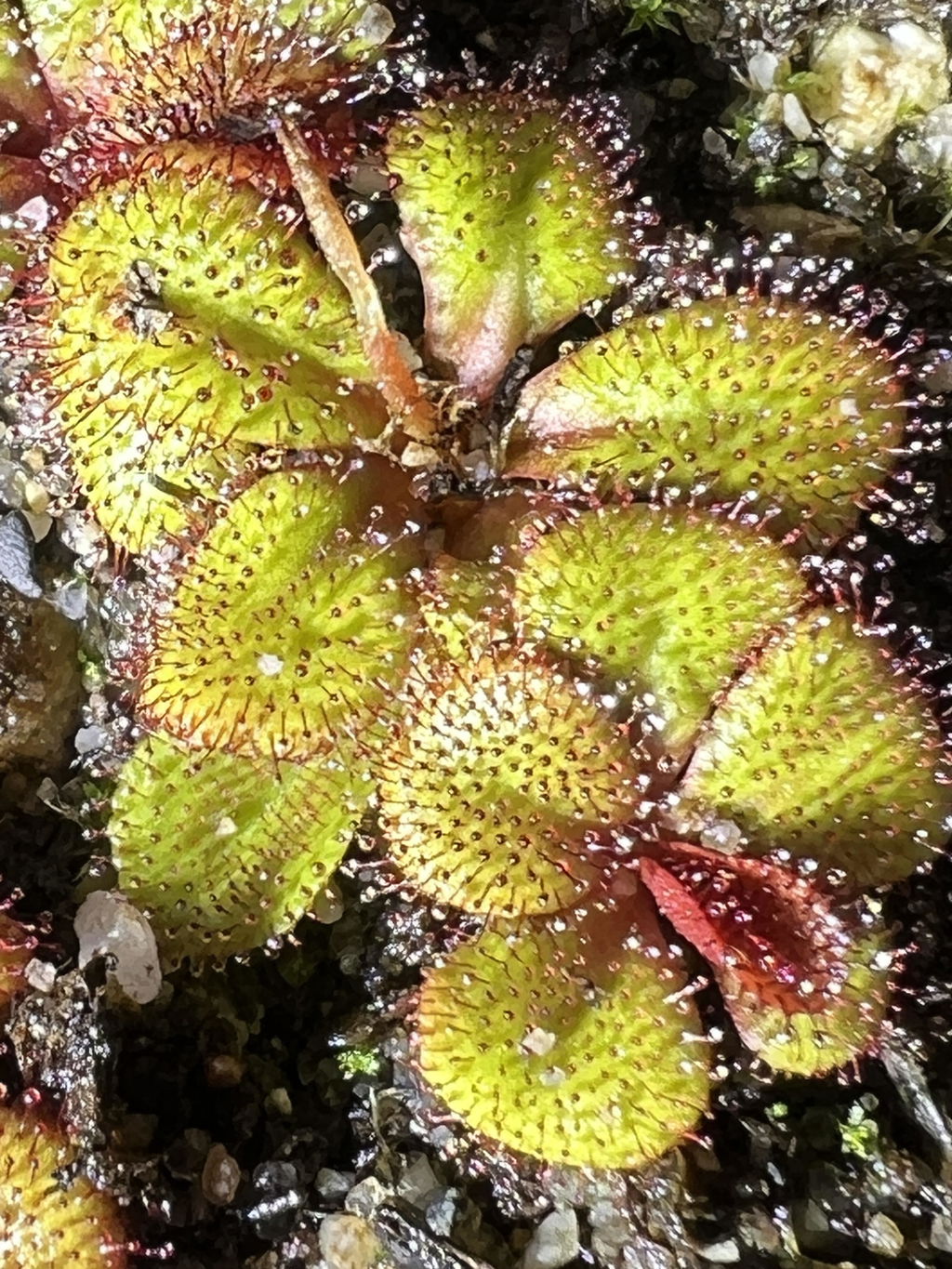
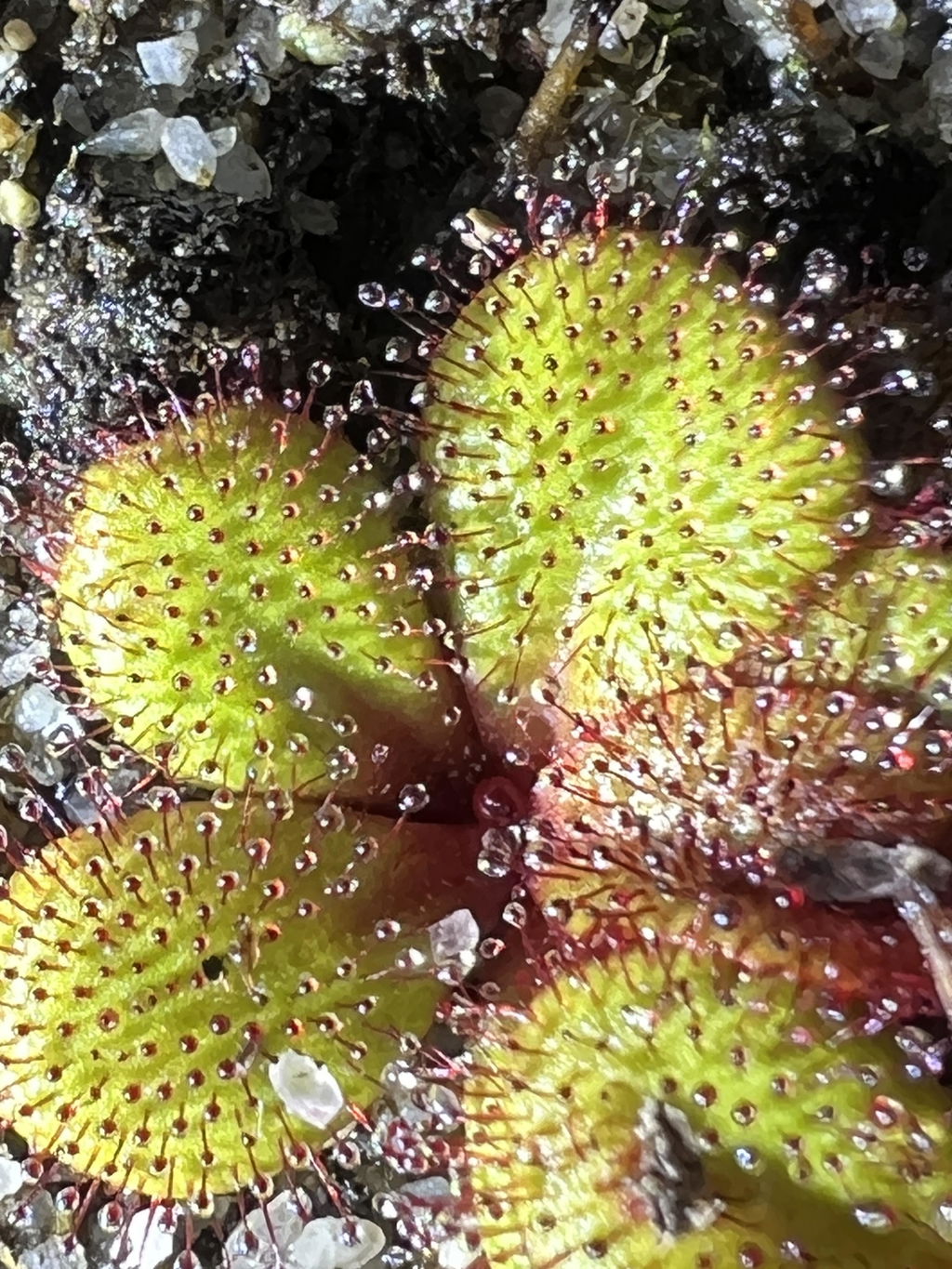
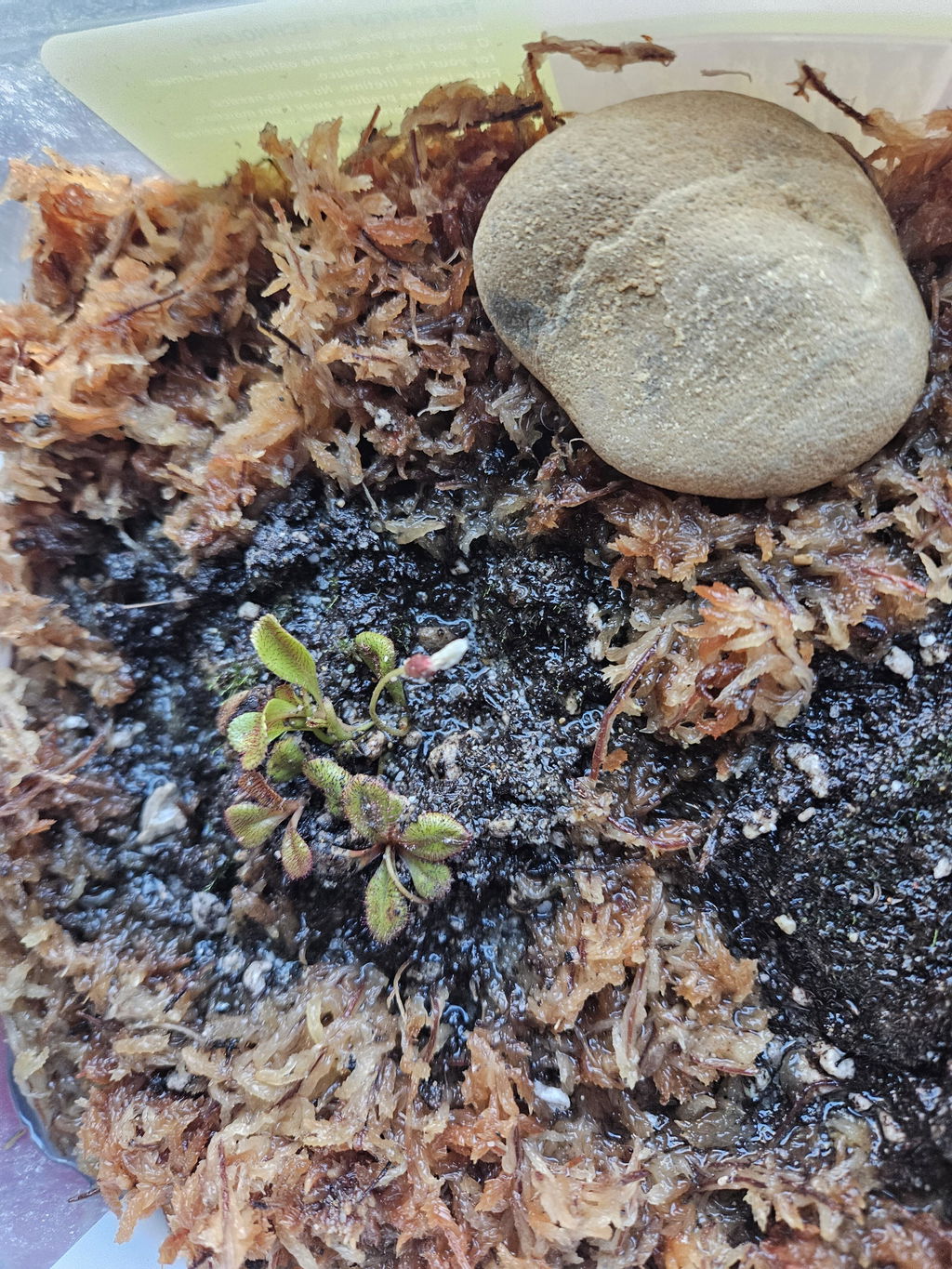
Drosera rosulata is one of Peter and Damon’s favorite rosetted tuberous sundew with its olive-colored leaves and red tentacles! It forms neat rosettes of obviate leaves around two inches across. It is particularly charming when the single, short-stemmed flowers are open in the rosette's center. And if that wasn’t enough to add to its beauty, the leaves have a pronounced reddish hue!
THESE PLANTS GO DORMANT IN SPRING, as early as March. If ordered in March, your plant may arrive with most or all of its leaves dying back.
Care Instructions
Growth Habit: Tuberous Drosera are very unusual plants. Only growing for the cold months of the year, they grow like a magic trick suddenly and quickly in winter once their dry pots are put in water! They grow from tubers in the soil that can be very, very tiny, depending on the species and age of the plant. When watered, the tuber will produce a vertical stolon, making its way to the soil surface. This stolon is fragile, and we do not recommend repotting it when the plant is actively growing as it is very easy to break. Through the winter the leaves will grow in rapidly and the plant will catch insects and flower. Then, as the heat of late spring and summer approaches, the plants brown and die back. In active growth, it is normal for the leaves to die back, turn brown, and grow new leaves. Nearly all tuberous drosera are self-sterile, and you will need two genetically different clones to make viable seed. This species produces low rosettes of obovate leaves up to 2” across and white flowers.
Sun: Tuberous Drosera grow over the wet winter of their Mediterranean climate. Then, in summer, they die back to the ground and must be dried out until growth resumes in Fall. During their growing season, starting in September, they will want full winter sun. They can be grown outdoors in frost-free Mediterranean climates, cool subtropical climates, cool greenhouses, indoors on sunny windowsills, or under grow lights. If grown under grow lights, set them on a winter day length of 7-8 hours; growing them on a longer day length may trigger dormancy. Place your lights 6-12” above the plants, depending on the strength of your lights. These plants will go dormant as warm temperatures and longer photo periods begin in spring, usually around March or April. They need to be dried out and stored in a cool, dry place until they grow again; during this time, they do not need to be in the sun. We keep ours tucked under our plant benching for summer. Never leave pots of dried, dormant plants in direct sunlight, as the heat will desiccate the tubers.
Water: Place your pots in water in September and keep the plants well-watered through their growing season. Only use distilled, rain, or reverse osmosis water as they are very sensitive to dissolved minerals and salts in their water. As spring wears on, day lengths increase, and temperatures rise, your plant will go dormant. Watch for signs of dormancy; your plant may turn yellow and then quickly go brown during this time. When you see these signs, or at the end of May, reduce watering so that it slowly goes dry over the course of a month. Keep them in a cool, dry place during summer dormancy, and sprinkle them with water once every couple of weeks throughout the summer to mimic seasonal rains. Do not water heavily, but just wet the soil like a summer rain storm would (as Peter always told us every summer).
Temperature: When actively growing, avoid exposing them to temperatures over 80 degrees, as this may cause them to go into dormancy. Many species experience light frost in the wild for short periods but must be protected from freezing. They will be most happy in temperatures of 60-75 during the day and 40-50 at night. When dormant, it is best to store them in a cool, dry place where the pots will not receive full sun and temperatures are below 80.
Dormancy: Dormancy is variable but often starts in March or April and ends in September or October. Some species will grow first thing in September, as soon as their pots are set in water; tubaestylis and rosulata, for example. Other species will come up much later, as late as December, but should still be watered starting in September; cistiflora, for instance. We prefer to leave our tubers potted for dormancy, having greater results over many years and thousands of plants, with this method. However, some growers prefer to remove the dormant tubers from their pots, every summer storing them in dry airtight plastic bags.
Soil and Repotting: DO NOT REPOT YOUR TUBEROUS DROSERA WHEN YOU RECEIVE IT FROM US! We have carefully potted up your tuber, which is actively growing when shipped to you. Repotting at this time will shock it up and possibly send it into dormancy; it is also easy to break the new growth. We highly recommend you do not attempt to repot at all until you watch our YouTube channel to see how small these tubers are. Tubers are sometimes as small as a BB, orange, white, or brown. These tiny tubers are very hard to find in their sandy mix, and many people miss them and throw them away accidentally. It’s incredible how such a fantastic plant can come from such a tiny tuber!
When ready to repot, which should be done every 3 years, use a very sandy mix. These plants can produce new tubers over the years, so look for extras when repotting. We generally prefer a blend of one part peat moss: two parts horticultural sand. They do well in tall, plastic pots. Soil can develop a swampy smell, especially after shipping, when the plant is wrapped in plastic and sealed. This is normal; these plants grow naturally in bogs and swampy conditions, and peat moss can develop a bit of an anaerobic smell, but this does not indicate a problem with the soil.
Feeding and Fertilizer: Drosera will benefit from fertilizing with a foliar fertilizer and feeding the leaves. Apply MaxSea fertilizer once per month to the foliage. Dilute 1/4 teaspoon of MaxSea into one gallon of water and then apply it to the leaves with a mister bottle or watering can.
More Information: For further information on dormancy, repotting, dividing, and more, check out our website FAQ or our YouTube channel.