
Great customer service! Fast shipping!
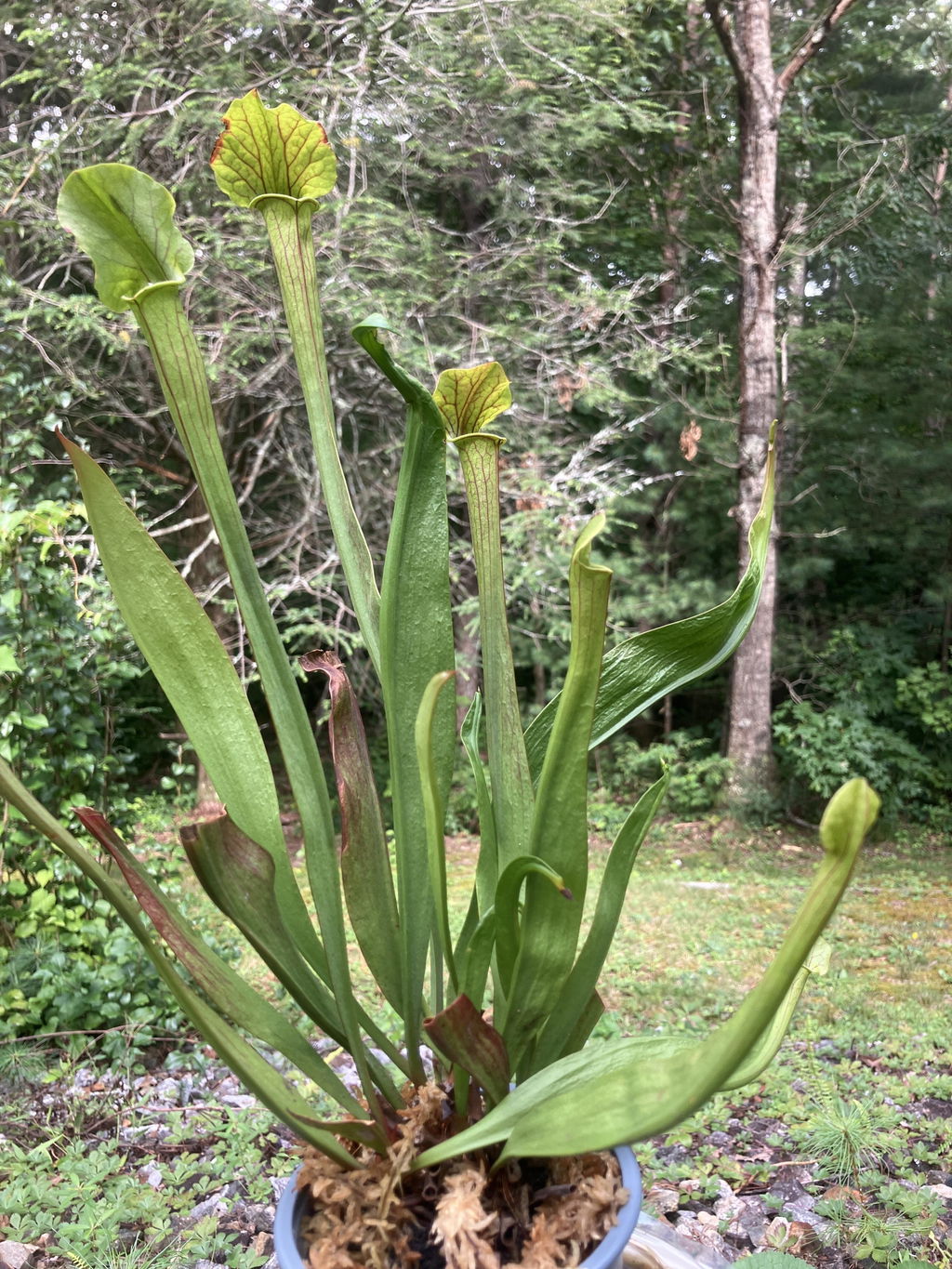
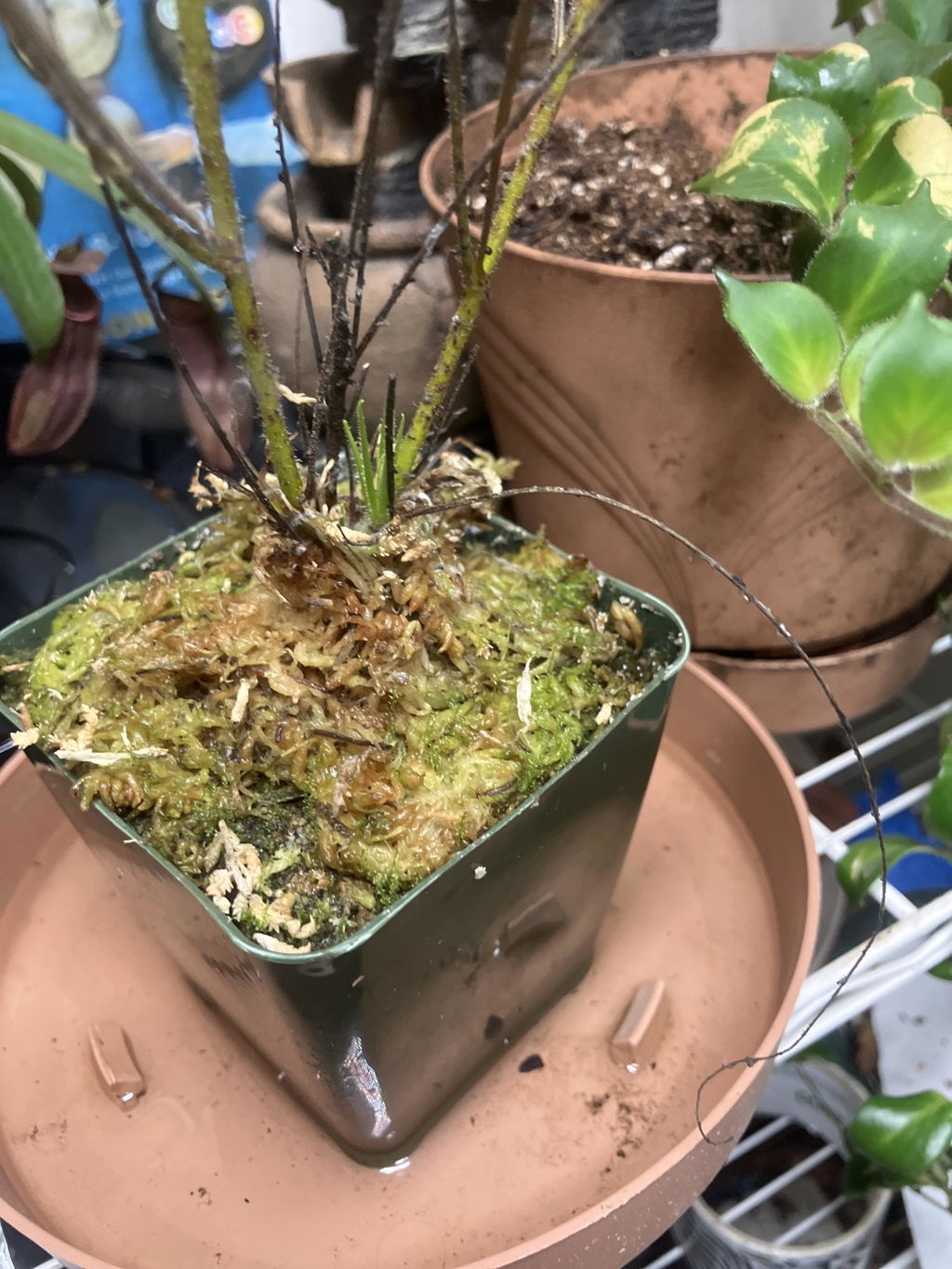
Plant is beautiful with deep pink color and dark pink veins from light lamp. Would be awesome to get a flower
Sort by:
251 products
251 products
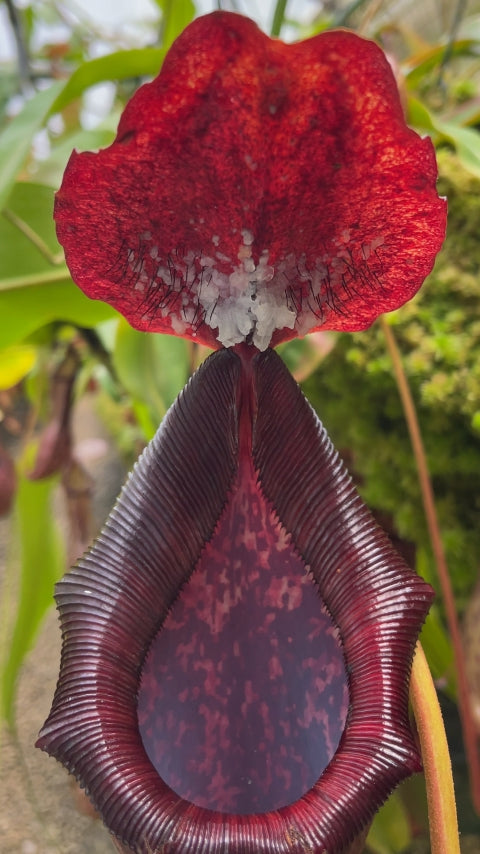
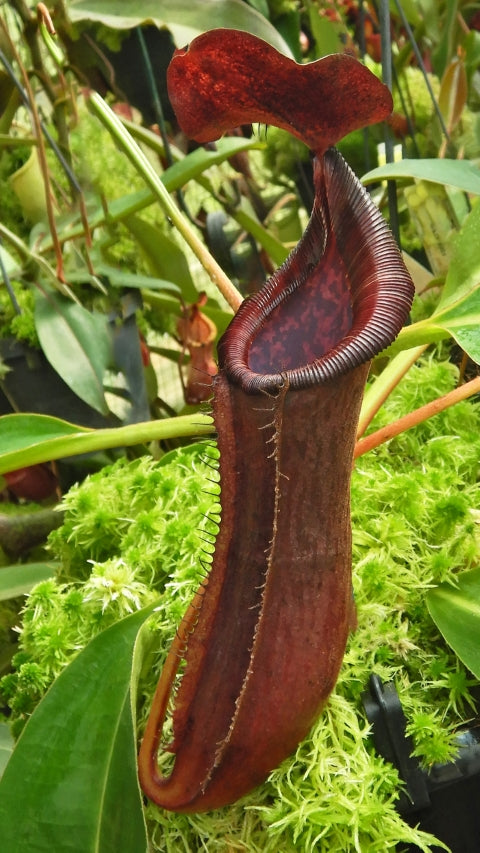
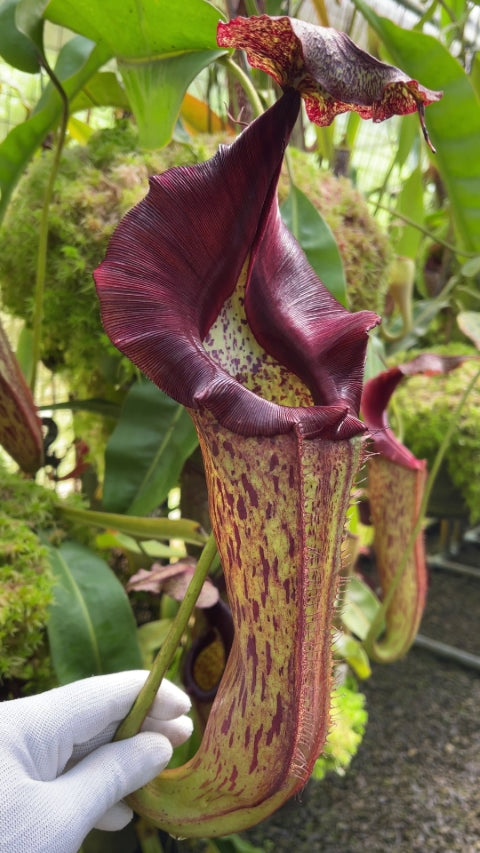
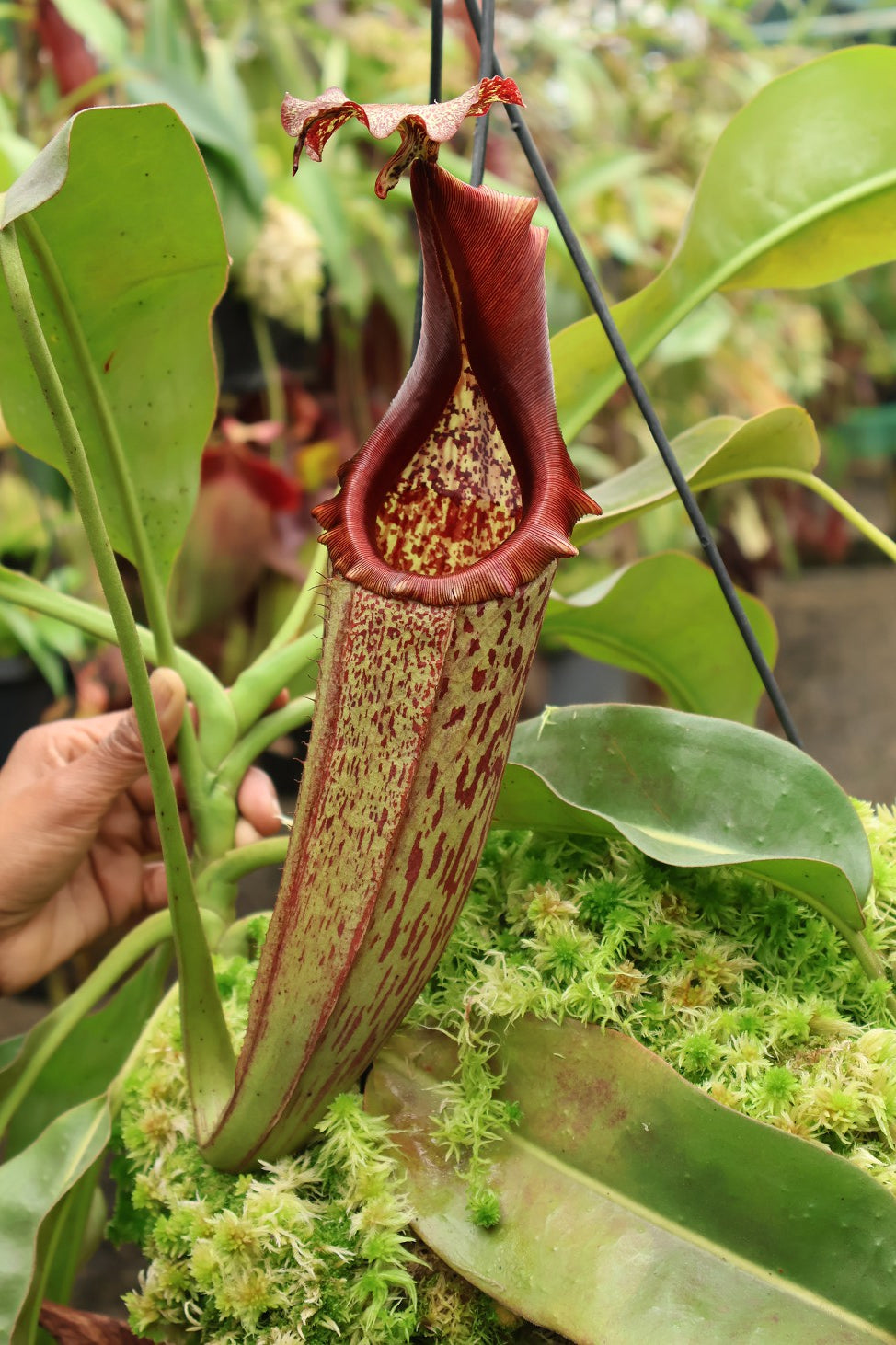
There are atropurpurea, and then there are atropurpurea! Damon used our very darkest flava var atropurpurea in the collection to make these babies, so they are consistently some of the best, deepest dark black-red plants we’ve ever sold! They are deep, deep burgundy, even approaching black. Their dark color is even harder to capture in photos! These are plants for serious flava collectors.
Individual plants are grown from seeds, so there is variation in color and form. Some plants have hints of green on top of the lid, but that mostly darkens into red as the pitcher ages.
Please note: X-Large sized plants have multiple growth points but can be 12” tall still.
DORMANT SEASONALLY, STARTING AS EARLY AS OCTOBER AND LASTING AS LATE AS MARCH, DEPENDING ON THE CONDITIONS AND SPECIES/HYBRID. The pitchers turn brown and die back to the rhizome, or non-carnivorous leaves (phyllodia) grow during this time. Please see the final photo to see how Sarracenia look when dormant. They will begin to grow vigorously again in Spring when photoperiods lengthen and temperatures increase.
Care Instructions:
Growth Habit: Sarracenia primarily grow along the Southeastern coastal plain of the United States. They grow pitchers, which are modified leaves, seasonally that can vary in height, color, and size depending on the species or hybrid. The pitchers can die back during the growing season, but new pitchers will grow throughout the spring and summer. The pitchers start to grow in spring, and many grow as the year progresses; in summer, they will be at their best. In summer, you may see brown or black on your pitchers, which can be normal nectar burn or crisping from heat. As Fall comes on, the pitchers may start to die back, turning brown, and by winter, many or all of the pitchers are brown, but the rhizome remains healthy and intact throughout winter dormancy even if you cannot see anything growing. Sarracenia have brown, black, or white roots and do not generally have many of them. The rhizome can be brown and still be healthy.
Sun: Full sun. Sarracenia require lots of direct sun to grow and form pitchers properly. In many areas, they can be grown outdoors in full sun. If you live in a very hot AND very dry place like Arizona or Sacramento, for example, you will want to grow your plants in full morning sun with protection from the afternoon sun or under 30% shade cloth. It is common for several pitchers to "burn" and die back when you first place your plant into the sun; your plant is acclimating to your conditions, and in most cases, new leaves will soon grow and be fully acclimated. Sarracenia can be grown indoors on extremely sunny windowsills that receive all-day sun, but they will require a grow light in most circumstances due to the amount of light the plant needs. Grow lights should be 6-12” from the plant, depending on the light, and on a 10-12 hour day length. Sarracenia generally are not a good candidate for a terrarium as they need intense light and get quite tall. Shorter species like Sarracenia purpurea will do better in a terrarium. Grow outdoors if possible for best results.
Water: Always keep them in a saucer with a few inches of distilled, rainwater, or reverse osmosis water. Never let them dry out, especially in the hot summer months. Sarracenia are bog plants that prefer water-logged conditions unless you live somewhere both very hot AND extremely humid, like Alabama. In that case, let the water tray dry out for a day or two between refills. Always use distilled, reverse osmosis, or rainwater only. These plants are sensitive to their water quality, and giving them mineral and salt-free water is very important. In winter, when the plants are dormant, you can let them dry out a bit between rain storms, but do not let the soil get so dry that it pulls away from the edges of the pots. Be sure to supplement water as needed in between rains in winter.
Temperature and Dormancy: These are warm-temperate plants, meaning they need warm summers and chilly winters. They should be grown outdoors year-round in areas with mild winters. They thrive in temperatures ranging from 20 degrees - 100F degrees and can take a brief freeze or high-temperature spike up to 105F degrees for a short period. If nighttime temps drop below 20 but rise again during the day above 40, your plant will be fine outside.
If you live in an area with very cold winters, where nighttime temperatures drop below 20 degrees for sustained periods, you have three options for providing them with winter dormancy: the garage method, mulching in, or the fridge method. Dormancy is triggered by a combination of exposure to shorter photo-periods and cooler temperatures in the 40-60's F. While you can skip a dormancy period once or twice, in the long term, your plant will begin to do poorly and will eventually die if you skip this crucial period.
The garage method: Bring your plant indoors to a sunny windowsill in an unheated room or garage, where the nighttime temperatures will dip down to 50-60F. Keep it well watered during this period, do not let it dry out, and put it outside again when the outside nighttime temperatures increase consistently above 20F.
The mulch method: Mulch them in very, very well outdoors. Pack at least four inches of mulch on top of the plants and all around the sides to prevent winds from chilling them and freezing the roots. You can also dig the pots into the ground and then mulch heavily on top.
The fridge method: remove the plants from pots, gently clean the roots of soil, wrap the roots in a bit of damp long-fibered New Zealand sphagnum moss, place the plants in a resealable bag, and put the bag into the refrigerator. Leave them in the fridge from October to February, periodically checking on them to ensure they are still moist and not growing mold or fungus. Pot them back up in February. You can vary the timing to align with your outside nighttime temperatures so that your plants can come out of dormancy when it is safe to place them back outside. You can leave them in the fridge for an extended period if you have very long winters.
Soil and Repotting: We prefer a mix of four-part fertilizer-free peat moss to one-part perlite. You can add our pre-made mix to your order here. You do not need to repot your plant when you receive it from us for at least a year, and we recommend against it during the spring-summer months. Repot Sarracenia every 1-3 years in winter when they are dormant. Avoid placing in excessively large pots; size up only a few inches at a time. They do well in tall pots. Soil can also develop a swampy smell, especially right after shipping, when the plant is wrapped in plastic and sealed. This is normal; these plants grow naturally in bogs and swampy conditions, and peat moss can develop a bit of an anaerobic smell, but this does not indicate a problem with the soil.
Feeding and Fertilizer: Sarracenia will catch plenty of food when grown outdoors. When grown indoors, they will significantly benefit from fertilizing, both a foliar fertilizer and feeding the pitchers. Plants grown outdoors will appreciate a foliar feed as well. Apply MaxSea fertilizer once per month to the foliage only. Dilute 1/4 teaspoon of MaxSea into one gallon of water and then apply to the pitchers, and inside the pitchers, with a mister bottle or a watering can. Osmocote slow-release flower and vegetable pellets can be dropped into the pitchers with a bit of distilled water. Pellets can burn the sides of the pitchers where they come to rest; that is normal.
More Information: For further information on dormancy, repotting, dividing, and more, check out our website or our YouTube channel.
Some of the most beautiful flava in cultivation are the ornata variety. They have electric yellow pitchers with dark red pinstripes. They emerge in spring with brightly colored pitchers and red venation, and the color deepens over the summer with the venation turning blood-red, almost black, over time! The pitchers are tall with round, oversized lids.
These are divisions.
X-Large divisions aren’t necessarily taller but will have multiple growth points or very chonky rhizomes.
DORMANT SEASONALLY, STARTING AS EARLY AS OCTOBER AND LASTING AS LATE AS MARCH, DEPENDING ON THE CONDITIONS AND SPECIES/HYBRID. The pitchers turn brown and die back to the rhizome, or non-carnivorous leaves (phyllodia) grow during this time. Please see the final photo to see how Sarracenia look when dormant. They will begin to grow vigorously again in Spring when photoperiods lengthen and temperatures increase.
Care Instructions:
Growth Habit: Sarracenia primarily grow along the Southeastern coastal plain of the United States. They grow pitchers, which are modified leaves, seasonally that can vary in height, color, and size depending on the species or hybrid. The pitchers can die back during the growing season, but new pitchers will grow throughout the spring and summer. The pitchers start to grow in spring, and many grow as the year progresses; in summer, they will be at their best. In summer, you may see brown or black on your pitchers, which can be normal nectar burn or crisping from heat. As Fall comes on, the pitchers may start to die back, turning brown, and by winter, many or all of the pitchers are brown, but the rhizome remains healthy and intact throughout winter dormancy even if you cannot see anything growing. Sarracenia have brown, black, or white roots and do not generally have many of them. The rhizome can be brown and still be healthy.
Sun: Full sun. Sarracenia require lots of direct sun to grow and form pitchers properly. In many areas, they can be grown outdoors in full sun. If you live in a very hot AND very dry place like Arizona or Sacramento, for example, you will want to grow your plants in full morning sun with protection from the afternoon sun or under 30% shade cloth. It is common for several pitchers to "burn" and die back when you first place your plant into the sun; your plant is acclimating to your conditions, and in most cases, new leaves will soon grow and be fully acclimated. Sarracenia can be grown indoors on extremely sunny windowsills that receive all-day sun, but they will require a grow light in most circumstances due to the amount of light the plant needs. Grow lights should be 6-12” from the plant, depending on the light, and on a 10-12 hour day length. Sarracenia generally are not a good candidate for a terrarium as they need intense light and get quite tall. Shorter species like Sarracenia purpurea will do better in a terrarium. Grow outdoors if possible for best results.
Water: Always keep them in a saucer with a few inches of distilled, rainwater, or reverse osmosis water. Never let them dry out, especially in the hot summer months. Sarracenia are bog plants that prefer water-logged conditions unless you live somewhere both very hot AND extremely humid, like Alabama. In that case, let the water tray dry out for a day or two between refills. Always use distilled, reverse osmosis, or rainwater only. These plants are sensitive to their water quality, and giving them mineral and salt-free water is very important. In winter, when the plants are dormant, you can let them dry out a bit between rain storms, but do not let the soil get so dry that it pulls away from the edges of the pots. Be sure to supplement water as needed in between rains in winter.
Temperature and Dormancy: These are warm-temperate plants, meaning they need warm summers and chilly winters. They should be grown outdoors year-round in areas with mild winters. They thrive in temperatures ranging from 20 degrees - 100F degrees and can take a brief freeze or high-temperature spike up to 105F degrees for a short period. If nighttime temps drop below 20 but rise again during the day above 40, your plant will be fine outside.
If you live in an area with very cold winters, where nighttime temperatures drop below 20 degrees for sustained periods, you have three options for providing them with winter dormancy: the garage method, mulching in, or the fridge method. Dormancy is triggered by a combination of exposure to shorter photo-periods and cooler temperatures in the 40-60's F. While you can skip a dormancy period once or twice, in the long term, your plant will begin to do poorly and will eventually die if you skip this crucial period.
The garage method: Bring your plant indoors to a sunny windowsill in an unheated room or garage, where the nighttime temperatures will dip down to 50-60F. Keep it well watered during this period, do not let it dry out, and put it outside again when the outside nighttime temperatures increase consistently above 20F.
The mulch method: Mulch them in very, very well outdoors. Pack at least four inches of mulch on top of the plants and all around the sides to prevent winds from chilling them and freezing the roots. You can also dig the pots into the ground and then mulch heavily on top.
The fridge method: remove the plants from pots, gently clean the roots of soil, wrap the roots in a bit of damp long-fibered New Zealand sphagnum moss, place the plants in a resealable bag, and put the bag into the refrigerator. Leave them in the fridge from October to February, periodically checking on them to ensure they are still moist and not growing mold or fungus. Pot them back up in February. You can vary the timing to align with your outside nighttime temperatures so that your plants can come out of dormancy when it is safe to place them back outside. You can leave them in the fridge for an extended period if you have very long winters.
Soil and Repotting: We prefer a mix of four-part fertilizer-free peat moss to one-part perlite. You can add our pre-made mix to your order here. You do not need to repot your plant when you receive it from us for at least a year, and we recommend against it during the spring-summer months. Repot Sarracenia every 1-3 years in winter when they are dormant. Avoid placing in excessively large pots; size up only a few inches at a time. They do well in tall pots. Soil can also develop a swampy smell, especially right after shipping, when the plant is wrapped in plastic and sealed. This is normal; these plants grow naturally in bogs and swampy conditions, and peat moss can develop a bit of an anaerobic smell, but this does not indicate a problem with the soil.
Feeding and Fertilizer: Sarracenia will catch plenty of food when grown outdoors. When grown indoors, they will significantly benefit from fertilizing, both a foliar fertilizer and feeding the pitchers. Plants grown outdoors will appreciate a foliar feed as well. Apply MaxSea fertilizer once per month to the foliage only. Dilute 1/4 teaspoon of MaxSea into one gallon of water and then apply to the pitchers, and inside the pitchers, with a mister bottle or a watering can. Osmocote slow-release flower and vegetable pellets can be dropped into the pitchers with a bit of distilled water. Pellets can burn the sides of the pitchers where they come to rest; that is normal.
More Information: For further information on dormancy, repotting, dividing, and more, check out our website or our YouTube channel.
This is a fantastic color variety of Sarracenia flava! The entire pitcher's body is a stunning orangey-red, complemented by a deep red throat. The top of the lid and the lip stay vibrant green-yellow, creating a beautiful and eye-catching contrast. Spring pitchers can be more green, and as spring turns into summer, the pitcher's colors intensify and deepen, making it a truly mesmerizing sight!
These are seed-grown plants, so there is a bit of variation, but they will all have classic rubricorpora color and size!
DORMANT SEASONALLY, STARTING AS EARLY AS OCTOBER AND LASTING AS LATE AS MARCH, DEPENDING ON THE CONDITIONS AND SPECIES/HYBRID. The pitchers turn brown and die back to the rhizome, or non-carnivorous leaves (phyllodia) grow during this time. Please see the final photo to see how Sarracenia look when dormant. They will begin to grow vigorously again in Spring when photoperiods lengthen and temperatures increase.
Care Instructions:
Growth Habit: Sarracenia primarily grow along the Southeastern coastal plain of the United States. They grow pitchers, which are modified leaves, seasonally that can vary in height, color, and size depending on the species or hybrid. The pitchers can die back during the growing season, but new pitchers will grow throughout the spring and summer. The pitchers start to grow in spring, and many grow as the year progresses; in summer, they will be at their best. In summer, you may see brown or black on your pitchers, which can be normal nectar burn or crisping from heat. As Fall comes on, the pitchers may start to die back, turning brown, and by winter, many or all of the pitchers are brown, but the rhizome remains healthy and intact throughout winter dormancy even if you cannot see anything growing. Sarracenia have brown, black, or white roots and do not generally have many of them. The rhizome can be brown and still be healthy.
Sun: Full sun. Sarracenia require lots of direct sun to grow and form pitchers properly. In many areas, they can be grown outdoors in full sun. If you live in a very hot AND very dry place like Arizona or Sacramento, for example, you will want to grow your plants in full morning sun with protection from the afternoon sun or under 30% shade cloth. It is common for several pitchers to "burn" and die back when you first place your plant into the sun; your plant is acclimating to your conditions, and in most cases, new leaves will soon grow and be fully acclimated. Sarracenia can be grown indoors on extremely sunny windowsills that receive all-day sun, but they will require a grow light in most circumstances due to the amount of light the plant needs. Grow lights should be 6-12” from the plant, depending on the light, and on a 10-12 hour day length. Sarracenia generally are not a good candidate for a terrarium as they need intense light and get quite tall. Shorter species like Sarracenia purpurea will do better in a terrarium. Grow outdoors if possible for best results.
Water: Always keep them in a saucer with a few inches of distilled, rainwater, or reverse osmosis water. Never let them dry out, especially in the hot summer months. Sarracenia are bog plants that prefer water-logged conditions unless you live somewhere both very hot AND extremely humid, like Alabama. In that case, let the water tray dry out for a day or two between refills. Always use distilled, reverse osmosis, or rainwater only. These plants are sensitive to their water quality, and giving them mineral and salt-free water is very important. In winter, when the plants are dormant, you can let them dry out a bit between rain storms, but do not let the soil get so dry that it pulls away from the edges of the pots. Be sure to supplement water as needed in between rains in winter.
Temperature and Dormancy: These are warm-temperate plants, meaning they need warm summers and chilly winters. They should be grown outdoors year-round in areas with mild winters. They thrive in temperatures ranging from 20 degrees - 100F degrees and can take a brief freeze or high-temperature spike up to 105F degrees for a short period. If nighttime temps drop below 20 but rise again during the day above 40, your plant will be fine outside.
If you live in an area with very cold winters, where nighttime temperatures drop below 20 degrees for sustained periods, you have three options for providing them with winter dormancy: the garage method, mulching in, or the fridge method. Dormancy is triggered by a combination of exposure to shorter photo-periods and cooler temperatures in the 40-60's F. While you can skip a dormancy period once or twice, in the long term, your plant will begin to do poorly and will eventually die if you skip this crucial period.
The garage method: Bring your plant indoors to a sunny windowsill in an unheated room or garage, where the nighttime temperatures will dip down to 50-60F. Keep it well watered during this period, do not let it dry out, and put it outside again when the outside nighttime temperatures increase consistently above 20F.
The mulch method: Mulch them in very, very well outdoors. Pack at least four inches of mulch on top of the plants and all around the sides to prevent winds from chilling them and freezing the roots. You can also dig the pots into the ground and then mulch heavily on top.
The fridge method: remove the plants from pots, gently clean the roots of soil, wrap the roots in a bit of damp long-fibered New Zealand sphagnum moss, place the plants in a resealable bag, and put the bag into the refrigerator. Leave them in the fridge from October to February, periodically checking on them to ensure they are still moist and not growing mold or fungus. Pot them back up in February. You can vary the timing to align with your outside nighttime temperatures so that your plants can come out of dormancy when it is safe to place them back outside. You can leave them in the fridge for an extended period if you have very long winters.
Soil and Repotting: We prefer a mix of four-part fertilizer-free peat moss to one-part perlite. You can add our pre-made mix to your order here. You do not need to repot your plant when you receive it from us for at least a year, and we recommend against it during the spring-summer months. Repot Sarracenia every 1-3 years in winter when they are dormant. Avoid placing in excessively large pots; size up only a few inches at a time. They do well in tall pots. Soil can also develop a swampy smell, especially right after shipping, when the plant is wrapped in plastic and sealed. This is normal; these plants grow naturally in bogs and swampy conditions, and peat moss can develop a bit of an anaerobic smell, but this does not indicate a problem with the soil.
Feeding and Fertilizer: Sarracenia will catch plenty of food when grown outdoors. When grown indoors, they will significantly benefit from fertilizing, both a foliar fertilizer and feeding the pitchers. Plants grown outdoors will appreciate a foliar feed as well. Apply MaxSea fertilizer once per month to the foliage only. Dilute 1/4 teaspoon of MaxSea into one gallon of water and then apply to the pitchers, and inside the pitchers, with a mister bottle or a watering can. Osmocote slow-release flower and vegetable pellets can be dropped into the pitchers with a bit of distilled water. Pellets can burn the sides of the pitchers where they come to rest; that is normal.
More Information: For further information on dormancy, repotting, dividing, and more, check out our website or our YouTube channel.
Sarracenia flava v rubricorpora “Fire Top” is a very special, select rubricorpora. Many years ago, Damon gifted a particularly nice plant to Alison, our office manager (if you’ve emailed us, she’s been the one to help you!). Recently, she brought the plant back to divide, and we were able to take some of the divisions for you! This unbelievable plant is so fiery and so colorful that we had to name it!
These are divisions. X-Large divisions have more than one growth point but may not be taller than Large divisions, they will have more pitchers and fill out more quickly.
DORMANT SEASONALLY, STARTING AS EARLY AS OCTOBER AND LASTING AS LATE AS MARCH, DEPENDING ON THE CONDITIONS AND SPECIES/HYBRID. The pitchers turn brown and die back to the rhizome, or non-carnivorous leaves (phyllodia) grow during this time. Please see the final photo to see how Sarracenia look when dormant. They will begin to grow vigorously again in Spring when photoperiods lengthen and temperatures increase.
Care Instructions:
Growth Habit: Sarracenia primarily grow along the Southeastern coastal plain of the United States. They grow pitchers, which are modified leaves, seasonally that can vary in height, color, and size depending on the species or hybrid. The pitchers can die back during the growing season, but new pitchers will grow throughout the spring and summer. The pitchers start to grow in spring, and many grow as the year progresses; in summer, they will be at their best. In summer, you may see brown or black on your pitchers, which can be normal nectar burn or crisping from heat. As Fall comes on, the pitchers may start to die back, turning brown, and by winter, many or all of the pitchers are brown, but the rhizome remains healthy and intact throughout winter dormancy even if you cannot see anything growing. Sarracenia have brown, black, or white roots and do not generally have many of them. The rhizome can be brown and still be healthy.
Sun: Full sun. Sarracenia require lots of direct sun to grow and form pitchers properly. In many areas, they can be grown outdoors in full sun. If you live in a very hot AND very dry place like Arizona or Sacramento, for example, you will want to grow your plants in full morning sun with protection from the afternoon sun or under 30% shade cloth. It is common for several pitchers to "burn" and die back when you first place your plant into the sun; your plant is acclimating to your conditions, and in most cases, new leaves will soon grow and be fully acclimated. Sarracenia can be grown indoors on extremely sunny windowsills that receive all-day sun, but they will require a grow light in most circumstances due to the amount of light the plant needs. Grow lights should be 6-12” from the plant, depending on the light, and on a 10-12 hour day length. Sarracenia generally are not a good candidate for a terrarium as they need intense light and get quite tall. Shorter species like Sarracenia purpurea will do better in a terrarium. Grow outdoors if possible for best results.
Water: Always keep them in a saucer with a few inches of distilled, rainwater, or reverse osmosis water. Never let them dry out, especially in the hot summer months. Sarracenia are bog plants that prefer water-logged conditions unless you live somewhere both very hot AND extremely humid, like Alabama. In that case, let the water tray dry out for a day or two between refills. Always use distilled, reverse osmosis, or rainwater only. These plants are sensitive to their water quality, and giving them mineral and salt-free water is very important. In winter, when the plants are dormant, you can let them dry out a bit between rain storms, but do not let the soil get so dry that it pulls away from the edges of the pots. Be sure to supplement water as needed in between rains in winter.
Temperature and Dormancy: These are warm-temperate plants, meaning they need warm summers and chilly winters. They should be grown outdoors year-round in areas with mild winters. They thrive in temperatures ranging from 20 degrees - 100F degrees and can take a brief freeze or high-temperature spike up to 105F degrees for a short period. If nighttime temps drop below 20 but rise again during the day above 40, your plant will be fine outside.
If you live in an area with very cold winters, where nighttime temperatures drop below 20 degrees for sustained periods, you have three options for providing them with winter dormancy: the garage method, mulching in, or the fridge method. Dormancy is triggered by a combination of exposure to shorter photo-periods and cooler temperatures in the 40-60's F. While you can skip a dormancy period once or twice, in the long term, your plant will begin to do poorly and will eventually die if you skip this crucial period.
The garage method: Bring your plant indoors to a sunny windowsill in an unheated room or garage, where the nighttime temperatures will dip down to 50-60F. Keep it well watered during this period, do not let it dry out, and put it outside again when the outside nighttime temperatures increase consistently above 20F.
The mulch method: Mulch them in very, very well outdoors. Pack at least four inches of mulch on top of the plants and all around the sides to prevent winds from chilling them and freezing the roots. You can also dig the pots into the ground and then mulch heavily on top.
The fridge method: remove the plants from pots, gently clean the roots of soil, wrap the roots in a bit of damp long-fibered New Zealand sphagnum moss, place the plants in a resealable bag, and put the bag into the refrigerator. Leave them in the fridge from October to February, periodically checking on them to ensure they are still moist and not growing mold or fungus. Pot them back up in February. You can vary the timing to align with your outside nighttime temperatures so that your plants can come out of dormancy when it is safe to place them back outside. You can leave them in the fridge for an extended period if you have very long winters.
Soil and Repotting: We prefer a mix of four-part fertilizer-free peat moss to one-part perlite. You can add our pre-made mix to your order here. You do not need to repot your plant when you receive it from us for at least a year, and we recommend against it during the spring-summer months. Repot Sarracenia every 1-3 years in winter when they are dormant. Avoid placing in excessively large pots; size up only a few inches at a time. They do well in tall pots. Soil can also develop a swampy smell, especially right after shipping, when the plant is wrapped in plastic and sealed. This is normal; these plants grow naturally in bogs and swampy conditions, and peat moss can develop a bit of an anaerobic smell, but this does not indicate a problem with the soil.
Feeding and Fertilizer: Sarracenia will catch plenty of food when grown outdoors. When grown indoors, they will significantly benefit from fertilizing, both a foliar fertilizer and feeding the pitchers. Plants grown outdoors will appreciate a foliar feed as well. Apply MaxSea fertilizer once per month to the foliage only. Dilute 1/4 teaspoon of MaxSea into one gallon of water and then apply to the pitchers, and inside the pitchers, with a mister bottle or a watering can. Osmocote slow-release flower and vegetable pellets can be dropped into the pitchers with a bit of distilled water. Pellets can burn the sides of the pitchers where they come to rest; that is normal.
More Information: For further information on dormancy, repotting, dividing, and more, check out our website or our YouTube channel.
Sarracenia flava var. rugelii is arrestingly beautiful: a burst of vibrant, chartreuse pitchers with a dark, mysterious blotch at the throat that catches the eye. Starting as a thin, red line on seedlings, it develops into the iconic, thick, blood-red blotch of rugelli at maturity, adding to its allure and fascination. These are divisions from our botanical collection.
DORMANT SEASONALLY, STARTING AS EARLY AS OCTOBER AND LASTING AS LATE AS MARCH, DEPENDING ON THE CONDITIONS AND SPECIES/HYBRID. The pitchers turn brown and die back to the rhizome, or non-carnivorous leaves (phyllodia) grow during this time. Please see the final photo to see how Sarracenia look when dormant. They will begin to grow vigorously again in Spring when photoperiods lengthen and temperatures increase.
Care Instructions:
Growth Habit: Sarracenia primarily grow along the Southeastern coastal plain of the United States. They grow pitchers, which are modified leaves, seasonally that can vary in height, color, and size depending on the species or hybrid. The pitchers can die back during the growing season, but new pitchers will grow throughout the spring and summer. The pitchers start to grow in spring, and many grow as the year progresses; in summer, they will be at their best. In summer, you may see brown or black on your pitchers, which can be normal nectar burn or crisping from heat. As Fall comes on, the pitchers may start to die back, turning brown, and by winter, many or all of the pitchers are brown, but the rhizome remains healthy and intact throughout winter dormancy even if you cannot see anything growing. Sarracenia have brown, black, or white roots and do not generally have many of them. The rhizome can be brown and still be healthy.
Sun: Full sun. Sarracenia require lots of direct sun to grow and form pitchers properly. In many areas, they can be grown outdoors in full sun. If you live in a very hot AND very dry place like Arizona or Sacramento, for example, you will want to grow your plants in full morning sun with protection from the afternoon sun or under 30% shade cloth. It is common for several pitchers to "burn" and die back when you first place your plant into the sun; your plant is acclimating to your conditions, and in most cases, new leaves will soon grow and be fully acclimated. Sarracenia can be grown indoors on extremely sunny windowsills that receive all-day sun, but they will require a grow light in most circumstances due to the amount of light the plant needs. Grow lights should be 6-12” from the plant, depending on the light, and on a 10-12 hour day length. Sarracenia generally are not a good candidate for a terrarium as they need intense light and get quite tall. Shorter species like Sarracenia purpurea will do better in a terrarium. Grow outdoors if possible for best results.
Water: Always keep them in a saucer with a few inches of distilled, rainwater, or reverse osmosis water. Never let them dry out, especially in the hot summer months. Sarracenia are bog plants that prefer water-logged conditions unless you live somewhere both very hot AND extremely humid, like Alabama. In that case, let the water tray dry out for a day or two between refills. Always use distilled, reverse osmosis, or rainwater only. These plants are sensitive to their water quality, and giving them mineral and salt-free water is very important. In winter, when the plants are dormant, you can let them dry out a bit between rain storms, but do not let the soil get so dry that it pulls away from the edges of the pots. Be sure to supplement water as needed in between rains in winter.
Temperature and Dormancy: These are warm-temperate plants, meaning they need warm summers and chilly winters. They should be grown outdoors year-round in areas with mild winters. They thrive in temperatures ranging from 20 degrees - 100F degrees and can take a brief freeze or high-temperature spike up to 105F degrees for a short period. If nighttime temps drop below 20 but rise again during the day above 40, your plant will be fine outside.
If you live in an area with very cold winters, where nighttime temperatures drop below 20 degrees for sustained periods, you have three options for providing them with winter dormancy: the garage method, mulching in, or the fridge method. Dormancy is triggered by a combination of exposure to shorter photo-periods and cooler temperatures in the 40-60's F. While you can skip a dormancy period once or twice, in the long term, your plant will begin to do poorly and will eventually die if you skip this crucial period.
The garage method: Bring your plant indoors to a sunny windowsill in an unheated room or garage, where the nighttime temperatures will dip down to 50-60F. Keep it well watered during this period, do not let it dry out, and put it outside again when the outside nighttime temperatures increase consistently above 20F.
The mulch method: Mulch them in very, very well outdoors. Pack at least four inches of mulch on top of the plants and all around the sides to prevent winds from chilling them and freezing the roots. You can also dig the pots into the ground and then mulch heavily on top.
The fridge method: remove the plants from pots, gently clean the roots of soil, wrap the roots in a bit of damp long-fibered New Zealand sphagnum moss, place the plants in a resealable bag, and put the bag into the refrigerator. Leave them in the fridge from October to February, periodically checking on them to ensure they are still moist and not growing mold or fungus. Pot them back up in February. You can vary the timing to align with your outside nighttime temperatures so that your plants can come out of dormancy when it is safe to place them back outside. You can leave them in the fridge for an extended period if you have very long winters.
Soil and Repotting: We prefer a mix of four-part fertilizer-free peat moss to one-part perlite. You can add our pre-made mix to your order here. You do not need to repot your plant when you receive it from us for at least a year, and we recommend against it during the spring-summer months. Repot Sarracenia every 1-3 years in winter when they are dormant. Avoid placing in excessively large pots; size up only a few inches at a time. They do well in tall pots. Soil can also develop a swampy smell, especially right after shipping, when the plant is wrapped in plastic and sealed. This is normal; these plants grow naturally in bogs and swampy conditions, and peat moss can develop a bit of an anaerobic smell, but this does not indicate a problem with the soil.
Feeding and Fertilizer: Sarracenia will catch plenty of food when grown outdoors. When grown indoors, they will significantly benefit from fertilizing, both a foliar fertilizer and feeding the pitchers. Plants grown outdoors will appreciate a foliar feed as well. Apply MaxSea fertilizer once per month to the foliage only. Dilute 1/4 teaspoon of MaxSea into one gallon of water and then apply to the pitchers, and inside the pitchers, with a mister bottle or a watering can. Osmocote slow-release flower and vegetable pellets can be dropped into the pitchers with a bit of distilled water. Pellets can burn the sides of the pitchers where they come to rest; that is normal.
More Information: For further information on dormancy, repotting, dividing, and more, check out our website or our YouTube channel.
Sarracenia flava can have a range of colors, from neon green to striped to dark red, all beautiful and fun! These plants were specifically bred to bring out the red in the flava! Sarracenia flava var atropurpurea is an exquisite, tall, all-red plant, and Sarracenia flava ‘Bronze’ is an extremely tall, bronze-colored plant with huge lids! These plants are all hand-chosen for rich, red color; some plants are highlighted in vivid yellow and others in deep red entirely! These are sure to all be very tall as well!
These are seed-grown plants with variations in color and size. Some plants are entirely red and others are highlighted with yellow!
DORMANT SEASONALLY, STARTING AS EARLY AS OCTOBER AND LASTING AS LATE AS MARCH, DEPENDING ON THE CONDITIONS AND SPECIES/HYBRID. The pitchers turn brown and die back to the rhizome, or non-carnivorous leaves (phyllodia) grow during this time. Please see the final photo to see how Sarracenia look when dormant. They will begin to grow vigorously again in Spring when photoperiods lengthen and temperatures increase.
Care Instructions:
Growth Habit: Sarracenia primarily grow along the Southeastern coastal plain of the United States. They grow pitchers, which are modified leaves, seasonally that can vary in height, color, and size depending on the species or hybrid. The pitchers can die back during the growing season, but new pitchers will grow throughout the spring and summer. The pitchers start to grow in spring, and many grow as the year progresses; in summer, they will be at their best. In summer, you may see brown or black on your pitchers, which can be normal nectar burn or crisping from heat. As Fall comes on, the pitchers may start to die back, turning brown, and by winter, many or all of the pitchers are brown, but the rhizome remains healthy and intact throughout winter dormancy even if you cannot see anything growing. Sarracenia have brown, black, or white roots and do not generally have many of them. The rhizome can be brown and still be healthy.
Sun: Full sun. Sarracenia require lots of direct sun to grow and form pitchers properly. In many areas, they can be grown outdoors in full sun. If you live in a very hot AND very dry place like Arizona or Sacramento, for example, you will want to grow your plants in full morning sun with protection from the afternoon sun or under 30% shade cloth. It is common for several pitchers to "burn" and die back when you first place your plant into the sun; your plant is acclimating to your conditions, and in most cases, new leaves will soon grow and be fully acclimated. Sarracenia can be grown indoors on extremely sunny windowsills that receive all-day sun, but they will require a grow light in most circumstances due to the amount of light the plant needs. Grow lights should be 6-12” from the plant, depending on the light, and on a 10-12 hour day length. Sarracenia generally are not a good candidate for a terrarium as they need intense light and get quite tall. Shorter species like Sarracenia purpurea will do better in a terrarium. Grow outdoors if possible for best results.
Water: Always keep them in a saucer with a few inches of distilled, rainwater, or reverse osmosis water. Never let them dry out, especially in the hot summer months. Sarracenia are bog plants that prefer water-logged conditions unless you live somewhere both very hot AND extremely humid, like Alabama. In that case, let the water tray dry out for a day or two between refills. Always use distilled, reverse osmosis, or rainwater only. These plants are sensitive to their water quality, and giving them mineral and salt-free water is very important. In winter, when the plants are dormant, you can let them dry out a bit between rain storms, but do not let the soil get so dry that it pulls away from the edges of the pots. Be sure to supplement water as needed in between rains in winter.
Temperature and Dormancy: These are warm-temperate plants, meaning they need warm summers and chilly winters. They should be grown outdoors year-round in areas with mild winters. They thrive in temperatures ranging from 20 degrees - 100F degrees and can take a brief freeze or high-temperature spike up to 105F degrees for a short period. If nighttime temps drop below 20 but rise again during the day above 40, your plant will be fine outside.
If you live in an area with very cold winters, where nighttime temperatures drop below 20 degrees for sustained periods, you have three options for providing them with winter dormancy: the garage method, mulching in, or the fridge method. Dormancy is triggered by a combination of exposure to shorter photo-periods and cooler temperatures in the 40-60's F. While you can skip a dormancy period once or twice, in the long term, your plant will begin to do poorly and will eventually die if you skip this crucial period.
The garage method: Bring your plant indoors to a sunny windowsill in an unheated room or garage, where the nighttime temperatures will dip down to 50-60F. Keep it well watered during this period, do not let it dry out, and put it outside again when the outside nighttime temperatures increase consistently above 20F.
The mulch method: Mulch them in very, very well outdoors. Pack at least four inches of mulch on top of the plants and all around the sides to prevent winds from chilling them and freezing the roots. You can also dig the pots into the ground and then mulch heavily on top.
The fridge method: remove the plants from pots, gently clean the roots of soil, wrap the roots in a bit of damp long-fibered New Zealand sphagnum moss, place the plants in a resealable bag, and put the bag into the refrigerator. Leave them in the fridge from October to February, periodically checking on them to ensure they are still moist and not growing mold or fungus. Pot them back up in February. You can vary the timing to align with your outside nighttime temperatures so that your plants can come out of dormancy when it is safe to place them back outside. You can leave them in the fridge for an extended period if you have very long winters.
Soil and Repotting: We prefer a mix of four-part fertilizer-free peat moss to one-part perlite. You can add our pre-made mix to your order here. You do not need to repot your plant when you receive it from us for at least a year, and we recommend against it during the spring-summer months. Repot Sarracenia every 1-3 years in winter when they are dormant. Avoid placing in excessively large pots; size up only a few inches at a time. They do well in tall pots. Soil can also develop a swampy smell, especially right after shipping, when the plant is wrapped in plastic and sealed. This is normal; these plants grow naturally in bogs and swampy conditions, and peat moss can develop a bit of an anaerobic smell, but this does not indicate a problem with the soil.
Feeding and Fertilizer: Sarracenia will catch plenty of food when grown outdoors. When grown indoors, they will significantly benefit from fertilizing, both a foliar fertilizer and feeding the pitchers. Plants grown outdoors will appreciate a foliar feed as well. Apply MaxSea fertilizer once per month to the foliage only. Dilute 1/4 teaspoon of MaxSea into one gallon of water and then apply to the pitchers, and inside the pitchers, with a mister bottle or a watering can. Osmocote slow-release flower and vegetable pellets can be dropped into the pitchers with a bit of distilled water. Pellets can burn the sides of the pitchers where they come to rest; that is normal.
More Information: For further information on dormancy, repotting, dividing, and more, check out our website or our YouTube channel.
Sarracenia flava, the Yellow trumpet, is the most striking and elegant of the American pitcher plant species. Old plants can produce pitchers almost three feet tall with wide mouths and beautiful big lids. It comes in seven official color varieties. These are var. flava or rugelii,, which means they will be all yellowy green with a red blotch or patch of venation at the throat. The flowers are oranged-yellow on this very special plant!
X-Large plants are not always taller but will have either multiple growth points or chonky rhizomes.
DORMANT SEASONALLY, STARTING AS EARLY AS OCTOBER AND LASTING AS LATE AS MARCH, DEPENDING ON THE CONDITIONS AND SPECIES/HYBRID. The pitchers turn brown and die back to the rhizome, or non-carnivorous leaves (phyllodia) grow during this time. Please see the final photo to see how Sarracenia look when dormant. They will begin to grow vigorously again in Spring when photoperiods lengthen and temperatures increase.
Care Instructions:
Growth Habit: Sarracenia primarily grow along the Southeastern coastal plain of the United States. They grow pitchers, which are modified leaves, seasonally that can vary in height, color, and size depending on the species or hybrid. The pitchers can die back during the growing season, but new pitchers will grow throughout the spring and summer. The pitchers start to grow in spring, and many grow as the year progresses; in summer, they will be at their best. In summer, you may see brown or black on your pitchers, which can be normal nectar burn or crisping from heat. As Fall comes on, the pitchers may start to die back, turning brown, and by winter, many or all of the pitchers are brown, but the rhizome remains healthy and intact throughout winter dormancy even if you cannot see anything growing. Sarracenia have brown, black, or white roots and do not generally have many of them. The rhizome can be brown and still be healthy.
Sun: Full sun. Sarracenia require lots of direct sun to grow and form pitchers properly. In many areas, they can be grown outdoors in full sun. If you live in a very hot AND very dry place like Arizona or Sacramento, for example, you will want to grow your plants in full morning sun with protection from the afternoon sun or under 30% shade cloth. It is common for several pitchers to "burn" and die back when you first place your plant into the sun; your plant is acclimating to your conditions, and in most cases, new leaves will soon grow and be fully acclimated. Sarracenia can be grown indoors on extremely sunny windowsills that receive all-day sun, but they will require a grow light in most circumstances due to the amount of light the plant needs. Grow lights should be 6-12” from the plant, depending on the light, and on a 10-12 hour day length. Sarracenia generally are not a good candidate for a terrarium as they need intense light and get quite tall. Shorter species like Sarracenia purpurea will do better in a terrarium. Grow outdoors if possible for best results.
Water: Always keep them in a saucer with a few inches of distilled, rainwater, or reverse osmosis water. Never let them dry out, especially in the hot summer months. Sarracenia are bog plants that prefer water-logged conditions unless you live somewhere both very hot AND extremely humid, like Alabama. In that case, let the water tray dry out for a day or two between refills. Always use distilled, reverse osmosis, or rainwater only. These plants are sensitive to their water quality, and giving them mineral and salt-free water is very important. In winter, when the plants are dormant, you can let them dry out a bit between rain storms, but do not let the soil get so dry that it pulls away from the edges of the pots. Be sure to supplement water as needed in between rains in winter.
Temperature and Dormancy: These are warm-temperate plants, meaning they need warm summers and chilly winters. They should be grown outdoors year-round in areas with mild winters. They thrive in temperatures ranging from 20 degrees - 100F degrees and can take a brief freeze or high-temperature spike up to 105F degrees for a short period. If nighttime temps drop below 20 but rise again during the day above 40, your plant will be fine outside.
If you live in an area with very cold winters, where nighttime temperatures drop below 20 degrees for sustained periods, you have three options for providing them with winter dormancy: the garage method, mulching in, or the fridge method. Dormancy is triggered by a combination of exposure to shorter photo-periods and cooler temperatures in the 40-60's F. While you can skip a dormancy period once or twice, in the long term, your plant will begin to do poorly and will eventually die if you skip this crucial period.
The garage method: Bring your plant indoors to a sunny windowsill in an unheated room or garage, where the nighttime temperatures will dip down to 50-60F. Keep it well watered during this period, do not let it dry out, and put it outside again when the outside nighttime temperatures increase consistently above 20F.
The mulch method: Mulch them in very, very well outdoors. Pack at least four inches of mulch on top of the plants and all around the sides to prevent winds from chilling them and freezing the roots. You can also dig the pots into the ground and then mulch heavily on top.
The fridge method: remove the plants from pots, gently clean the roots of soil, wrap the roots in a bit of damp long-fibered New Zealand sphagnum moss, place the plants in a resealable bag, and put the bag into the refrigerator. Leave them in the fridge from October to February, periodically checking on them to ensure they are still moist and not growing mold or fungus. Pot them back up in February. You can vary the timing to align with your outside nighttime temperatures so that your plants can come out of dormancy when it is safe to place them back outside. You can leave them in the fridge for an extended period if you have very long winters.
Soil and Repotting: We prefer a mix of four-part fertilizer-free peat moss to one-part perlite. You can add our pre-made mix to your order here. You do not need to repot your plant when you receive it from us for at least a year, and we recommend against it during the spring-summer months. Repot Sarracenia every 1-3 years in winter when they are dormant. Avoid placing in excessively large pots; size up only a few inches at a time. They do well in tall pots. Soil can also develop a swampy smell, especially right after shipping, when the plant is wrapped in plastic and sealed. This is normal; these plants grow naturally in bogs and swampy conditions, and peat moss can develop a bit of an anaerobic smell, but this does not indicate a problem with the soil.
Feeding and Fertilizer: Sarracenia will catch plenty of food when grown outdoors. When grown indoors, they will significantly benefit from fertilizing, both a foliar fertilizer and feeding the pitchers. Plants grown outdoors will appreciate a foliar feed as well. Apply MaxSea fertilizer once per month to the foliage only. Dilute 1/4 teaspoon of MaxSea into one gallon of water and then apply to the pitchers, and inside the pitchers, with a mister bottle or a watering can. Osmocote slow-release flower and vegetable pellets can be dropped into the pitchers with a bit of distilled water. Pellets can burn the sides of the pitchers where they come to rest; that is normal.
More Information: For further information on dormancy, repotting, dividing, and more, check out our website or our YouTube channel.
Sarracenia flava var. rugelii is arrestingly beautiful: a burst of vibrant, chartreuse pitchers with a dark, mysterious blotch at the throat that catches the eye. Starting as a thin, red line on seedlings, it develops into the iconic, thick, blood-red blotch of rugelii at maturity, adding to its allure and fascination.
These are divisions of a lovely clone that has a particularly charming, upturned lid and wide, flattened mouth.
X-Large divisions are not always taller but will have either multiple growth points or very chonky rhizomes.
DORMANT SEASONALLY, STARTING AS EARLY AS OCTOBER AND LASTING AS LATE AS MARCH, DEPENDING ON THE CONDITIONS AND SPECIES/HYBRID. The pitchers turn brown and die back to the rhizome, or non-carnivorous leaves (phyllodia) grow during this time. Please see the final photo to see how Sarracenia look when dormant. They will begin to grow vigorously again in Spring when photoperiods lengthen and temperatures increase.
Care Instructions:
Growth Habit: Sarracenia primarily grow along the Southeastern coastal plain of the United States. They grow pitchers, which are modified leaves, seasonally that can vary in height, color, and size depending on the species or hybrid. The pitchers can die back during the growing season, but new pitchers will grow throughout the spring and summer. The pitchers start to grow in spring, and many grow as the year progresses; in summer, they will be at their best. In summer, you may see brown or black on your pitchers, which can be normal nectar burn or crisping from heat. As Fall comes on, the pitchers may start to die back, turning brown, and by winter, many or all of the pitchers are brown, but the rhizome remains healthy and intact throughout winter dormancy even if you cannot see anything growing. Sarracenia have brown, black, or white roots and do not generally have many of them. The rhizome can be brown and still be healthy.
Sun: Full sun. Sarracenia require lots of direct sun to grow and form pitchers properly. In many areas, they can be grown outdoors in full sun. If you live in a very hot AND very dry place like Arizona or Sacramento, for example, you will want to grow your plants in full morning sun with protection from the afternoon sun or under 30% shade cloth. It is common for several pitchers to "burn" and die back when you first place your plant into the sun; your plant is acclimating to your conditions, and in most cases, new leaves will soon grow and be fully acclimated. Sarracenia can be grown indoors on extremely sunny windowsills that receive all-day sun, but they will require a grow light in most circumstances due to the amount of light the plant needs. Grow lights should be 6-12” from the plant, depending on the light, and on a 10-12 hour day length. Sarracenia generally are not a good candidate for a terrarium as they need intense light and get quite tall. Shorter species like Sarracenia purpurea will do better in a terrarium. Grow outdoors if possible for best results.
Water: Always keep them in a saucer with a few inches of distilled, rainwater, or reverse osmosis water. Never let them dry out, especially in the hot summer months. Sarracenia are bog plants that prefer water-logged conditions unless you live somewhere both very hot AND extremely humid, like Alabama. In that case, let the water tray dry out for a day or two between refills. Always use distilled, reverse osmosis, or rainwater only. These plants are sensitive to their water quality, and giving them mineral and salt-free water is very important. In winter, when the plants are dormant, you can let them dry out a bit between rain storms, but do not let the soil get so dry that it pulls away from the edges of the pots. Be sure to supplement water as needed in between rains in winter.
Temperature and Dormancy: These are warm-temperate plants, meaning they need warm summers and chilly winters. They should be grown outdoors year-round in areas with mild winters. They thrive in temperatures ranging from 20 degrees - 100F degrees and can take a brief freeze or high-temperature spike up to 105F degrees for a short period. If nighttime temps drop below 20 but rise again during the day above 40, your plant will be fine outside.
If you live in an area with very cold winters, where nighttime temperatures drop below 20 degrees for sustained periods, you have three options for providing them with winter dormancy: the garage method, mulching in, or the fridge method. Dormancy is triggered by a combination of exposure to shorter photo-periods and cooler temperatures in the 40-60's F. While you can skip a dormancy period once or twice, in the long term, your plant will begin to do poorly and will eventually die if you skip this crucial period.
The garage method: Bring your plant indoors to a sunny windowsill in an unheated room or garage, where the nighttime temperatures will dip down to 50-60F. Keep it well watered during this period, do not let it dry out, and put it outside again when the outside nighttime temperatures increase consistently above 20F.
The mulch method: Mulch them in very, very well outdoors. Pack at least four inches of mulch on top of the plants and all around the sides to prevent winds from chilling them and freezing the roots. You can also dig the pots into the ground and then mulch heavily on top.
The fridge method: remove the plants from pots, gently clean the roots of soil, wrap the roots in a bit of damp long-fibered New Zealand sphagnum moss, place the plants in a resealable bag, and put the bag into the refrigerator. Leave them in the fridge from October to February, periodically checking on them to ensure they are still moist and not growing mold or fungus. Pot them back up in February. You can vary the timing to align with your outside nighttime temperatures so that your plants can come out of dormancy when it is safe to place them back outside. You can leave them in the fridge for an extended period if you have very long winters.
Soil and Repotting: We prefer a mix of four-part fertilizer-free peat moss to one-part perlite. You can add our pre-made mix to your order here. You do not need to repot your plant when you receive it from us for at least a year, and we recommend against it during the spring-summer months. Repot Sarracenia every 1-3 years in winter when they are dormant. Avoid placing in excessively large pots; size up only a few inches at a time. They do well in tall pots. Soil can also develop a swampy smell, especially right after shipping, when the plant is wrapped in plastic and sealed. This is normal; these plants grow naturally in bogs and swampy conditions, and peat moss can develop a bit of an anaerobic smell, but this does not indicate a problem with the soil.
Feeding and Fertilizer: Sarracenia will catch plenty of food when grown outdoors. When grown indoors, they will significantly benefit from fertilizing, both a foliar fertilizer and feeding the pitchers. Plants grown outdoors will appreciate a foliar feed as well. Apply MaxSea fertilizer once per month to the foliage only. Dilute 1/4 teaspoon of MaxSea into one gallon of water and then apply to the pitchers, and inside the pitchers, with a mister bottle or a watering can. Osmocote slow-release flower and vegetable pellets can be dropped into the pitchers with a bit of distilled water. Pellets can burn the sides of the pitchers where they come to rest; that is normal.
More Information: For further information on dormancy, repotting, dividing, and more, check out our website or our YouTube channel.
Sarracenia flava var. atropurpurea “Our Darkest” x flava var rugelii ‘Bud’s Gargoyle’ Potted
From $ 24.99
Unit price perSarracenia flava var. atropurpurea “Our Darkest” x flava var rugelii ‘Bud’s Gargoyle’ Potted
From $ 24.99
Unit price perSarracenia flava var. atropurpurea “Our Darkest” x flava var rugelii ‘Bud’s Gargoyle’ is a fantastic seed-grown batch of Sarracenia that we expect to have broad, impressive lids and wide, open mouths! The coloration is scarlet-red with bright yellow lids and mouth, although a few are a striking all-red! We expect these pitchers to be quite tall when mature.
These are seed-grown, and there is variability in size and coloration.
DORMANT SEASONALLY, STARTING AS EARLY AS OCTOBER AND LASTING AS LATE AS MARCH, DEPENDING ON THE CONDITIONS AND SPECIES/HYBRID. The pitchers turn brown and die back to the rhizome, or non-carnivorous leaves (phyllodia) grow during this time. Please see the final photo to see how Sarracenia look when dormant. They will begin to grow vigorously again in Spring when photoperiods lengthen and temperatures increase.
Care Instructions:
Growth Habit: Sarracenia primarily grow along the Southeastern coastal plain of the United States. They grow pitchers, which are modified leaves, seasonally that can vary in height, color, and size depending on the species or hybrid. The pitchers can die back during the growing season, but new pitchers will grow throughout the spring and summer. The pitchers start to grow in spring, and many grow as the year progresses; in summer, they will be at their best. In summer, you may see brown or black on your pitchers, which can be normal nectar burn or crisping from heat. As Fall comes on, the pitchers may start to die back, turning brown, and by winter, many or all of the pitchers are brown, but the rhizome remains healthy and intact throughout winter dormancy even if you cannot see anything growing. Sarracenia have brown, black, or white roots and do not generally have many of them. The rhizome can be brown and still be healthy.
Sun: Full sun. Sarracenia require lots of direct sun to grow and form pitchers properly. In many areas, they can be grown outdoors in full sun. If you live in a very hot AND very dry place like Arizona or Sacramento, for example, you will want to grow your plants in full morning sun with protection from the afternoon sun or under 30% shade cloth. It is common for several pitchers to "burn" and die back when you first place your plant into the sun; your plant is acclimating to your conditions, and in most cases, new leaves will soon grow and be fully acclimated. Sarracenia can be grown indoors on extremely sunny windowsills that receive all-day sun, but they will require a grow light in most circumstances due to the amount of light the plant needs. Grow lights should be 6-12” from the plant, depending on the light, and on a 10-12 hour day length. Sarracenia generally are not a good candidate for a terrarium as they need intense light and get quite tall. Shorter species like Sarracenia purpurea will do better in a terrarium. Grow outdoors if possible for best results.
Water: Always keep them in a saucer with a few inches of distilled, rainwater, or reverse osmosis water. Never let them dry out, especially in the hot summer months. Sarracenia are bog plants that prefer water-logged conditions unless you live somewhere both very hot AND extremely humid, like Alabama. In that case, let the water tray dry out for a day or two between refills. Always use distilled, reverse osmosis, or rainwater only. These plants are sensitive to their water quality, and giving them mineral and salt-free water is very important. In winter, when the plants are dormant, you can let them dry out a bit between rain storms, but do not let the soil get so dry that it pulls away from the edges of the pots. Be sure to supplement water as needed in between rains in winter.
Temperature and Dormancy: These are warm-temperate plants, meaning they need warm summers and chilly winters. They should be grown outdoors year-round in areas with mild winters. They thrive in temperatures ranging from 20 degrees - 100F degrees and can take a brief freeze or high-temperature spike up to 105F degrees for a short period. If nighttime temps drop below 20 but rise again during the day above 40, your plant will be fine outside.
If you live in an area with very cold winters, where nighttime temperatures drop below 20 degrees for sustained periods, you have three options for providing them with winter dormancy: the garage method, mulching in, or the fridge method. Dormancy is triggered by a combination of exposure to shorter photo-periods and cooler temperatures in the 40-60's F. While you can skip a dormancy period once or twice, in the long term, your plant will begin to do poorly and will eventually die if you skip this crucial period.
The garage method: Bring your plant indoors to a sunny windowsill in an unheated room or garage, where the nighttime temperatures will dip down to 50-60F. Keep it well watered during this period, do not let it dry out, and put it outside again when the outside nighttime temperatures increase consistently above 20F.
The mulch method: Mulch them in very, very well outdoors. Pack at least four inches of mulch on top of the plants and all around the sides to prevent winds from chilling them and freezing the roots. You can also dig the pots into the ground and then mulch heavily on top.
The fridge method: remove the plants from pots, gently clean the roots of soil, wrap the roots in a bit of damp long-fibered New Zealand sphagnum moss, place the plants in a resealable bag, and put the bag into the refrigerator. Leave them in the fridge from October to February, periodically checking on them to ensure they are still moist and not growing mold or fungus. Pot them back up in February. You can vary the timing to align with your outside nighttime temperatures so that your plants can come out of dormancy when it is safe to place them back outside. You can leave them in the fridge for an extended period if you have very long winters.
Soil and Repotting: We prefer a mix of four-part fertilizer-free peat moss to one-part perlite. You can add our pre-made mix to your order here. You do not need to repot your plant when you receive it from us for at least a year, and we recommend against it during the spring-summer months. Repot Sarracenia every 1-3 years in winter when they are dormant. Avoid placing in excessively large pots; size up only a few inches at a time. They do well in tall pots. Soil can also develop a swampy smell, especially right after shipping, when the plant is wrapped in plastic and sealed. This is normal; these plants grow naturally in bogs and swampy conditions, and peat moss can develop a bit of an anaerobic smell, but this does not indicate a problem with the soil.
Feeding and Fertilizer: Sarracenia will catch plenty of food when grown outdoors. When grown indoors, they will significantly benefit from fertilizing, both a foliar fertilizer and feeding the pitchers. Plants grown outdoors will appreciate a foliar feed as well. Apply MaxSea fertilizer once per month to the foliage only. Dilute 1/4 teaspoon of MaxSea into one gallon of water and then apply to the pitchers, and inside the pitchers, with a mister bottle or a watering can. Osmocote slow-release flower and vegetable pellets can be dropped into the pitchers with a bit of distilled water. Pellets can burn the sides of the pitchers where they come to rest; that is normal.
More Information: For further information on dormancy, repotting, dividing, and more, check out our website or our YouTube channel.
Sarracenia flava var cuprea are absolutely stunning with their tall, slender, red pitchers and deeply coppery lids. Sarracenia flava var cuprea is hands down one of our favorite flava varieties - they're massive, have gorgeous copper-topped pitchers, and display a stunning array of colors from spring to fall!
These are seed-grown plants, so there is some variation in the intensity and venation of their copper lids. Still, they are all exceptionally beautiful, chosen for their characteristic cuprea features.
DORMANT SEASONALLY, STARTING AS EARLY AS OCTOBER AND LASTING AS LATE AS MARCH, DEPENDING ON THE CONDITIONS AND SPECIES/HYBRID. The pitchers turn brown and die back to the rhizome, or non-carnivorous leaves (phyllodia) grow during this time. Please see the final photo to see how Sarracenia look when dormant. They will begin to grow vigorously again in Spring when photoperiods lengthen and temperatures increase.
Care Instructions:
Growth Habit: Sarracenia primarily grow along the Southeastern coastal plain of the United States. They grow pitchers, which are modified leaves, seasonally that can vary in height, color, and size depending on the species or hybrid. The pitchers can die back during the growing season, but new pitchers will grow throughout the spring and summer. The pitchers start to grow in spring, and many grow as the year progresses; in summer, they will be at their best. In summer, you may see brown or black on your pitchers, which can be normal nectar burn or crisping from heat. As Fall comes on, the pitchers may start to die back, turning brown, and by winter, many or all of the pitchers are brown, but the rhizome remains healthy and intact throughout winter dormancy even if you cannot see anything growing. Sarracenia have brown, black, or white roots and do not generally have many of them. The rhizome can be brown and still be healthy.
Sun: Full sun. Sarracenia require lots of direct sun to grow and form pitchers properly. In many areas, they can be grown outdoors in full sun. If you live in a very hot AND very dry place like Arizona or Sacramento, for example, you will want to grow your plants in full morning sun with protection from the afternoon sun or under 30% shade cloth. It is common for several pitchers to "burn" and die back when you first place your plant into the sun; your plant is acclimating to your conditions, and in most cases, new leaves will soon grow and be fully acclimated. Sarracenia can be grown indoors on extremely sunny windowsills that receive all-day sun, but they will require a grow light in most circumstances due to the amount of light the plant needs. Grow lights should be 6-12” from the plant, depending on the light, and on a 10-12 hour day length. Sarracenia generally are not a good candidate for a terrarium as they need intense light and get quite tall. Shorter species like Sarracenia purpurea will do better in a terrarium. Grow outdoors if possible for best results.
Water: Always keep them in a saucer with a few inches of distilled, rainwater, or reverse osmosis water. Never let them dry out, especially in the hot summer months. Sarracenia are bog plants that prefer water-logged conditions unless you live somewhere both very hot AND extremely humid, like Alabama. In that case, let the water tray dry out for a day or two between refills. Always use distilled, reverse osmosis, or rainwater only. These plants are sensitive to their water quality, and giving them mineral and salt-free water is very important. In winter, when the plants are dormant, you can let them dry out a bit between rain storms, but do not let the soil get so dry that it pulls away from the edges of the pots. Be sure to supplement water as needed in between rains in winter.
Temperature and Dormancy: These are warm-temperate plants, meaning they need warm summers and chilly winters. They should be grown outdoors year-round in areas with mild winters. They thrive in temperatures ranging from 20 degrees - 100F degrees and can take a brief freeze or high-temperature spike up to 105F degrees for a short period. If nighttime temps drop below 20 but rise again during the day above 40, your plant will be fine outside.
If you live in an area with very cold winters, where nighttime temperatures drop below 20 degrees for sustained periods, you have three options for providing them with winter dormancy: the garage method, mulching in, or the fridge method. Dormancy is triggered by a combination of exposure to shorter photo-periods and cooler temperatures in the 40-60's F. While you can skip a dormancy period once or twice, in the long term, your plant will begin to do poorly and will eventually die if you skip this crucial period.
The garage method: Bring your plant indoors to a sunny windowsill in an unheated room or garage, where the nighttime temperatures will dip down to 50-60F. Keep it well watered during this period, do not let it dry out, and put it outside again when the outside nighttime temperatures increase consistently above 20F.
The mulch method: Mulch them in very, very well outdoors. Pack at least four inches of mulch on top of the plants and all around the sides to prevent winds from chilling them and freezing the roots. You can also dig the pots into the ground and then mulch heavily on top.
The fridge method: remove the plants from pots, gently clean the roots of soil, wrap the roots in a bit of damp long-fibered New Zealand sphagnum moss, place the plants in a resealable bag, and put the bag into the refrigerator. Leave them in the fridge from October to February, periodically checking on them to ensure they are still moist and not growing mold or fungus. Pot them back up in February. You can vary the timing to align with your outside nighttime temperatures so that your plants can come out of dormancy when it is safe to place them back outside. You can leave them in the fridge for an extended period if you have very long winters.
Soil and Repotting: We prefer a mix of four-part fertilizer-free peat moss to one-part perlite. You can add our pre-made mix to your order here. You do not need to repot your plant when you receive it from us for at least a year, and we recommend against it during the spring-summer months. Repot Sarracenia every 1-3 years in winter when they are dormant. Avoid placing in excessively large pots; size up only a few inches at a time. They do well in tall pots. Soil can also develop a swampy smell, especially right after shipping, when the plant is wrapped in plastic and sealed. This is normal; these plants grow naturally in bogs and swampy conditions, and peat moss can develop a bit of an anaerobic smell, but this does not indicate a problem with the soil.
Feeding and Fertilizer: Sarracenia will catch plenty of food when grown outdoors. When grown indoors, they will significantly benefit from fertilizing, both a foliar fertilizer and feeding the pitchers. Plants grown outdoors will appreciate a foliar feed as well. Apply MaxSea fertilizer once per month to the foliage only. Dilute 1/4 teaspoon of MaxSea into one gallon of water and then apply to the pitchers, and inside the pitchers, with a mister bottle or a watering can. Osmocote slow-release flower and vegetable pellets can be dropped into the pitchers with a bit of distilled water. Pellets can burn the sides of the pitchers where they come to rest; that is normal.
More Information: For further information on dormancy, repotting, dividing, and more, check out our website or our YouTube channel.
With the golden yellow Sarracenia flava "Goldie" and strikingly regal Sarracenia 'Leah Wilkerson' as parents, these seedlings are sure to be impressive bright green/yellow moorei hybrids.
These are seed-grown and there is variation in the plant size, shape and color.
*If you see black mold on your pitcher, don't panic! This harmless mold grows on the pitcher nectar and is not harmful to your plant. It exists on all Sarracenia. Although some consider it unsightly, it is totally normal and occurs on both plants in the wild and in cultivation. It can be difficult to wipe off, but the more persnickety of us can try!
DORMANT SEASONALLY, STARTING AS EARLY AS OCTOBER AND LASTING AS LATE AS MARCH, DEPENDING ON THE CONDITIONS AND SPECIES/HYBRID. The pitchers turn brown and die back to the rhizome, or non-carnivorous leaves (phyllodia) grow during this time. Please see the final photo to see how Sarracenia look when dormant. They will begin to grow vigorously again in Spring when photoperiods lengthen and temperatures increase.
Care Instructions:
Growth Habit: Sarracenia primarily grow along the Southeastern coastal plain of the United States. They grow pitchers, which are modified leaves, seasonally that can vary in height, color, and size depending on the species or hybrid. The pitchers can die back during the growing season, but new pitchers will grow throughout the spring and summer. The pitchers start to grow in spring, and many grow as the year progresses; in summer, they will be at their best. In summer, you may see brown or black on your pitchers, which can be normal nectar burn or crisping from heat. As Fall comes on, the pitchers may start to die back, turning brown, and by winter, many or all of the pitchers are brown, but the rhizome remains healthy and intact throughout winter dormancy even if you cannot see anything growing. Sarracenia have brown, black, or white roots and do not generally have many of them. The rhizome can be brown and still be healthy.
Sun: Full sun. Sarracenia require lots of direct sun to grow and form pitchers properly. In many areas, they can be grown outdoors in full sun. If you live in a very hot AND very dry place like Arizona or Sacramento, for example, you will want to grow your plants in full morning sun with protection from the afternoon sun or under 30% shade cloth. It is common for several pitchers to "burn" and die back when you first place your plant into the sun; your plant is acclimating to your conditions, and in most cases, new leaves will soon grow and be fully acclimated. Sarracenia can be grown indoors on extremely sunny windowsills that receive all-day sun, but they will require a grow light in most circumstances due to the amount of light the plant needs. Grow lights should be 6-12” from the plant, depending on the light, and on a 10-12 hour day length. Sarracenia generally are not a good candidate for a terrarium as they need intense light and get quite tall. Shorter species like Sarracenia purpurea will do better in a terrarium. Grow outdoors if possible for best results.
Water: Always keep them in a saucer with a few inches of distilled, rainwater, or reverse osmosis water. Never let them dry out, especially in the hot summer months. Sarracenia are bog plants that prefer water-logged conditions unless you live somewhere both very hot AND extremely humid, like Alabama. In that case, let the water tray dry out for a day or two between refills. Always use distilled, reverse osmosis, or rainwater only. These plants are sensitive to their water quality, and giving them mineral and salt-free water is very important. In winter, when the plants are dormant, you can let them dry out a bit between rain storms, but do not let the soil get so dry that it pulls away from the edges of the pots. Be sure to supplement water as needed in between rains in winter.
Temperature and Dormancy: These are warm-temperate plants, meaning they need warm summers and chilly winters. They should be grown outdoors year-round in areas with mild winters. They thrive in temperatures ranging from 20 degrees - 100F degrees and can take a brief freeze or high-temperature spike up to 105F degrees for a short period. If nighttime temps drop below 20 but rise again during the day above 40, your plant will be fine outside.
If you live in an area with very cold winters, where nighttime temperatures drop below 20 degrees for sustained periods, you have three options for providing them with winter dormancy: the garage method, mulching in, or the fridge method. Dormancy is triggered by a combination of exposure to shorter photo-periods and cooler temperatures in the 40-60's F. While you can skip a dormancy period once or twice, in the long term, your plant will begin to do poorly and will eventually die if you skip this crucial period.
The garage method: Bring your plant indoors to a sunny windowsill in an unheated room or garage, where the nighttime temperatures will dip down to 50-60F. Keep it well watered during this period, do not let it dry out, and put it outside again when the outside nighttime temperatures increase consistently above 20F.
The mulch method: Mulch them in very, very well outdoors. Pack at least four inches of mulch on top of the plants and all around the sides to prevent winds from chilling them and freezing the roots. You can also dig the pots into the ground and then mulch heavily on top.
The fridge method: remove the plants from pots, gently clean the roots of soil, wrap the roots in a bit of damp long-fibered New Zealand sphagnum moss, place the plants in a resealable bag, and put the bag into the refrigerator. Leave them in the fridge from October to February, periodically checking on them to ensure they are still moist and not growing mold or fungus. Pot them back up in February. You can vary the timing to align with your outside nighttime temperatures so that your plants can come out of dormancy when it is safe to place them back outside. You can leave them in the fridge for an extended period if you have very long winters.
Soil and Repotting: We prefer a mix of four-part fertilizer-free peat moss to one-part perlite. You can add our pre-made mix to your order here. You do not need to repot your plant when you receive it from us for at least a year, and we recommend against it during the spring-summer months. Repot Sarracenia every 1-3 years in winter when they are dormant. Avoid placing in excessively large pots; size up only a few inches at a time. They do well in tall pots. Soil can also develop a swampy smell, especially right after shipping, when the plant is wrapped in plastic and sealed. This is normal; these plants grow naturally in bogs and swampy conditions, and peat moss can develop a bit of an anaerobic smell, but this does not indicate a problem with the soil.
Feeding and Fertilizer: Sarracenia will catch plenty of food when grown outdoors. When grown indoors, they will significantly benefit from fertilizing, both a foliar fertilizer and feeding the pitchers. Plants grown outdoors will appreciate a foliar feed as well. Apply MaxSea fertilizer once per month to the foliage only. Dilute 1/4 teaspoon of MaxSea into one gallon of water and then apply to the pitchers, and inside the pitchers, with a mister bottle or a watering can. Osmocote slow-release flower and vegetable pellets can be dropped into the pitchers with a bit of distilled water. Pellets can burn the sides of the pitchers where they come to rest; that is normal.
More Information: For further information on dormancy, repotting, dividing, and more, check out our website or our YouTube channel.
This is a seed batch from our best colored rubricorporas in an effort to make a beautiful, dark red pitcher with a red throat. These are seed-grown so there is a lot of variation; some all red, some with striking red and yellow contrast!
These are seed-grown so there is a lot of variation in color.
DORMANT SEASONALLY, STARTING AS EARLY AS OCTOBER AND LASTING AS LATE AS MARCH, DEPENDING ON THE CONDITIONS AND SPECIES/HYBRID. The pitchers turn brown and die back to the rhizome, or non-carnivorous leaves (phyllodia) grow during this time. Please see the final photo to see how Sarracenia look when dormant. They will begin to grow vigorously again in Spring when photoperiods lengthen and temperatures increase.
Care Instructions:
Growth Habit: Sarracenia primarily grow along the Southeastern coastal plain of the United States. They grow pitchers, which are modified leaves, seasonally that can vary in height, color, and size depending on the species or hybrid. The pitchers can die back during the growing season, but new pitchers will grow throughout the spring and summer. The pitchers start to grow in spring, and many grow as the year progresses; in summer, they will be at their best. In summer, you may see brown or black on your pitchers, which can be normal nectar burn or crisping from heat. As Fall comes on, the pitchers may start to die back, turning brown, and by winter, many or all of the pitchers are brown, but the rhizome remains healthy and intact throughout winter dormancy even if you cannot see anything growing. Sarracenia have brown, black, or white roots and do not generally have many of them. The rhizome can be brown and still be healthy.
Sun: Full sun. Sarracenia require lots of direct sun to grow and form pitchers properly. In many areas, they can be grown outdoors in full sun. If you live in a very hot AND very dry place like Arizona or Sacramento, for example, you will want to grow your plants in full morning sun with protection from the afternoon sun or under 30% shade cloth. It is common for several pitchers to "burn" and die back when you first place your plant into the sun; your plant is acclimating to your conditions, and in most cases, new leaves will soon grow and be fully acclimated. Sarracenia can be grown indoors on extremely sunny windowsills that receive all-day sun, but they will require a grow light in most circumstances due to the amount of light the plant needs. Grow lights should be 6-12” from the plant, depending on the light, and on a 10-12 hour day length. Sarracenia generally are not a good candidate for a terrarium as they need intense light and get quite tall. Shorter species like Sarracenia purpurea will do better in a terrarium. Grow outdoors if possible for best results.
Water: Always keep them in a saucer with a few inches of distilled, rainwater, or reverse osmosis water. Never let them dry out, especially in the hot summer months. Sarracenia are bog plants that prefer water-logged conditions unless you live somewhere both very hot AND extremely humid, like Alabama. In that case, let the water tray dry out for a day or two between refills. Always use distilled, reverse osmosis, or rainwater only. These plants are sensitive to their water quality, and giving them mineral and salt-free water is very important. In winter, when the plants are dormant, you can let them dry out a bit between rain storms, but do not let the soil get so dry that it pulls away from the edges of the pots. Be sure to supplement water as needed in between rains in winter.
Temperature and Dormancy: These are warm-temperate plants, meaning they need warm summers and chilly winters. They should be grown outdoors year-round in areas with mild winters. They thrive in temperatures ranging from 20 degrees - 100F degrees and can take a brief freeze or high-temperature spike up to 105F degrees for a short period. If nighttime temps drop below 20 but rise again during the day above 40, your plant will be fine outside.
If you live in an area with very cold winters, where nighttime temperatures drop below 20 degrees for sustained periods, you have three options for providing them with winter dormancy: the garage method, mulching in, or the fridge method. Dormancy is triggered by a combination of exposure to shorter photo-periods and cooler temperatures in the 40-60's F. While you can skip a dormancy period once or twice, in the long term, your plant will begin to do poorly and will eventually die if you skip this crucial period.
The garage method: Bring your plant indoors to a sunny windowsill in an unheated room or garage, where the nighttime temperatures will dip down to 50-60F. Keep it well watered during this period, do not let it dry out, and put it outside again when the outside nighttime temperatures increase consistently above 20F.
The mulch method: Mulch them in very, very well outdoors. Pack at least four inches of mulch on top of the plants and all around the sides to prevent winds from chilling them and freezing the roots. You can also dig the pots into the ground and then mulch heavily on top.
The fridge method: remove the plants from pots, gently clean the roots of soil, wrap the roots in a bit of damp long-fibered New Zealand sphagnum moss, place the plants in a resealable bag, and put the bag into the refrigerator. Leave them in the fridge from October to February, periodically checking on them to ensure they are still moist and not growing mold or fungus. Pot them back up in February. You can vary the timing to align with your outside nighttime temperatures so that your plants can come out of dormancy when it is safe to place them back outside. You can leave them in the fridge for an extended period if you have very long winters.
Soil and Repotting: We prefer a mix of four-part fertilizer-free peat moss to one-part perlite. You can add our pre-made mix to your order here. You do not need to repot your plant when you receive it from us for at least a year, and we recommend against it during the spring-summer months. Repot Sarracenia every 1-3 years in winter when they are dormant. Avoid placing in excessively large pots; size up only a few inches at a time. They do well in tall pots. Soil can also develop a swampy smell, especially right after shipping, when the plant is wrapped in plastic and sealed. This is normal; these plants grow naturally in bogs and swampy conditions, and peat moss can develop a bit of an anaerobic smell, but this does not indicate a problem with the soil.
Feeding and Fertilizer: Sarracenia will catch plenty of food when grown outdoors. When grown indoors, they will significantly benefit from fertilizing, both a foliar fertilizer and feeding the pitchers. Plants grown outdoors will appreciate a foliar feed as well. Apply MaxSea fertilizer once per month to the foliage only. Dilute 1/4 teaspoon of MaxSea into one gallon of water and then apply to the pitchers, and inside the pitchers, with a mister bottle or a watering can. Osmocote slow-release flower and vegetable pellets can be dropped into the pitchers with a bit of distilled water. Pellets can burn the sides of the pitchers where they come to rest; that is normal.
More Information: For further information on dormancy, repotting, dividing, and more, check out our website or our YouTube channel.
We are so excited to have the very rare Sarracenia flava “Towering Inferno” available! This exceptional flava has been in the CC collection for decades. The tallest pitchers are reliably 41-43” tall, even when grown outdoors in full sun. On top of being amazingly tall, it also sports magnificent coloration. The pitchers and lip are very yellowy which contrasts beautifully with the orangey lids which are veined on top as well as the underside. We’ve always called it a cuprea/ornata variety—a rarely offered must-have for the serious Sarracenia collector.
These divisions are similar to the ones pictured. PLEASE NOTE: The pitchers on these specific divisions have a bit of sooty black mold on them. This is normal for this time of year and not harmful. We are not trimming any of the pitchers off, as this is such a fantastic plant, and it is not harmful, and we don’t want to send you a plant with any fewer pitchers than possible!
DORMANT SEASONALLY, STARTING AS EARLY AS OCTOBER AND LASTING AS LATE AS MARCH, DEPENDING ON THE CONDITIONS AND SPECIES/HYBRID. The pitchers turn brown and die back to the rhizome, or non-carnivorous leaves (phyllodia) grow during this time. Please see the final photo to see how Sarracenia look when dormant. They will begin to grow vigorously again in Spring when photoperiods lengthen and temperatures increase.
Care Instructions:
Growth Habit: Sarracenia primarily grow along the Southeastern coastal plain of the United States. They grow pitchers, which are modified leaves, seasonally that can vary in height, color, and size depending on the species or hybrid. The pitchers can die back during the growing season, but new pitchers will grow throughout the spring and summer. The pitchers start to grow in spring, and many grow as the year progresses; in summer, they will be at their best. In summer, you may see brown or black on your pitchers, which can be normal nectar burn or crisping from heat. As Fall comes on, the pitchers may start to die back, turning brown, and by winter, many or all of the pitchers are brown, but the rhizome remains healthy and intact throughout winter dormancy even if you cannot see anything growing. Sarracenia have brown, black, or white roots and do not generally have many of them. The rhizome can be brown and still be healthy.
Sun: Full sun. Sarracenia require lots of direct sun to grow and form pitchers properly. In many areas, they can be grown outdoors in full sun. If you live in a very hot AND very dry place like Arizona or Sacramento, for example, you will want to grow your plants in full morning sun with protection from the afternoon sun or under 30% shade cloth. It is common for several pitchers to "burn" and die back when you first place your plant into the sun; your plant is acclimating to your conditions, and in most cases, new leaves will soon grow and be fully acclimated. Sarracenia can be grown indoors on extremely sunny windowsills that receive all-day sun, but they will require a grow light in most circumstances due to the amount of light the plant needs. Grow lights should be 6-12” from the plant, depending on the light, and on a 10-12 hour day length. Sarracenia generally are not a good candidate for a terrarium as they need intense light and get quite tall. Shorter species like Sarracenia purpurea will do better in a terrarium. Grow outdoors if possible for best results.
Water: Always keep them in a saucer with a few inches of distilled, rainwater, or reverse osmosis water. Never let them dry out, especially in the hot summer months. Sarracenia are bog plants that prefer water-logged conditions unless you live somewhere both very hot AND extremely humid, like Alabama. In that case, let the water tray dry out for a day or two between refills. Always use distilled, reverse osmosis, or rainwater only. These plants are sensitive to their water quality, and giving them mineral and salt-free water is very important. In winter, when the plants are dormant, you can let them dry out a bit between rain storms, but do not let the soil get so dry that it pulls away from the edges of the pots. Be sure to supplement water as needed in between rains in winter.
Temperature and Dormancy: These are warm-temperate plants, meaning they need warm summers and chilly winters. They should be grown outdoors year-round in areas with mild winters. They thrive in temperatures ranging from 20 degrees - 100F degrees and can take a brief freeze or high-temperature spike up to 105F degrees for a short period. If nighttime temps drop below 20 but rise again during the day above 40, your plant will be fine outside.
If you live in an area with very cold winters, where nighttime temperatures drop below 20 degrees for sustained periods, you have three options for providing them with winter dormancy: the garage method, mulching in, or the fridge method. Dormancy is triggered by a combination of exposure to shorter photo-periods and cooler temperatures in the 40-60's F. While you can skip a dormancy period once or twice, in the long term, your plant will begin to do poorly and will eventually die if you skip this crucial period.
The garage method: Bring your plant indoors to a sunny windowsill in an unheated room or garage, where the nighttime temperatures will dip down to 50-60F. Keep it well watered during this period, do not let it dry out, and put it outside again when the outside nighttime temperatures increase consistently above 20F.
The mulch method: Mulch them in very, very well outdoors. Pack at least four inches of mulch on top of the plants and all around the sides to prevent winds from chilling them and freezing the roots. You can also dig the pots into the ground and then mulch heavily on top.
The fridge method: remove the plants from pots, gently clean the roots of soil, wrap the roots in a bit of damp long-fibered New Zealand sphagnum moss, place the plants in a resealable bag, and put the bag into the refrigerator. Leave them in the fridge from October to February, periodically checking on them to ensure they are still moist and not growing mold or fungus. Pot them back up in February. You can vary the timing to align with your outside nighttime temperatures so that your plants can come out of dormancy when it is safe to place them back outside. You can leave them in the fridge for an extended period if you have very long winters.
Soil and Repotting: We prefer a mix of four-part fertilizer-free peat moss to one-part perlite. You can add our pre-made mix to your order here. You do not need to repot your plant when you receive it from us for at least a year, and we recommend against it during the spring-summer months. Repot Sarracenia every 1-3 years in winter when they are dormant. Avoid placing in excessively large pots; size up only a few inches at a time. They do well in tall pots. Soil can also develop a swampy smell, especially right after shipping, when the plant is wrapped in plastic and sealed. This is normal; these plants grow naturally in bogs and swampy conditions, and peat moss can develop a bit of an anaerobic smell, but this does not indicate a problem with the soil.
Feeding and Fertilizer: Sarracenia will catch plenty of food when grown outdoors. When grown indoors, they will significantly benefit from fertilizing, both a foliar fertilizer and feeding the pitchers. Plants grown outdoors will appreciate a foliar feed as well. Apply MaxSea fertilizer once per month to the foliage only. Dilute 1/4 teaspoon of MaxSea into one gallon of water and then apply to the pitchers, and inside the pitchers, with a mister bottle or a watering can. Osmocote slow-release flower and vegetable pellets can be dropped into the pitchers with a bit of distilled water. Pellets can burn the sides of the pitchers where they come to rest; that is normal.
More Information: For further information on dormancy, repotting, dividing, and more, check out our website or our YouTube channel.
Sarracenia flava “Waccamaw Mix” is a seed-grown batch of deep-red, gorgeous flava genetics from Steve Galic. He made these by crossing the famous super red flava var attopurpurea “Waccamaw” with his best flavas! These are all very red, most with a vivid yellow lip, and others a full garnet-red! We expect these to be nice and tall as well!
These are seed-grown plants, and there is a lot of variability in size and color.
DORMANT SEASONALLY, STARTING AS EARLY AS OCTOBER AND LASTING AS LATE AS MARCH, DEPENDING ON THE CONDITIONS AND SPECIES/HYBRID. The pitchers turn brown and die back to the rhizome, or non-carnivorous leaves (phyllodia) grow during this time. Please see the final photo to see how Sarracenia look when dormant. They will begin to grow vigorously again in Spring when photoperiods lengthen and temperatures increase.
Care Instructions:
Growth Habit: Sarracenia primarily grow along the Southeastern coastal plain of the United States. They grow pitchers, which are modified leaves, seasonally that can vary in height, color, and size depending on the species or hybrid. The pitchers can die back during the growing season, but new pitchers will grow throughout the spring and summer. The pitchers start to grow in spring, and many grow as the year progresses; in summer, they will be at their best. In summer, you may see brown or black on your pitchers, which can be normal nectar burn or crisping from heat. As Fall comes on, the pitchers may start to die back, turning brown, and by winter, many or all of the pitchers are brown, but the rhizome remains healthy and intact throughout winter dormancy even if you cannot see anything growing. Sarracenia have brown, black, or white roots and do not generally have many of them. The rhizome can be brown and still be healthy.
Sun: Full sun. Sarracenia require lots of direct sun to grow and form pitchers properly. In many areas, they can be grown outdoors in full sun. If you live in a very hot AND very dry place like Arizona or Sacramento, for example, you will want to grow your plants in full morning sun with protection from the afternoon sun or under 30% shade cloth. It is common for several pitchers to "burn" and die back when you first place your plant into the sun; your plant is acclimating to your conditions, and in most cases, new leaves will soon grow and be fully acclimated. Sarracenia can be grown indoors on extremely sunny windowsills that receive all-day sun, but they will require a grow light in most circumstances due to the amount of light the plant needs. Grow lights should be 6-12” from the plant, depending on the light, and on a 10-12 hour day length. Sarracenia generally are not a good candidate for a terrarium as they need intense light and get quite tall. Shorter species like Sarracenia purpurea will do better in a terrarium. Grow outdoors if possible for best results.
Water: Always keep them in a saucer with a few inches of distilled, rainwater, or reverse osmosis water. Never let them dry out, especially in the hot summer months. Sarracenia are bog plants that prefer water-logged conditions unless you live somewhere both very hot AND extremely humid, like Alabama. In that case, let the water tray dry out for a day or two between refills. Always use distilled, reverse osmosis, or rainwater only. These plants are sensitive to their water quality, and giving them mineral and salt-free water is very important. In winter, when the plants are dormant, you can let them dry out a bit between rain storms, but do not let the soil get so dry that it pulls away from the edges of the pots. Be sure to supplement water as needed in between rains in winter.
Temperature and Dormancy: These are warm-temperate plants, meaning they need warm summers and chilly winters. They should be grown outdoors year-round in areas with mild winters. They thrive in temperatures ranging from 20 degrees - 100F degrees and can take a brief freeze or high-temperature spike up to 105F degrees for a short period. If nighttime temps drop below 20 but rise again during the day above 40, your plant will be fine outside.
If you live in an area with very cold winters, where nighttime temperatures drop below 20 degrees for sustained periods, you have three options for providing them with winter dormancy: the garage method, mulching in, or the fridge method. Dormancy is triggered by a combination of exposure to shorter photo-periods and cooler temperatures in the 40-60's F. While you can skip a dormancy period once or twice, in the long term, your plant will begin to do poorly and will eventually die if you skip this crucial period.
The garage method: Bring your plant indoors to a sunny windowsill in an unheated room or garage, where the nighttime temperatures will dip down to 50-60F. Keep it well watered during this period, do not let it dry out, and put it outside again when the outside nighttime temperatures increase consistently above 20F.
The mulch method: Mulch them in very, very well outdoors. Pack at least four inches of mulch on top of the plants and all around the sides to prevent winds from chilling them and freezing the roots. You can also dig the pots into the ground and then mulch heavily on top.
The fridge method: remove the plants from pots, gently clean the roots of soil, wrap the roots in a bit of damp long-fibered New Zealand sphagnum moss, place the plants in a resealable bag, and put the bag into the refrigerator. Leave them in the fridge from October to February, periodically checking on them to ensure they are still moist and not growing mold or fungus. Pot them back up in February. You can vary the timing to align with your outside nighttime temperatures so that your plants can come out of dormancy when it is safe to place them back outside. You can leave them in the fridge for an extended period if you have very long winters.
Soil and Repotting: We prefer a mix of four-part fertilizer-free peat moss to one-part perlite. You can add our pre-made mix to your order here. You do not need to repot your plant when you receive it from us for at least a year, and we recommend against it during the spring-summer months. Repot Sarracenia every 1-3 years in winter when they are dormant. Avoid placing in excessively large pots; size up only a few inches at a time. They do well in tall pots. Soil can also develop a swampy smell, especially right after shipping, when the plant is wrapped in plastic and sealed. This is normal; these plants grow naturally in bogs and swampy conditions, and peat moss can develop a bit of an anaerobic smell, but this does not indicate a problem with the soil.
Feeding and Fertilizer: Sarracenia will catch plenty of food when grown outdoors. When grown indoors, they will significantly benefit from fertilizing, both a foliar fertilizer and feeding the pitchers. Plants grown outdoors will appreciate a foliar feed as well. Apply MaxSea fertilizer once per month to the foliage only. Dilute 1/4 teaspoon of MaxSea into one gallon of water and then apply to the pitchers, and inside the pitchers, with a mister bottle or a watering can. Osmocote slow-release flower and vegetable pellets can be dropped into the pitchers with a bit of distilled water. Pellets can burn the sides of the pitchers where they come to rest; that is normal.
More Information: For further information on dormancy, repotting, dividing, and more, check out our website or our YouTube channel.
Sarracenia leucophylla, the white trumpet, is considered by many to be the most beautiful species of American pitcher plant. It produces large, red-petaled flowers as tall as 3 feet! The first pitchers of the season are usually thinner and more delicate than the second crop of pitchers produced in late summer to early autumn. These later pitchers put on a spectacular show; they can be as tall as the flowers were in spring! The pitchers are variable, with the lower part of the tubes green, tan, or purplish red. The upper portion of the tube, mouth, column, and lid are nearly pure white laced with a network of veins in green to pink to red to purple.
These seed-grown plants come from Baldwin County, Alabama from horticulturally produced seed. As these are seed-grown, there is variation in color and venation. Some have a nice light pubescence, meaning they are a little furry!
X-Large plant sizing refers to the number of growth points, you may receive a plant with shorter pitchers but multiple growth points meaning that it is bigger and more mature at the rhizome.
DORMANT SEASONALLY, STARTING AS EARLY AS OCTOBER AND LASTING AS LATE AS MARCH, DEPENDING ON THE CONDITIONS AND SPECIES/HYBRID. The pitchers turn brown and die back to the rhizome, or non-carnivorous leaves (phyllodia) grow during this time. Please see the final photo to see how Sarracenia look when dormant. They will begin to grow vigorously again in Spring when photoperiods lengthen and temperatures increase.
Care Instructions:
Growth Habit: Sarracenia primarily grow along the Southeastern coastal plain of the United States. They grow pitchers, which are modified leaves, seasonally that can vary in height, color, and size depending on the species or hybrid. The pitchers can die back during the growing season, but new pitchers will grow throughout the spring and summer. The pitchers start to grow in spring, and many grow as the year progresses; in summer, they will be at their best. In summer, you may see brown or black on your pitchers, which can be normal nectar burn or crisping from heat. As Fall comes on, the pitchers may start to die back, turning brown, and by winter, many or all of the pitchers are brown, but the rhizome remains healthy and intact throughout winter dormancy even if you cannot see anything growing. Sarracenia have brown, black, or white roots and do not generally have many of them. The rhizome can be brown and still be healthy.
Sun: Full sun. Sarracenia require lots of direct sun to grow and form pitchers properly. In many areas, they can be grown outdoors in full sun. If you live in a very hot AND very dry place like Arizona or Sacramento, for example, you will want to grow your plants in full morning sun with protection from the afternoon sun or under 30% shade cloth. It is common for several pitchers to "burn" and die back when you first place your plant into the sun; your plant is acclimating to your conditions, and in most cases, new leaves will soon grow and be fully acclimated. Sarracenia can be grown indoors on extremely sunny windowsills that receive all-day sun, but they will require a grow light in most circumstances due to the amount of light the plant needs. Grow lights should be 6-12” from the plant, depending on the light, and on a 10-12 hour day length. Sarracenia generally are not a good candidate for a terrarium as they need intense light and get quite tall. Shorter species like Sarracenia purpurea will do better in a terrarium. Grow outdoors if possible for best results.
Water: Always keep them in a saucer with a few inches of distilled, rainwater, or reverse osmosis water. Never let them dry out, especially in the hot summer months. Sarracenia are bog plants that prefer water-logged conditions unless you live somewhere both very hot AND extremely humid, like Alabama. In that case, let the water tray dry out for a day or two between refills. Always use distilled, reverse osmosis, or rainwater only. These plants are sensitive to their water quality, and giving them mineral and salt-free water is very important. In winter, when the plants are dormant, you can let them dry out a bit between rain storms, but do not let the soil get so dry that it pulls away from the edges of the pots. Be sure to supplement water as needed in between rains in winter.
Temperature and Dormancy: These are warm-temperate plants, meaning they need warm summers and chilly winters. They should be grown outdoors year-round in areas with mild winters. They thrive in temperatures ranging from 20 degrees - 100F degrees and can take a brief freeze or high-temperature spike up to 105F degrees for a short period. If nighttime temps drop below 20 but rise again during the day above 40, your plant will be fine outside.
If you live in an area with very cold winters, where nighttime temperatures drop below 20 degrees for sustained periods, you have three options for providing them with winter dormancy: the garage method, mulching in, or the fridge method. Dormancy is triggered by a combination of exposure to shorter photo-periods and cooler temperatures in the 40-60's F. While you can skip a dormancy period once or twice, in the long term, your plant will begin to do poorly and will eventually die if you skip this crucial period.
The garage method: Bring your plant indoors to a sunny windowsill in an unheated room or garage, where the nighttime temperatures will dip down to 50-60F. Keep it well watered during this period, do not let it dry out, and put it outside again when the outside nighttime temperatures increase consistently above 20F.
The mulch method: Mulch them in very, very well outdoors. Pack at least four inches of mulch on top of the plants and all around the sides to prevent winds from chilling them and freezing the roots. You can also dig the pots into the ground and then mulch heavily on top.
The fridge method: remove the plants from pots, gently clean the roots of soil, wrap the roots in a bit of damp long-fibered New Zealand sphagnum moss, place the plants in a resealable bag, and put the bag into the refrigerator. Leave them in the fridge from October to February, periodically checking on them to ensure they are still moist and not growing mold or fungus. Pot them back up in February. You can vary the timing to align with your outside nighttime temperatures so that your plants can come out of dormancy when it is safe to place them back outside. You can leave them in the fridge for an extended period if you have very long winters.
Soil and Repotting: We prefer a mix of four-part fertilizer-free peat moss to one-part perlite. You can add our pre-made mix to your order here. You do not need to repot your plant when you receive it from us for at least a year, and we recommend against it during the spring-summer months. Repot Sarracenia every 1-3 years in winter when they are dormant. Avoid placing in excessively large pots; size up only a few inches at a time. They do well in tall pots. Soil can also develop a swampy smell, especially right after shipping, when the plant is wrapped in plastic and sealed. This is normal; these plants grow naturally in bogs and swampy conditions, and peat moss can develop a bit of an anaerobic smell, but this does not indicate a problem with the soil.
Feeding and Fertilizer: Sarracenia will catch plenty of food when grown outdoors. When grown indoors, they will significantly benefit from fertilizing, both a foliar fertilizer and feeding the pitchers. Plants grown outdoors will appreciate a foliar feed as well. Apply MaxSea fertilizer once per month to the foliage only. Dilute 1/4 teaspoon of MaxSea into one gallon of water and then apply to the pitchers, and inside the pitchers, with a mister bottle or a watering can. Osmocote slow-release flower and vegetable pellets can be dropped into the pitchers with a bit of distilled water. Pellets can burn the sides of the pitchers where they come to rest; that is normal.
More Information: For further information on dormancy, repotting, dividing, and more, check out our website or our YouTube channel.
Sarracenia leucophylla "Hurricane Creek White" x flava var. maxima DG Potted
From $ 19.99
Unit price perSarracenia leucophylla "Hurricane Creek White" x flava var. maxima DG Potted
From $ 19.99
Unit price perSarracenia leucophylla “Hurricane Creek White” x flava var. maxima are tall, chartreuse green plants that hold their pitchers late into the year. Wide, boxy lips and rounded, open mouths make this plant exceptionally lovely! The tall, upturned lids, speckled with white dots, add even more charm to a charming plant!
These were originally listed as divisions but are seed-grown so there is some diversity in size, color and shape!
DORMANT SEASONALLY, STARTING AS EARLY AS OCTOBER AND LASTING AS LATE AS MARCH, DEPENDING ON THE CONDITIONS AND SPECIES/HYBRID. The pitchers turn brown and die back to the rhizome, or non-carnivorous leaves (phyllodia) grow during this time. Please see the final photo to see how Sarracenia look when dormant. They will begin to grow vigorously again in Spring when photoperiods lengthen and temperatures increase.
Care Instructions:
Growth Habit: Sarracenia primarily grow along the Southeastern coastal plain of the United States. They grow pitchers, which are modified leaves, seasonally that can vary in height, color, and size depending on the species or hybrid. The pitchers can die back during the growing season, but new pitchers will grow throughout the spring and summer. The pitchers start to grow in spring, and many grow as the year progresses; in summer, they will be at their best. In summer, you may see brown or black on your pitchers, which can be normal nectar burn or crisping from heat. As Fall comes on, the pitchers may start to die back, turning brown, and by winter, many or all of the pitchers are brown, but the rhizome remains healthy and intact throughout winter dormancy even if you cannot see anything growing. Sarracenia have brown, black, or white roots and do not generally have many of them. The rhizome can be brown and still be healthy.
Sun: Full sun. Sarracenia require lots of direct sun to grow and form pitchers properly. In many areas, they can be grown outdoors in full sun. If you live in a very hot AND very dry place like Arizona or Sacramento, for example, you will want to grow your plants in full morning sun with protection from the afternoon sun or under 30% shade cloth. It is common for several pitchers to "burn" and die back when you first place your plant into the sun; your plant is acclimating to your conditions, and in most cases, new leaves will soon grow and be fully acclimated. Sarracenia can be grown indoors on extremely sunny windowsills that receive all-day sun, but they will require a grow light in most circumstances due to the amount of light the plant needs. Grow lights should be 6-12” from the plant, depending on the light, and on a 10-12 hour day length. Sarracenia generally are not a good candidate for a terrarium as they need intense light and get quite tall. Shorter species like Sarracenia purpurea will do better in a terrarium. Grow outdoors if possible for best results.
Water: Always keep them in a saucer with a few inches of distilled, rainwater, or reverse osmosis water. Never let them dry out, especially in the hot summer months. Sarracenia are bog plants that prefer water-logged conditions unless you live somewhere both very hot AND extremely humid, like Alabama. In that case, let the water tray dry out for a day or two between refills. Always use distilled, reverse osmosis, or rainwater only. These plants are sensitive to their water quality, and giving them mineral and salt-free water is very important. In winter, when the plants are dormant, you can let them dry out a bit between rain storms, but do not let the soil get so dry that it pulls away from the edges of the pots. Be sure to supplement water as needed in between rains in winter.
Temperature and Dormancy: These are warm-temperate plants, meaning they need warm summers and chilly winters. They should be grown outdoors year-round in areas with mild winters. They thrive in temperatures ranging from 20 degrees - 100F degrees and can take a brief freeze or high-temperature spike up to 105F degrees for a short period. If nighttime temps drop below 20 but rise again during the day above 40, your plant will be fine outside.
If you live in an area with very cold winters, where nighttime temperatures drop below 20 degrees for sustained periods, you have three options for providing them with winter dormancy: the garage method, mulching in, or the fridge method. Dormancy is triggered by a combination of exposure to shorter photo-periods and cooler temperatures in the 40-60's F. While you can skip a dormancy period once or twice, in the long term, your plant will begin to do poorly and will eventually die if you skip this crucial period.
The garage method: Bring your plant indoors to a sunny windowsill in an unheated room or garage, where the nighttime temperatures will dip down to 50-60F. Keep it well watered during this period, do not let it dry out, and put it outside again when the outside nighttime temperatures increase consistently above 20F.
The mulch method: Mulch them in very, very well outdoors. Pack at least four inches of mulch on top of the plants and all around the sides to prevent winds from chilling them and freezing the roots. You can also dig the pots into the ground and then mulch heavily on top.
The fridge method: remove the plants from pots, gently clean the roots of soil, wrap the roots in a bit of damp long-fibered New Zealand sphagnum moss, place the plants in a resealable bag, and put the bag into the refrigerator. Leave them in the fridge from October to February, periodically checking on them to ensure they are still moist and not growing mold or fungus. Pot them back up in February. You can vary the timing to align with your outside nighttime temperatures so that your plants can come out of dormancy when it is safe to place them back outside. You can leave them in the fridge for an extended period if you have very long winters.
Soil and Repotting: We prefer a mix of four-part fertilizer-free peat moss to one-part perlite. You can add our pre-made mix to your order here. You do not need to repot your plant when you receive it from us for at least a year, and we recommend against it during the spring-summer months. Repot Sarracenia every 1-3 years in winter when they are dormant. Avoid placing in excessively large pots; size up only a few inches at a time. They do well in tall pots. Soil can also develop a swampy smell, especially right after shipping, when the plant is wrapped in plastic and sealed. This is normal; these plants grow naturally in bogs and swampy conditions, and peat moss can develop a bit of an anaerobic smell, but this does not indicate a problem with the soil.
Feeding and Fertilizer: Sarracenia will catch plenty of food when grown outdoors. When grown indoors, they will significantly benefit from fertilizing, both a foliar fertilizer and feeding the pitchers. Plants grown outdoors will appreciate a foliar feed as well. Apply MaxSea fertilizer once per month to the foliage only. Dilute 1/4 teaspoon of MaxSea into one gallon of water and then apply to the pitchers, and inside the pitchers, with a mister bottle or a watering can. Osmocote slow-release flower and vegetable pellets can be dropped into the pitchers with a bit of distilled water. Pellets can burn the sides of the pitchers where they come to rest; that is normal.
More Information: For further information on dormancy, repotting, dividing, and more, check out our website or our YouTube channel.
Sarracenia leucophylla "Last Site, Sumter Co, GA" Clone B Potted
Sarracenia leucophylla, the white trumpet, is considered by many to be the most beautiful species of American pitcher plant. It produces large, red-petaled flowers as tall as 3 feet! The first pitchers of the season are usually thinner and more delicate than the second crop of pitchers produced in late summer to early autumn. These later pitchers put on a spectacular show; they can be as tall as the flowers were in spring! The pitchers are variable, with the lower part of the tubes green, tan, or purplish red. The upper portion of the tube, mouth, column, and lid are nearly pure white, laced with a network of veins in green to pink to red to purple.
These plants are from Sumter County, Georgia, grown from horticulturally produced seed. This is the last leucophylla site in Georgia and is known for leucophylla with short, slightly upturned, ruffled lids! We grow a few different siblings from a selfing done at UC Berkeley. These are extremely rare divisions of select clones; we have marked them as Clones A-D.
DORMANT SEASONALLY, STARTING AS EARLY AS OCTOBER AND LASTING AS LATE AS MARCH, DEPENDING ON THE CONDITIONS AND SPECIES/HYBRID. The pitchers turn brown and die back to the rhizome, or non-carnivorous leaves (phyllodia) grow during this time. Please see the final photo to see how Sarracenia look when dormant. They will begin to grow vigorously again in Spring when photoperiods lengthen and temperatures increase.
Care Instructions:
Growth Habit: Sarracenia primarily grow along the Southeastern coastal plain of the United States. They grow pitchers, which are modified leaves, seasonally that can vary in height, color, and size depending on the species or hybrid. The pitchers can die back during the growing season, but new pitchers will grow throughout the spring and summer. The pitchers start to grow in spring, and many grow as the year progresses; in summer, they will be at their best. In summer, you may see brown or black on your pitchers, which can be normal nectar burn or crisping from heat. As Fall comes on, the pitchers may start to die back, turning brown, and by winter, many or all of the pitchers are brown, but the rhizome remains healthy and intact throughout winter dormancy even if you cannot see anything growing. Sarracenia have brown, black, or white roots and do not generally have many of them. The rhizome can be brown and still be healthy.
Sun: Full sun. Sarracenia require lots of direct sun to grow and form pitchers properly. In many areas, they can be grown outdoors in full sun. If you live in a very hot AND very dry place like Arizona or Sacramento, for example, you will want to grow your plants in full morning sun with protection from the afternoon sun or under 30% shade cloth. It is common for several pitchers to "burn" and die back when you first place your plant into the sun; your plant is acclimating to your conditions, and in most cases, new leaves will soon grow and be fully acclimated. Sarracenia can be grown indoors on extremely sunny windowsills that receive all-day sun, but they will require a grow light in most circumstances due to the amount of light the plant needs. Grow lights should be 6-12” from the plant, depending on the light, and on a 10-12 hour day length. Sarracenia generally are not a good candidate for a terrarium as they need intense light and get quite tall. Shorter species like Sarracenia purpurea will do better in a terrarium. Grow outdoors if possible for best results.
Water: Always keep them in a saucer with a few inches of distilled, rainwater, or reverse osmosis water. Never let them dry out, especially in the hot summer months. Sarracenia are bog plants that prefer water-logged conditions unless you live somewhere both very hot AND extremely humid, like Alabama. In that case, let the water tray dry out for a day or two between refills. Always use distilled, reverse osmosis, or rainwater only. These plants are sensitive to their water quality, and giving them mineral and salt-free water is very important. In winter, when the plants are dormant, you can let them dry out a bit between rain storms, but do not let the soil get so dry that it pulls away from the edges of the pots. Be sure to supplement water as needed in between rains in winter.
Temperature and Dormancy: These are warm-temperate plants, meaning they need warm summers and chilly winters. They should be grown outdoors year-round in areas with mild winters. They thrive in temperatures ranging from 20 degrees - 100F degrees and can take a brief freeze or high-temperature spike up to 105F degrees for a short period. If nighttime temps drop below 20 but rise again during the day above 40, your plant will be fine outside.
If you live in an area with very cold winters, where nighttime temperatures drop below 20 degrees for sustained periods, you have three options for providing them with winter dormancy: the garage method, mulching in, or the fridge method. Dormancy is triggered by a combination of exposure to shorter photo-periods and cooler temperatures in the 40-60's F. While you can skip a dormancy period once or twice, in the long term, your plant will begin to do poorly and will eventually die if you skip this crucial period.
The garage method: Bring your plant indoors to a sunny windowsill in an unheated room or garage, where the nighttime temperatures will dip down to 50-60F. Keep it well watered during this period, do not let it dry out, and put it outside again when the outside nighttime temperatures increase consistently above 20F.
The mulch method: Mulch them in very, very well outdoors. Pack at least four inches of mulch on top of the plants and all around the sides to prevent winds from chilling them and freezing the roots. You can also dig the pots into the ground and then mulch heavily on top.
The fridge method: remove the plants from pots, gently clean the roots of soil, wrap the roots in a bit of damp long-fibered New Zealand sphagnum moss, place the plants in a resealable bag, and put the bag into the refrigerator. Leave them in the fridge from October to February, periodically checking on them to ensure they are still moist and not growing mold or fungus. Pot them back up in February. You can vary the timing to align with your outside nighttime temperatures so that your plants can come out of dormancy when it is safe to place them back outside. You can leave them in the fridge for an extended period if you have very long winters.
Soil and Repotting: We prefer a mix of four-part fertilizer-free peat moss to one-part perlite. You can add our pre-made mix to your order here. You do not need to repot your plant when you receive it from us for at least a year, and we recommend against it during the spring-summer months. Repot Sarracenia every 1-3 years in winter when they are dormant. Avoid placing in excessively large pots; size up only a few inches at a time. They do well in tall pots. Soil can also develop a swampy smell, especially right after shipping, when the plant is wrapped in plastic and sealed. This is normal; these plants grow naturally in bogs and swampy conditions, and peat moss can develop a bit of an anaerobic smell, but this does not indicate a problem with the soil.
Feeding and Fertilizer: Sarracenia will catch plenty of food when grown outdoors. When grown indoors, they will significantly benefit from fertilizing, both a foliar fertilizer and feeding the pitchers. Plants grown outdoors will appreciate a foliar feed as well. Apply MaxSea fertilizer once per month to the foliage only. Dilute 1/4 teaspoon of MaxSea into one gallon of water and then apply to the pitchers, and inside the pitchers, with a mister bottle or a watering can. Osmocote slow-release flower and vegetable pellets can be dropped into the pitchers with a bit of distilled water. Pellets can burn the sides of the pitchers where they come to rest; that is normal.
More Information: For further information on dormancy, repotting, dividing, and more, check out our website or our YouTube channel.
Sarracenia leucophylla "Last Site, Sumter Co, GA" Clone C Potted
Sarracenia leucophylla, the white trumpet, is considered by many to be the most beautiful species of American pitcher plant. It produces large, red-petaled flowers as tall as 3 feet! The first pitchers of the season are usually thinner and more delicate than the second crop of pitchers produced in late summer to early autumn. These later pitchers put on a spectacular show; they can be as tall as the flowers were in spring! The pitchers are variable, with the lower part of the tubes green, tan, or purplish red. The upper portion of the tube, mouth, column, and lid are nearly pure white, laced with a network of veins in green to pink to red to purple.
These plants are from Sumter County, Georgia, grown from horticulturally produced seed. This is the last leucophylla site in Georgia and is known for leucophylla with short, slightly upturned, ruffled lids! We grow a few different siblings from a selfing done at UC Berkeley. These are extremely rare divisions of select clones; we have marked them as Clones A-D.
DORMANT SEASONALLY, STARTING AS EARLY AS OCTOBER AND LASTING AS LATE AS MARCH, DEPENDING ON THE CONDITIONS AND SPECIES/HYBRID. The pitchers turn brown and die back to the rhizome, or non-carnivorous leaves (phyllodia) grow during this time. Please see the final photo to see how Sarracenia look when dormant. They will begin to grow vigorously again in Spring when photoperiods lengthen and temperatures increase.
Care Instructions:
Growth Habit: Sarracenia primarily grow along the Southeastern coastal plain of the United States. They grow pitchers, which are modified leaves, seasonally that can vary in height, color, and size depending on the species or hybrid. The pitchers can die back during the growing season, but new pitchers will grow throughout the spring and summer. The pitchers start to grow in spring, and many grow as the year progresses; in summer, they will be at their best. In summer, you may see brown or black on your pitchers, which can be normal nectar burn or crisping from heat. As Fall comes on, the pitchers may start to die back, turning brown, and by winter, many or all of the pitchers are brown, but the rhizome remains healthy and intact throughout winter dormancy even if you cannot see anything growing. Sarracenia have brown, black, or white roots and do not generally have many of them. The rhizome can be brown and still be healthy.
Sun: Full sun. Sarracenia require lots of direct sun to grow and form pitchers properly. In many areas, they can be grown outdoors in full sun. If you live in a very hot AND very dry place like Arizona or Sacramento, for example, you will want to grow your plants in full morning sun with protection from the afternoon sun or under 30% shade cloth. It is common for several pitchers to "burn" and die back when you first place your plant into the sun; your plant is acclimating to your conditions, and in most cases, new leaves will soon grow and be fully acclimated. Sarracenia can be grown indoors on extremely sunny windowsills that receive all-day sun, but they will require a grow light in most circumstances due to the amount of light the plant needs. Grow lights should be 6-12” from the plant, depending on the light, and on a 10-12 hour day length. Sarracenia generally are not a good candidate for a terrarium as they need intense light and get quite tall. Shorter species like Sarracenia purpurea will do better in a terrarium. Grow outdoors if possible for best results.
Water: Always keep them in a saucer with a few inches of distilled, rainwater, or reverse osmosis water. Never let them dry out, especially in the hot summer months. Sarracenia are bog plants that prefer water-logged conditions unless you live somewhere both very hot AND extremely humid, like Alabama. In that case, let the water tray dry out for a day or two between refills. Always use distilled, reverse osmosis, or rainwater only. These plants are sensitive to their water quality, and giving them mineral and salt-free water is very important. In winter, when the plants are dormant, you can let them dry out a bit between rain storms, but do not let the soil get so dry that it pulls away from the edges of the pots. Be sure to supplement water as needed in between rains in winter.
Temperature and Dormancy: These are warm-temperate plants, meaning they need warm summers and chilly winters. They should be grown outdoors year-round in areas with mild winters. They thrive in temperatures ranging from 20 degrees - 100F degrees and can take a brief freeze or high-temperature spike up to 105F degrees for a short period. If nighttime temps drop below 20 but rise again during the day above 40, your plant will be fine outside.
If you live in an area with very cold winters, where nighttime temperatures drop below 20 degrees for sustained periods, you have three options for providing them with winter dormancy: the garage method, mulching in, or the fridge method. Dormancy is triggered by a combination of exposure to shorter photo-periods and cooler temperatures in the 40-60's F. While you can skip a dormancy period once or twice, in the long term, your plant will begin to do poorly and will eventually die if you skip this crucial period.
The garage method: Bring your plant indoors to a sunny windowsill in an unheated room or garage, where the nighttime temperatures will dip down to 50-60F. Keep it well watered during this period, do not let it dry out, and put it outside again when the outside nighttime temperatures increase consistently above 20F.
The mulch method: Mulch them in very, very well outdoors. Pack at least four inches of mulch on top of the plants and all around the sides to prevent winds from chilling them and freezing the roots. You can also dig the pots into the ground and then mulch heavily on top.
The fridge method: remove the plants from pots, gently clean the roots of soil, wrap the roots in a bit of damp long-fibered New Zealand sphagnum moss, place the plants in a resealable bag, and put the bag into the refrigerator. Leave them in the fridge from October to February, periodically checking on them to ensure they are still moist and not growing mold or fungus. Pot them back up in February. You can vary the timing to align with your outside nighttime temperatures so that your plants can come out of dormancy when it is safe to place them back outside. You can leave them in the fridge for an extended period if you have very long winters.
Soil and Repotting: We prefer a mix of four-part fertilizer-free peat moss to one-part perlite. You can add our pre-made mix to your order here. You do not need to repot your plant when you receive it from us for at least a year, and we recommend against it during the spring-summer months. Repot Sarracenia every 1-3 years in winter when they are dormant. Avoid placing in excessively large pots; size up only a few inches at a time. They do well in tall pots. Soil can also develop a swampy smell, especially right after shipping, when the plant is wrapped in plastic and sealed. This is normal; these plants grow naturally in bogs and swampy conditions, and peat moss can develop a bit of an anaerobic smell, but this does not indicate a problem with the soil.
Feeding and Fertilizer: Sarracenia will catch plenty of food when grown outdoors. When grown indoors, they will significantly benefit from fertilizing, both a foliar fertilizer and feeding the pitchers. Plants grown outdoors will appreciate a foliar feed as well. Apply MaxSea fertilizer once per month to the foliage only. Dilute 1/4 teaspoon of MaxSea into one gallon of water and then apply to the pitchers, and inside the pitchers, with a mister bottle or a watering can. Osmocote slow-release flower and vegetable pellets can be dropped into the pitchers with a bit of distilled water. Pellets can burn the sides of the pitchers where they come to rest; that is normal.
More Information: For further information on dormancy, repotting, dividing, and more, check out our website or our YouTube channel.
Sarracenia leucophylla "Last Site, Sumter Co, GA" Clone D Potted
Sarracenia leucophylla, the white trumpet, is considered by many to be the most beautiful species of American pitcher plant. It produces large, red-petaled flowers as tall as 3 feet! The first pitchers of the season are usually thinner and more delicate than the second crop of pitchers produced in late summer to early autumn. These later pitchers put on a spectacular show; they can be as tall as the flowers were in spring! The pitchers are variable, with the lower part of the tubes green, tan, or purplish red. The upper portion of the tube, mouth, column, and lid are nearly pure white, laced with a network of veins in green to pink to red to purple.
These plants are from Sumter County, Georgia, grown from horticulturally produced seed. This is the last leucophylla site in Georgia and is known for leucophylla with short, slightly upturned, ruffled lids! We grow a few different siblings from a selfing done at UC Berkeley. These are extremely rare divisions of select clones; we have marked them as Clones A-D.
DORMANT SEASONALLY, STARTING AS EARLY AS OCTOBER AND LASTING AS LATE AS MARCH, DEPENDING ON THE CONDITIONS AND SPECIES/HYBRID. The pitchers turn brown and die back to the rhizome, or non-carnivorous leaves (phyllodia) grow during this time. Please see the final photo to see how Sarracenia look when dormant. They will begin to grow vigorously again in Spring when photoperiods lengthen and temperatures increase.
Care Instructions:
Growth Habit: Sarracenia primarily grow along the Southeastern coastal plain of the United States. They grow pitchers, which are modified leaves, seasonally that can vary in height, color, and size depending on the species or hybrid. The pitchers can die back during the growing season, but new pitchers will grow throughout the spring and summer. The pitchers start to grow in spring, and many grow as the year progresses; in summer, they will be at their best. In summer, you may see brown or black on your pitchers, which can be normal nectar burn or crisping from heat. As Fall comes on, the pitchers may start to die back, turning brown, and by winter, many or all of the pitchers are brown, but the rhizome remains healthy and intact throughout winter dormancy even if you cannot see anything growing. Sarracenia have brown, black, or white roots and do not generally have many of them. The rhizome can be brown and still be healthy.
Sun: Full sun. Sarracenia require lots of direct sun to grow and form pitchers properly. In many areas, they can be grown outdoors in full sun. If you live in a very hot AND very dry place like Arizona or Sacramento, for example, you will want to grow your plants in full morning sun with protection from the afternoon sun or under 30% shade cloth. It is common for several pitchers to "burn" and die back when you first place your plant into the sun; your plant is acclimating to your conditions, and in most cases, new leaves will soon grow and be fully acclimated. Sarracenia can be grown indoors on extremely sunny windowsills that receive all-day sun, but they will require a grow light in most circumstances due to the amount of light the plant needs. Grow lights should be 6-12” from the plant, depending on the light, and on a 10-12 hour day length. Sarracenia generally are not a good candidate for a terrarium as they need intense light and get quite tall. Shorter species like Sarracenia purpurea will do better in a terrarium. Grow outdoors if possible for best results.
Water: Always keep them in a saucer with a few inches of distilled, rainwater, or reverse osmosis water. Never let them dry out, especially in the hot summer months. Sarracenia are bog plants that prefer water-logged conditions unless you live somewhere both very hot AND extremely humid, like Alabama. In that case, let the water tray dry out for a day or two between refills. Always use distilled, reverse osmosis, or rainwater only. These plants are sensitive to their water quality, and giving them mineral and salt-free water is very important. In winter, when the plants are dormant, you can let them dry out a bit between rain storms, but do not let the soil get so dry that it pulls away from the edges of the pots. Be sure to supplement water as needed in between rains in winter.
Temperature and Dormancy: These are warm-temperate plants, meaning they need warm summers and chilly winters. They should be grown outdoors year-round in areas with mild winters. They thrive in temperatures ranging from 20 degrees - 100F degrees and can take a brief freeze or high-temperature spike up to 105F degrees for a short period. If nighttime temps drop below 20 but rise again during the day above 40, your plant will be fine outside.
If you live in an area with very cold winters, where nighttime temperatures drop below 20 degrees for sustained periods, you have three options for providing them with winter dormancy: the garage method, mulching in, or the fridge method. Dormancy is triggered by a combination of exposure to shorter photo-periods and cooler temperatures in the 40-60's F. While you can skip a dormancy period once or twice, in the long term, your plant will begin to do poorly and will eventually die if you skip this crucial period.
The garage method: Bring your plant indoors to a sunny windowsill in an unheated room or garage, where the nighttime temperatures will dip down to 50-60F. Keep it well watered during this period, do not let it dry out, and put it outside again when the outside nighttime temperatures increase consistently above 20F.
The mulch method: Mulch them in very, very well outdoors. Pack at least four inches of mulch on top of the plants and all around the sides to prevent winds from chilling them and freezing the roots. You can also dig the pots into the ground and then mulch heavily on top.
The fridge method: remove the plants from pots, gently clean the roots of soil, wrap the roots in a bit of damp long-fibered New Zealand sphagnum moss, place the plants in a resealable bag, and put the bag into the refrigerator. Leave them in the fridge from October to February, periodically checking on them to ensure they are still moist and not growing mold or fungus. Pot them back up in February. You can vary the timing to align with your outside nighttime temperatures so that your plants can come out of dormancy when it is safe to place them back outside. You can leave them in the fridge for an extended period if you have very long winters.
Soil and Repotting: We prefer a mix of four-part fertilizer-free peat moss to one-part perlite. You can add our pre-made mix to your order here. You do not need to repot your plant when you receive it from us for at least a year, and we recommend against it during the spring-summer months. Repot Sarracenia every 1-3 years in winter when they are dormant. Avoid placing in excessively large pots; size up only a few inches at a time. They do well in tall pots. Soil can also develop a swampy smell, especially right after shipping, when the plant is wrapped in plastic and sealed. This is normal; these plants grow naturally in bogs and swampy conditions, and peat moss can develop a bit of an anaerobic smell, but this does not indicate a problem with the soil.
Feeding and Fertilizer: Sarracenia will catch plenty of food when grown outdoors. When grown indoors, they will significantly benefit from fertilizing, both a foliar fertilizer and feeding the pitchers. Plants grown outdoors will appreciate a foliar feed as well. Apply MaxSea fertilizer once per month to the foliage only. Dilute 1/4 teaspoon of MaxSea into one gallon of water and then apply to the pitchers, and inside the pitchers, with a mister bottle or a watering can. Osmocote slow-release flower and vegetable pellets can be dropped into the pitchers with a bit of distilled water. Pellets can burn the sides of the pitchers where they come to rest; that is normal.
More Information: For further information on dormancy, repotting, dividing, and more, check out our website or our YouTube channel.
Sarracenia leucophylla "Santa Rosa, Co, FL" Select Clone DGL5 Potted
From $ 44.99
Unit price perSarracenia leucophylla "Santa Rosa, Co, FL" Select Clone DGL5 Potted
From $ 44.99
Unit price perSarracenia leucophylla, the white trumpet, is considered by many to be the most beautiful species of American pitcher plant. It produces large, red petaled flowers that can be as tall as 3 feet! The first pitchers of the season are usually thinner and more delicate than the second crop of pitchers produced in late summer to early autumn. These later pitchers put on a spectacular show; they can be as tall as the flowers were in spring! The pitchers are variable with the lower part of the tubes green, tan or purplish red. The upper portion of the tube, mouth, column and lid are nearly pure white laced with a network of veins in green to pink to red to purple.
These plants are divisions of a select clone from Santa Rosa County, Florida that is especially colorful!
DORMANT SEASONALLY, STARTING AS EARLY AS OCTOBER AND LASTING AS LATE AS MARCH, DEPENDING ON THE CONDITIONS AND SPECIES/HYBRID. The pitchers turn brown and die back to the rhizome, or non-carnivorous leaves (phyllodia) grow during this time. Please see the final photo to see how Sarracenia look when dormant. They will begin to grow vigorously again in Spring when photoperiods lengthen and temperatures increase.
Care Instructions:
Growth Habit: Sarracenia primarily grow along the Southeastern coastal plain of the United States. They grow pitchers, which are modified leaves, seasonally that can vary in height, color, and size depending on the species or hybrid. The pitchers can die back during the growing season, but new pitchers will grow throughout the spring and summer. The pitchers start to grow in spring, and many grow as the year progresses; in summer, they will be at their best. In summer, you may see brown or black on your pitchers, which can be normal nectar burn or crisping from heat. As Fall comes on, the pitchers may start to die back, turning brown, and by winter, many or all of the pitchers are brown, but the rhizome remains healthy and intact throughout winter dormancy even if you cannot see anything growing. Sarracenia have brown, black, or white roots and do not generally have many of them. The rhizome can be brown and still be healthy.
Sun: Full sun. Sarracenia require lots of direct sun to grow and form pitchers properly. In many areas, they can be grown outdoors in full sun. If you live in a very hot AND very dry place like Arizona or Sacramento, for example, you will want to grow your plants in full morning sun with protection from the afternoon sun or under 30% shade cloth. It is common for several pitchers to "burn" and die back when you first place your plant into the sun; your plant is acclimating to your conditions, and in most cases, new leaves will soon grow and be fully acclimated. Sarracenia can be grown indoors on extremely sunny windowsills that receive all-day sun, but they will require a grow light in most circumstances due to the amount of light the plant needs. Grow lights should be 6-12” from the plant, depending on the light, and on a 10-12 hour day length. Sarracenia generally are not a good candidate for a terrarium as they need intense light and get quite tall. Shorter species like Sarracenia purpurea will do better in a terrarium. Grow outdoors if possible for best results.
Water: Always keep them in a saucer with a few inches of distilled, rainwater, or reverse osmosis water. Never let them dry out, especially in the hot summer months. Sarracenia are bog plants that prefer water-logged conditions unless you live somewhere both very hot AND extremely humid, like Alabama. In that case, let the water tray dry out for a day or two between refills. Always use distilled, reverse osmosis, or rainwater only. These plants are sensitive to their water quality, and giving them mineral and salt-free water is very important. In winter, when the plants are dormant, you can let them dry out a bit between rain storms, but do not let the soil get so dry that it pulls away from the edges of the pots. Be sure to supplement water as needed in between rains in winter.
Temperature and Dormancy: These are warm-temperate plants, meaning they need warm summers and chilly winters. They should be grown outdoors year-round in areas with mild winters. They thrive in temperatures ranging from 20 degrees - 100F degrees and can take a brief freeze or high-temperature spike up to 105F degrees for a short period. If nighttime temps drop below 20 but rise again during the day above 40, your plant will be fine outside.
If you live in an area with very cold winters, where nighttime temperatures drop below 20 degrees for sustained periods, you have three options for providing them with winter dormancy: the garage method, mulching in, or the fridge method. Dormancy is triggered by a combination of exposure to shorter photo-periods and cooler temperatures in the 40-60's F. While you can skip a dormancy period once or twice, in the long term, your plant will begin to do poorly and will eventually die if you skip this crucial period.
The garage method: Bring your plant indoors to a sunny windowsill in an unheated room or garage, where the nighttime temperatures will dip down to 50-60F. Keep it well watered during this period, do not let it dry out, and put it outside again when the outside nighttime temperatures increase consistently above 20F.
The mulch method: Mulch them in very, very well outdoors. Pack at least four inches of mulch on top of the plants and all around the sides to prevent winds from chilling them and freezing the roots. You can also dig the pots into the ground and then mulch heavily on top.
The fridge method: remove the plants from pots, gently clean the roots of soil, wrap the roots in a bit of damp long-fibered New Zealand sphagnum moss, place the plants in a resealable bag, and put the bag into the refrigerator. Leave them in the fridge from October to February, periodically checking on them to ensure they are still moist and not growing mold or fungus. Pot them back up in February. You can vary the timing to align with your outside nighttime temperatures so that your plants can come out of dormancy when it is safe to place them back outside. You can leave them in the fridge for an extended period if you have very long winters.
Soil and Repotting: We prefer a mix of four-part fertilizer-free peat moss to one-part perlite. You can add our pre-made mix to your order here. You do not need to repot your plant when you receive it from us for at least a year, and we recommend against it during the spring-summer months. Repot Sarracenia every 1-3 years in winter when they are dormant. Avoid placing in excessively large pots; size up only a few inches at a time. They do well in tall pots. Soil can also develop a swampy smell, especially right after shipping, when the plant is wrapped in plastic and sealed. This is normal; these plants grow naturally in bogs and swampy conditions, and peat moss can develop a bit of an anaerobic smell, but this does not indicate a problem with the soil.
Feeding and Fertilizer: Sarracenia will catch plenty of food when grown outdoors. When grown indoors, they will significantly benefit from fertilizing, both a foliar fertilizer and feeding the pitchers. Plants grown outdoors will appreciate a foliar feed as well. Apply MaxSea fertilizer once per month to the foliage only. Dilute 1/4 teaspoon of MaxSea into one gallon of water and then apply to the pitchers, and inside the pitchers, with a mister bottle or a watering can. Osmocote slow-release flower and vegetable pellets can be dropped into the pitchers with a bit of distilled water. Pellets can burn the sides of the pitchers where they come to rest; that is normal.
More Information: For further information on dormancy, repotting, dividing, and more, check out our website or our YouTube channel.
Sarracenia leucophylla "Splinter Hill, Baldwin Co, AL" Potted
Sarracenia leucophylla, the white trumpet, is considered by many to be the most beautiful species of American pitcher plant. It produces large, red-petaled flowers as tall as 3 feet! The first pitchers of the season are usually thinner and more delicate than the second crop of pitchers produced in late summer to early autumn. These later pitchers put on a spectacular show; they can be as tall as the flowers were in spring! The pitchers are variable, with the lower part of the tubes green, tan, or purplish red. The upper portion of the tube, mouth, column, and lid are nearly pure white laced with a network of veins in green to pink to red to purple.
These plants come from Splinter Hill, Baldwin County, Alabama from horticulturally produced seed. As these are divisions from multiple clones, there is variation in color and venation.
DORMANT SEASONALLY, STARTING AS EARLY AS OCTOBER AND LASTING AS LATE AS MARCH, DEPENDING ON THE CONDITIONS AND SPECIES/HYBRID. The pitchers turn brown and die back to the rhizome, or non-carnivorous leaves (phyllodia) grow during this time. Please see the final photo to see how Sarracenia look when dormant. They will begin to grow vigorously again in Spring when photoperiods lengthen and temperatures increase.
Care Instructions:
Growth Habit: Sarracenia primarily grow along the Southeastern coastal plain of the United States. They grow pitchers, which are modified leaves, seasonally that can vary in height, color, and size depending on the species or hybrid. The pitchers can die back during the growing season, but new pitchers will grow throughout the spring and summer. The pitchers start to grow in spring, and many grow as the year progresses; in summer, they will be at their best. In summer, you may see brown or black on your pitchers, which can be normal nectar burn or crisping from heat. As Fall comes on, the pitchers may start to die back, turning brown, and by winter, many or all of the pitchers are brown, but the rhizome remains healthy and intact throughout winter dormancy even if you cannot see anything growing. Sarracenia have brown, black, or white roots and do not generally have many of them. The rhizome can be brown and still be healthy.
Sun: Full sun. Sarracenia require lots of direct sun to grow and form pitchers properly. In many areas, they can be grown outdoors in full sun. If you live in a very hot AND very dry place like Arizona or Sacramento, for example, you will want to grow your plants in full morning sun with protection from the afternoon sun or under 30% shade cloth. It is common for several pitchers to "burn" and die back when you first place your plant into the sun; your plant is acclimating to your conditions, and in most cases, new leaves will soon grow and be fully acclimated. Sarracenia can be grown indoors on extremely sunny windowsills that receive all-day sun, but they will require a grow light in most circumstances due to the amount of light the plant needs. Grow lights should be 6-12” from the plant, depending on the light, and on a 10-12 hour day length. Sarracenia generally are not a good candidate for a terrarium as they need intense light and get quite tall. Shorter species like Sarracenia purpurea will do better in a terrarium. Grow outdoors if possible for best results.
Water: Always keep them in a saucer with a few inches of distilled, rainwater, or reverse osmosis water. Never let them dry out, especially in the hot summer months. Sarracenia are bog plants that prefer water-logged conditions unless you live somewhere both very hot AND extremely humid, like Alabama. In that case, let the water tray dry out for a day or two between refills. Always use distilled, reverse osmosis, or rainwater only. These plants are sensitive to their water quality, and giving them mineral and salt-free water is very important. In winter, when the plants are dormant, you can let them dry out a bit between rain storms, but do not let the soil get so dry that it pulls away from the edges of the pots. Be sure to supplement water as needed in between rains in winter.
Temperature and Dormancy: These are warm-temperate plants, meaning they need warm summers and chilly winters. They should be grown outdoors year-round in areas with mild winters. They thrive in temperatures ranging from 20 degrees - 100F degrees and can take a brief freeze or high-temperature spike up to 105F degrees for a short period. If nighttime temps drop below 20 but rise again during the day above 40, your plant will be fine outside.
If you live in an area with very cold winters, where nighttime temperatures drop below 20 degrees for sustained periods, you have three options for providing them with winter dormancy: the garage method, mulching in, or the fridge method. Dormancy is triggered by a combination of exposure to shorter photo-periods and cooler temperatures in the 40-60's F. While you can skip a dormancy period once or twice, in the long term, your plant will begin to do poorly and will eventually die if you skip this crucial period.
The garage method: Bring your plant indoors to a sunny windowsill in an unheated room or garage, where the nighttime temperatures will dip down to 50-60F. Keep it well watered during this period, do not let it dry out, and put it outside again when the outside nighttime temperatures increase consistently above 20F.
The mulch method: Mulch them in very, very well outdoors. Pack at least four inches of mulch on top of the plants and all around the sides to prevent winds from chilling them and freezing the roots. You can also dig the pots into the ground and then mulch heavily on top.
The fridge method: remove the plants from pots, gently clean the roots of soil, wrap the roots in a bit of damp long-fibered New Zealand sphagnum moss, place the plants in a resealable bag, and put the bag into the refrigerator. Leave them in the fridge from October to February, periodically checking on them to ensure they are still moist and not growing mold or fungus. Pot them back up in February. You can vary the timing to align with your outside nighttime temperatures so that your plants can come out of dormancy when it is safe to place them back outside. You can leave them in the fridge for an extended period if you have very long winters.
Soil and Repotting: We prefer a mix of four-part fertilizer-free peat moss to one-part perlite. You can add our pre-made mix to your order here. You do not need to repot your plant when you receive it from us for at least a year, and we recommend against it during the spring-summer months. Repot Sarracenia every 1-3 years in winter when they are dormant. Avoid placing in excessively large pots; size up only a few inches at a time. They do well in tall pots. Soil can also develop a swampy smell, especially right after shipping, when the plant is wrapped in plastic and sealed. This is normal; these plants grow naturally in bogs and swampy conditions, and peat moss can develop a bit of an anaerobic smell, but this does not indicate a problem with the soil.
Feeding and Fertilizer: Sarracenia will catch plenty of food when grown outdoors. When grown indoors, they will significantly benefit from fertilizing, both a foliar fertilizer and feeding the pitchers. Plants grown outdoors will appreciate a foliar feed as well. Apply MaxSea fertilizer once per month to the foliage only. Dilute 1/4 teaspoon of MaxSea into one gallon of water and then apply to the pitchers, and inside the pitchers, with a mister bottle or a watering can. Osmocote slow-release flower and vegetable pellets can be dropped into the pitchers with a bit of distilled water. Pellets can burn the sides of the pitchers where they come to rest; that is normal.
More Information: For further information on dormancy, repotting, dividing, and more, check out our website or our YouTube channel.
Sarracenia leucophylla 'Hurricane Creek White' Clone B Potted DG
Sarracenia leucophylla ’Hurricane Creek White’ is legendary! Unfortunately all of the plants were destroyed and the site was turned into a highway overpass several years ago. This site was always known to have some of the most beautiful leucophylla; the upper part of the pitchers were all almost entirely white with little to no venation. Luckily, before it was destroyed, seeds were collected. These seedlings were created by us by crossing two of the original plants!
These are divisions of the original clone B, an attractive and vigorous plant.
DORMANT SEASONALLY, STARTING AS EARLY AS OCTOBER AND LASTING AS LATE AS MARCH, DEPENDING ON THE CONDITIONS AND SPECIES/HYBRID. The pitchers turn brown and die back to the rhizome, or non-carnivorous leaves (phyllodia) grow during this time. Please see the final photo to see how Sarracenia look when dormant. They will begin to grow vigorously again in Spring when photoperiods lengthen and temperatures increase.
Care Instructions:
Growth Habit: Sarracenia primarily grow along the Southeastern coastal plain of the United States. They grow pitchers, which are modified leaves, seasonally that can vary in height, color, and size depending on the species or hybrid. The pitchers can die back during the growing season, but new pitchers will grow throughout the spring and summer. The pitchers start to grow in spring, and many grow as the year progresses; in summer, they will be at their best. In summer, you may see brown or black on your pitchers, which can be normal nectar burn or crisping from heat. As Fall comes on, the pitchers may start to die back, turning brown, and by winter, many or all of the pitchers are brown, but the rhizome remains healthy and intact throughout winter dormancy even if you cannot see anything growing. Sarracenia have brown, black, or white roots and do not generally have many of them. The rhizome can be brown and still be healthy.
Sun: Full sun. Sarracenia require lots of direct sun to grow and form pitchers properly. In many areas, they can be grown outdoors in full sun. If you live in a very hot AND very dry place like Arizona or Sacramento, for example, you will want to grow your plants in full morning sun with protection from the afternoon sun or under 30% shade cloth. It is common for several pitchers to "burn" and die back when you first place your plant into the sun; your plant is acclimating to your conditions, and in most cases, new leaves will soon grow and be fully acclimated. Sarracenia can be grown indoors on extremely sunny windowsills that receive all-day sun, but they will require a grow light in most circumstances due to the amount of light the plant needs. Grow lights should be 6-12” from the plant, depending on the light, and on a 10-12 hour day length. Sarracenia generally are not a good candidate for a terrarium as they need intense light and get quite tall. Shorter species like Sarracenia purpurea will do better in a terrarium. Grow outdoors if possible for best results.
Water: Always keep them in a saucer with a few inches of distilled, rainwater, or reverse osmosis water. Never let them dry out, especially in the hot summer months. Sarracenia are bog plants that prefer water-logged conditions unless you live somewhere both very hot AND extremely humid, like Alabama. In that case, let the water tray dry out for a day or two between refills. Always use distilled, reverse osmosis, or rainwater only. These plants are sensitive to their water quality, and giving them mineral and salt-free water is very important. In winter, when the plants are dormant, you can let them dry out a bit between rain storms, but do not let the soil get so dry that it pulls away from the edges of the pots. Be sure to supplement water as needed in between rains in winter.
Temperature and Dormancy: These are warm-temperate plants, meaning they need warm summers and chilly winters. They should be grown outdoors year-round in areas with mild winters. They thrive in temperatures ranging from 20 degrees - 100F degrees and can take a brief freeze or high-temperature spike up to 105F degrees for a short period. If nighttime temps drop below 20 but rise again during the day above 40, your plant will be fine outside.
If you live in an area with very cold winters, where nighttime temperatures drop below 20 degrees for sustained periods, you have three options for providing them with winter dormancy: the garage method, mulching in, or the fridge method. Dormancy is triggered by a combination of exposure to shorter photo-periods and cooler temperatures in the 40-60's F. While you can skip a dormancy period once or twice, in the long term, your plant will begin to do poorly and will eventually die if you skip this crucial period.
The garage method: Bring your plant indoors to a sunny windowsill in an unheated room or garage, where the nighttime temperatures will dip down to 50-60F. Keep it well watered during this period, do not let it dry out, and put it outside again when the outside nighttime temperatures increase consistently above 20F.
The mulch method: Mulch them in very, very well outdoors. Pack at least four inches of mulch on top of the plants and all around the sides to prevent winds from chilling them and freezing the roots. You can also dig the pots into the ground and then mulch heavily on top.
The fridge method: remove the plants from pots, gently clean the roots of soil, wrap the roots in a bit of damp long-fibered New Zealand sphagnum moss, place the plants in a resealable bag, and put the bag into the refrigerator. Leave them in the fridge from October to February, periodically checking on them to ensure they are still moist and not growing mold or fungus. Pot them back up in February. You can vary the timing to align with your outside nighttime temperatures so that your plants can come out of dormancy when it is safe to place them back outside. You can leave them in the fridge for an extended period if you have very long winters.
Soil and Repotting: We prefer a mix of four-part fertilizer-free peat moss to one-part perlite. You can add our pre-made mix to your order here. You do not need to repot your plant when you receive it from us for at least a year, and we recommend against it during the spring-summer months. Repot Sarracenia every 1-3 years in winter when they are dormant. Avoid placing in excessively large pots; size up only a few inches at a time. They do well in tall pots. Soil can also develop a swampy smell, especially right after shipping, when the plant is wrapped in plastic and sealed. This is normal; these plants grow naturally in bogs and swampy conditions, and peat moss can develop a bit of an anaerobic smell, but this does not indicate a problem with the soil.
Feeding and Fertilizer: Sarracenia will catch plenty of food when grown outdoors. When grown indoors, they will significantly benefit from fertilizing, both a foliar fertilizer and feeding the pitchers. Plants grown outdoors will appreciate a foliar feed as well. Apply MaxSea fertilizer once per month to the foliage only. Dilute 1/4 teaspoon of MaxSea into one gallon of water and then apply to the pitchers, and inside the pitchers, with a mister bottle or a watering can. Osmocote slow-release flower and vegetable pellets can be dropped into the pitchers with a bit of distilled water. Pellets can burn the sides of the pitchers where they come to rest; that is normal.
More Information: For further information on dormancy, repotting, dividing, and more, check out our website or our YouTube channel.
This famous cultivar of leucophllya has ghostly white and green pitchers without any red, even when grown in full sun. It's not truly anthocyanin free however, as the rhizome has red coloration but the flowers are yellow.
DORMANT SEASONALLY, STARTING AS EARLY AS OCTOBER AND LASTING AS LATE AS MARCH, DEPENDING ON THE CONDITIONS AND SPECIES/HYBRID. The pitchers turn brown and die back to the rhizome, or non-carnivorous leaves (phyllodia) grow during this time. Please see the final photo to see how Sarracenia look when dormant. They will begin to grow vigorously again in Spring when photoperiods lengthen and temperatures increase.
Care Instructions:
Growth Habit: Sarracenia primarily grow along the Southeastern coastal plain of the United States. They grow pitchers, which are modified leaves, seasonally that can vary in height, color, and size depending on the species or hybrid. The pitchers can die back during the growing season, but new pitchers will grow throughout the spring and summer. The pitchers start to grow in spring, and many grow as the year progresses; in summer, they will be at their best. In summer, you may see brown or black on your pitchers, which can be normal nectar burn or crisping from heat. As Fall comes on, the pitchers may start to die back, turning brown, and by winter, many or all of the pitchers are brown, but the rhizome remains healthy and intact throughout winter dormancy even if you cannot see anything growing. Sarracenia have brown, black, or white roots and do not generally have many of them. The rhizome can be brown and still be healthy.
Sun: Full sun. Sarracenia require lots of direct sun to grow and form pitchers properly. In many areas, they can be grown outdoors in full sun. If you live in a very hot AND very dry place like Arizona or Sacramento, for example, you will want to grow your plants in full morning sun with protection from the afternoon sun or under 30% shade cloth. It is common for several pitchers to "burn" and die back when you first place your plant into the sun; your plant is acclimating to your conditions, and in most cases, new leaves will soon grow and be fully acclimated. Sarracenia can be grown indoors on extremely sunny windowsills that receive all-day sun, but they will require a grow light in most circumstances due to the amount of light the plant needs. Grow lights should be 6-12” from the plant, depending on the light, and on a 10-12 hour day length. Sarracenia generally are not a good candidate for a terrarium as they need intense light and get quite tall. Shorter species like Sarracenia purpurea will do better in a terrarium. Grow outdoors if possible for best results.
Water: Always keep them in a saucer with a few inches of distilled, rainwater, or reverse osmosis water. Never let them dry out, especially in the hot summer months. Sarracenia are bog plants that prefer water-logged conditions unless you live somewhere both very hot AND extremely humid, like Alabama. In that case, let the water tray dry out for a day or two between refills. Always use distilled, reverse osmosis, or rainwater only. These plants are sensitive to their water quality, and giving them mineral and salt-free water is very important. In winter, when the plants are dormant, you can let them dry out a bit between rain storms, but do not let the soil get so dry that it pulls away from the edges of the pots. Be sure to supplement water as needed in between rains in winter.
Temperature and Dormancy: These are warm-temperate plants, meaning they need warm summers and chilly winters. They should be grown outdoors year-round in areas with mild winters. They thrive in temperatures ranging from 20 degrees - 100F degrees and can take a brief freeze or high-temperature spike up to 105F degrees for a short period. If nighttime temps drop below 20 but rise again during the day above 40, your plant will be fine outside.
If you live in an area with very cold winters, where nighttime temperatures drop below 20 degrees for sustained periods, you have three options for providing them with winter dormancy: the garage method, mulching in, or the fridge method. Dormancy is triggered by a combination of exposure to shorter photo-periods and cooler temperatures in the 40-60's F. While you can skip a dormancy period once or twice, in the long term, your plant will begin to do poorly and will eventually die if you skip this crucial period.
The garage method: Bring your plant indoors to a sunny windowsill in an unheated room or garage, where the nighttime temperatures will dip down to 50-60F. Keep it well watered during this period, do not let it dry out, and put it outside again when the outside nighttime temperatures increase consistently above 20F.
The mulch method: Mulch them in very, very well outdoors. Pack at least four inches of mulch on top of the plants and all around the sides to prevent winds from chilling them and freezing the roots. You can also dig the pots into the ground and then mulch heavily on top.
The fridge method: remove the plants from pots, gently clean the roots of soil, wrap the roots in a bit of damp long-fibered New Zealand sphagnum moss, place the plants in a resealable bag, and put the bag into the refrigerator. Leave them in the fridge from October to February, periodically checking on them to ensure they are still moist and not growing mold or fungus. Pot them back up in February. You can vary the timing to align with your outside nighttime temperatures so that your plants can come out of dormancy when it is safe to place them back outside. You can leave them in the fridge for an extended period if you have very long winters.
Soil and Repotting: We prefer a mix of four-part fertilizer-free peat moss to one-part perlite. You can add our pre-made mix to your order here. You do not need to repot your plant when you receive it from us for at least a year, and we recommend against it during the spring-summer months. Repot Sarracenia every 1-3 years in winter when they are dormant. Avoid placing in excessively large pots; size up only a few inches at a time. They do well in tall pots. Soil can also develop a swampy smell, especially right after shipping, when the plant is wrapped in plastic and sealed. This is normal; these plants grow naturally in bogs and swampy conditions, and peat moss can develop a bit of an anaerobic smell, but this does not indicate a problem with the soil.
Feeding and Fertilizer: Sarracenia will catch plenty of food when grown outdoors. When grown indoors, they will significantly benefit from fertilizing, both a foliar fertilizer and feeding the pitchers. Plants grown outdoors will appreciate a foliar feed as well. Apply MaxSea fertilizer once per month to the foliage only. Dilute 1/4 teaspoon of MaxSea into one gallon of water and then apply to the pitchers, and inside the pitchers, with a mister bottle or a watering can. Osmocote slow-release flower and vegetable pellets can be dropped into the pitchers with a bit of distilled water. Pellets can burn the sides of the pitchers where they come to rest; that is normal.
More Information: For further information on dormancy, repotting, dividing, and more, check out our website or our YouTube channel.
Sarracenia leucophylla Baldwin Co, AL "CalCarn Select Clone" DG Potted
This select clone of leucophylla from Baldwin County, Alabama, has been grown in the nursery for many years. It is prized for its fantastic venation and large, frilly lids!
These are divisions of the exact clone pictured.
DORMANT SEASONALLY, STARTING AS EARLY AS OCTOBER AND LASTING AS LATE AS MARCH, DEPENDING ON THE CONDITIONS AND SPECIES/HYBRID. The pitchers turn brown and die back to the rhizome, or non-carnivorous leaves (phyllodia) grow during this time. Please see the final photo to see how Sarracenia look when dormant. They will begin to grow vigorously again in Spring when photoperiods lengthen and temperatures increase.
Care Instructions:
Growth Habit: Sarracenia primarily grow along the Southeastern coastal plain of the United States. They grow pitchers, which are modified leaves, seasonally that can vary in height, color, and size depending on the species or hybrid. The pitchers can die back during the growing season, but new pitchers will grow throughout the spring and summer. The pitchers start to grow in spring, and many grow as the year progresses; in summer, they will be at their best. In summer, you may see brown or black on your pitchers, which can be normal nectar burn or crisping from heat. As Fall comes on, the pitchers may start to die back, turning brown, and by winter, many or all of the pitchers are brown, but the rhizome remains healthy and intact throughout winter dormancy even if you cannot see anything growing. Sarracenia have brown, black, or white roots and do not generally have many of them. The rhizome can be brown and still be healthy.
Sun: Full sun. Sarracenia require lots of direct sun to grow and form pitchers properly. In many areas, they can be grown outdoors in full sun. If you live in a very hot AND very dry place like Arizona or Sacramento, for example, you will want to grow your plants in full morning sun with protection from the afternoon sun or under 30% shade cloth. It is common for several pitchers to "burn" and die back when you first place your plant into the sun; your plant is acclimating to your conditions, and in most cases, new leaves will soon grow and be fully acclimated. Sarracenia can be grown indoors on extremely sunny windowsills that receive all-day sun, but they will require a grow light in most circumstances due to the amount of light the plant needs. Grow lights should be 6-12” from the plant, depending on the light, and on a 10-12 hour day length. Sarracenia generally are not a good candidate for a terrarium as they need intense light and get quite tall. Shorter species like Sarracenia purpurea will do better in a terrarium. Grow outdoors if possible for best results.
Water: Always keep them in a saucer with a few inches of distilled, rainwater, or reverse osmosis water. Never let them dry out, especially in the hot summer months. Sarracenia are bog plants that prefer water-logged conditions unless you live somewhere both very hot AND extremely humid, like Alabama. In that case, let the water tray dry out for a day or two between refills. Always use distilled, reverse osmosis, or rainwater only. These plants are sensitive to their water quality, and giving them mineral and salt-free water is very important. In winter, when the plants are dormant, you can let them dry out a bit between rain storms, but do not let the soil get so dry that it pulls away from the edges of the pots. Be sure to supplement water as needed in between rains in winter.
Temperature and Dormancy: These are warm-temperate plants, meaning they need warm summers and chilly winters. They should be grown outdoors year-round in areas with mild winters. They thrive in temperatures ranging from 20 degrees - 100F degrees and can take a brief freeze or high-temperature spike up to 105F degrees for a short period. If nighttime temps drop below 20 but rise again during the day above 40, your plant will be fine outside.
If you live in an area with very cold winters, where nighttime temperatures drop below 20 degrees for sustained periods, you have three options for providing them with winter dormancy: the garage method, mulching in, or the fridge method. Dormancy is triggered by a combination of exposure to shorter photo-periods and cooler temperatures in the 40-60's F. While you can skip a dormancy period once or twice, in the long term, your plant will begin to do poorly and will eventually die if you skip this crucial period.
The garage method: Bring your plant indoors to a sunny windowsill in an unheated room or garage, where the nighttime temperatures will dip down to 50-60F. Keep it well watered during this period, do not let it dry out, and put it outside again when the outside nighttime temperatures increase consistently above 20F.
The mulch method: Mulch them in very, very well outdoors. Pack at least four inches of mulch on top of the plants and all around the sides to prevent winds from chilling them and freezing the roots. You can also dig the pots into the ground and then mulch heavily on top.
The fridge method: remove the plants from pots, gently clean the roots of soil, wrap the roots in a bit of damp long-fibered New Zealand sphagnum moss, place the plants in a resealable bag, and put the bag into the refrigerator. Leave them in the fridge from October to February, periodically checking on them to ensure they are still moist and not growing mold or fungus. Pot them back up in February. You can vary the timing to align with your outside nighttime temperatures so that your plants can come out of dormancy when it is safe to place them back outside. You can leave them in the fridge for an extended period if you have very long winters.
Soil and Repotting: We prefer a mix of four-part fertilizer-free peat moss to one-part perlite. You can add our pre-made mix to your order here. You do not need to repot your plant when you receive it from us for at least a year, and we recommend against it during the spring-summer months. Repot Sarracenia every 1-3 years in winter when they are dormant. Avoid placing in excessively large pots; size up only a few inches at a time. They do well in tall pots. Soil can also develop a swampy smell, especially right after shipping, when the plant is wrapped in plastic and sealed. This is normal; these plants grow naturally in bogs and swampy conditions, and peat moss can develop a bit of an anaerobic smell, but this does not indicate a problem with the soil.
Feeding and Fertilizer: Sarracenia will catch plenty of food when grown outdoors. When grown indoors, they will significantly benefit from fertilizing, both a foliar fertilizer and feeding the pitchers. Plants grown outdoors will appreciate a foliar feed as well. Apply MaxSea fertilizer once per month to the foliage only. Dilute 1/4 teaspoon of MaxSea into one gallon of water and then apply to the pitchers, and inside the pitchers, with a mister bottle or a watering can. Osmocote slow-release flower and vegetable pellets can be dropped into the pitchers with a bit of distilled water. Pellets can burn the sides of the pitchers where they come to rest; that is normal.
More Information: For further information on dormancy, repotting, dividing, and more, check out our website or our YouTube channel.
Sarracenia leucophylla ‘Calen’s Super’ x flava var atropurpurea Potted
From $ 49.99
Unit price perSarracenia leucophylla ‘Calen’s Super’ x flava var atropurpurea Potted
From $ 49.99
Unit price perSarracenia leucophylla ‘Calen’s Super’ x flava var atropurpurea is spectacularly vibrant red! These are seed-grown but almost universally luminescent, bright red! Damon crossed the tall, beautiful leucophylla ‘Calen’s Super’ with his best, darkest flava var atropurpurea to create a towering giant with fiery red color! These plants are a mix of neon pink and wine red with some variation in the lid accent colors.
These are all seed-grown, so there is variation in size, shape, and form.
DORMANT SEASONALLY, STARTING AS EARLY AS OCTOBER AND LASTING AS LATE AS MARCH, DEPENDING ON THE CONDITIONS AND SPECIES/HYBRID. The pitchers turn brown and die back to the rhizome, or non-carnivorous leaves (phyllodia) grow during this time. Please see the final photo to see how Sarracenia look when dormant. They will begin to grow vigorously again in Spring when photoperiods lengthen and temperatures increase.
Care Instructions:
Growth Habit: Sarracenia primarily grow along the Southeastern coastal plain of the United States. They grow pitchers, which are modified leaves, seasonally that can vary in height, color, and size depending on the species or hybrid. The pitchers can die back during the growing season, but new pitchers will grow throughout the spring and summer. The pitchers start to grow in spring, and many grow as the year progresses; in summer, they will be at their best. In summer, you may see brown or black on your pitchers, which can be normal nectar burn or crisping from heat. As Fall comes on, the pitchers may start to die back, turning brown, and by winter, many or all of the pitchers are brown, but the rhizome remains healthy and intact throughout winter dormancy even if you cannot see anything growing. Sarracenia have brown, black, or white roots and do not generally have many of them. The rhizome can be brown and still be healthy.
Sun: Full sun. Sarracenia require lots of direct sun to grow and form pitchers properly. In many areas, they can be grown outdoors in full sun. If you live in a very hot AND very dry place like Arizona or Sacramento, for example, you will want to grow your plants in full morning sun with protection from the afternoon sun or under 30% shade cloth. It is common for several pitchers to "burn" and die back when you first place your plant into the sun; your plant is acclimating to your conditions, and in most cases, new leaves will soon grow and be fully acclimated. Sarracenia can be grown indoors on extremely sunny windowsills that receive all-day sun, but they will require a grow light in most circumstances due to the amount of light the plant needs. Grow lights should be 6-12” from the plant, depending on the light, and on a 10-12 hour day length. Sarracenia generally are not a good candidate for a terrarium as they need intense light and get quite tall. Shorter species like Sarracenia purpurea will do better in a terrarium. Grow outdoors if possible for best results.
Water: Always keep them in a saucer with a few inches of distilled, rainwater, or reverse osmosis water. Never let them dry out, especially in the hot summer months. Sarracenia are bog plants that prefer water-logged conditions unless you live somewhere both very hot AND extremely humid, like Alabama. In that case, let the water tray dry out for a day or two between refills. Always use distilled, reverse osmosis, or rainwater only. These plants are sensitive to their water quality, and giving them mineral and salt-free water is very important. In winter, when the plants are dormant, you can let them dry out a bit between rain storms, but do not let the soil get so dry that it pulls away from the edges of the pots. Be sure to supplement water as needed in between rains in winter.
Temperature and Dormancy: These are warm-temperate plants, meaning they need warm summers and chilly winters. They should be grown outdoors year-round in areas with mild winters. They thrive in temperatures ranging from 20 degrees - 100F degrees and can take a brief freeze or high-temperature spike up to 105F degrees for a short period. If nighttime temps drop below 20 but rise again during the day above 40, your plant will be fine outside.
If you live in an area with very cold winters, where nighttime temperatures drop below 20 degrees for sustained periods, you have three options for providing them with winter dormancy: the garage method, mulching in, or the fridge method. Dormancy is triggered by a combination of exposure to shorter photo-periods and cooler temperatures in the 40-60's F. While you can skip a dormancy period once or twice, in the long term, your plant will begin to do poorly and will eventually die if you skip this crucial period.
The garage method: Bring your plant indoors to a sunny windowsill in an unheated room or garage, where the nighttime temperatures will dip down to 50-60F. Keep it well watered during this period, do not let it dry out, and put it outside again when the outside nighttime temperatures increase consistently above 20F.
The mulch method: Mulch them in very, very well outdoors. Pack at least four inches of mulch on top of the plants and all around the sides to prevent winds from chilling them and freezing the roots. You can also dig the pots into the ground and then mulch heavily on top.
The fridge method: remove the plants from pots, gently clean the roots of soil, wrap the roots in a bit of damp long-fibered New Zealand sphagnum moss, place the plants in a resealable bag, and put the bag into the refrigerator. Leave them in the fridge from October to February, periodically checking on them to ensure they are still moist and not growing mold or fungus. Pot them back up in February. You can vary the timing to align with your outside nighttime temperatures so that your plants can come out of dormancy when it is safe to place them back outside. You can leave them in the fridge for an extended period if you have very long winters.
Soil and Repotting: We prefer a mix of four-part fertilizer-free peat moss to one-part perlite. You can add our pre-made mix to your order here. You do not need to repot your plant when you receive it from us for at least a year, and we recommend against it during the spring-summer months. Repot Sarracenia every 1-3 years in winter when they are dormant. Avoid placing in excessively large pots; size up only a few inches at a time. They do well in tall pots. Soil can also develop a swampy smell, especially right after shipping, when the plant is wrapped in plastic and sealed. This is normal; these plants grow naturally in bogs and swampy conditions, and peat moss can develop a bit of an anaerobic smell, but this does not indicate a problem with the soil.
Feeding and Fertilizer: Sarracenia will catch plenty of food when grown outdoors. When grown indoors, they will significantly benefit from fertilizing, both a foliar fertilizer and feeding the pitchers. Plants grown outdoors will appreciate a foliar feed as well. Apply MaxSea fertilizer once per month to the foliage only. Dilute 1/4 teaspoon of MaxSea into one gallon of water and then apply to the pitchers, and inside the pitchers, with a mister bottle or a watering can. Osmocote slow-release flower and vegetable pellets can be dropped into the pitchers with a bit of distilled water. Pellets can burn the sides of the pitchers where they come to rest; that is normal.
More Information: For further information on dormancy, repotting, dividing, and more, check out our website or our YouTube channel.
Showing 200/251