

This beautiful, large plant arrived healthy!
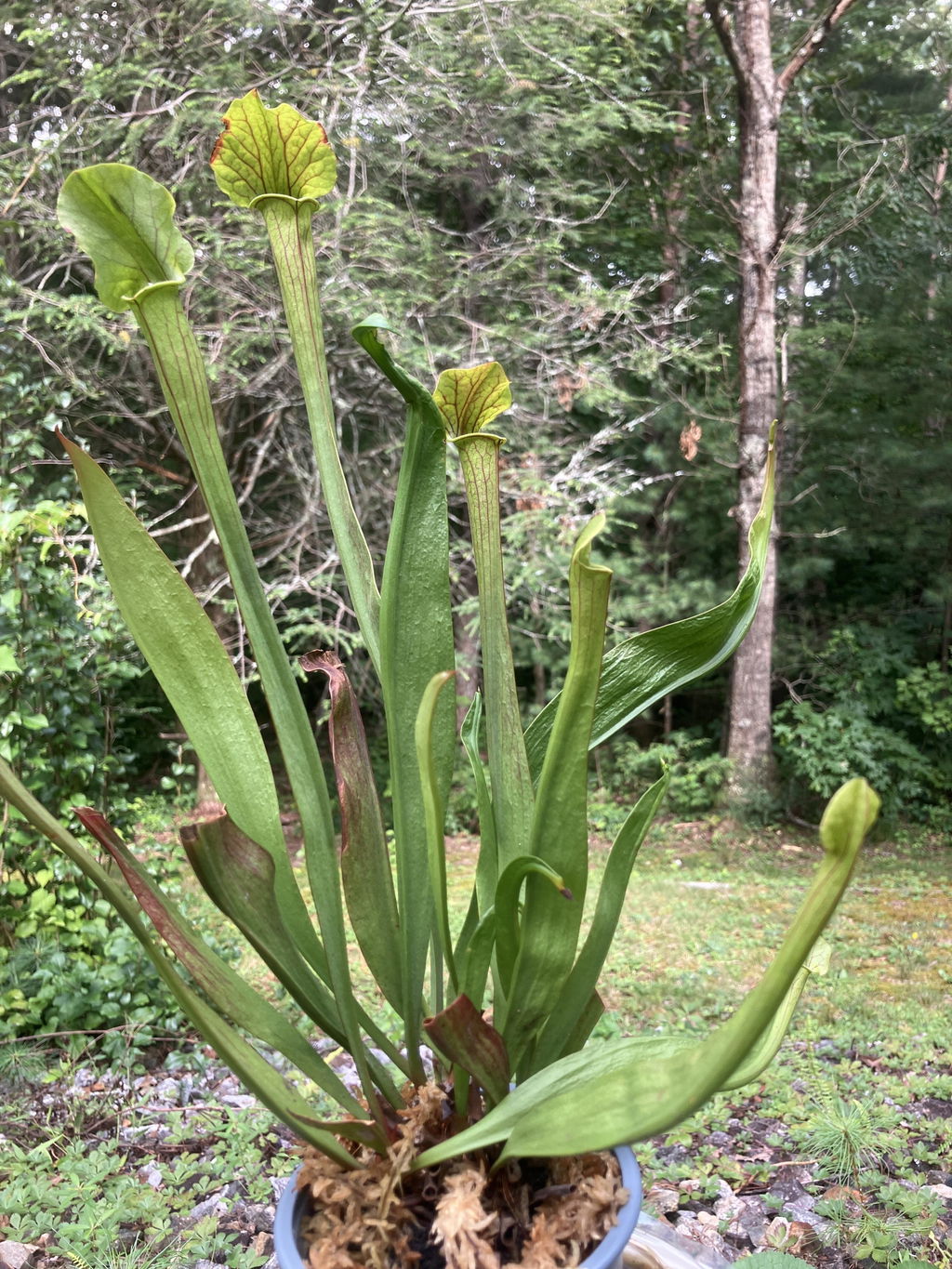
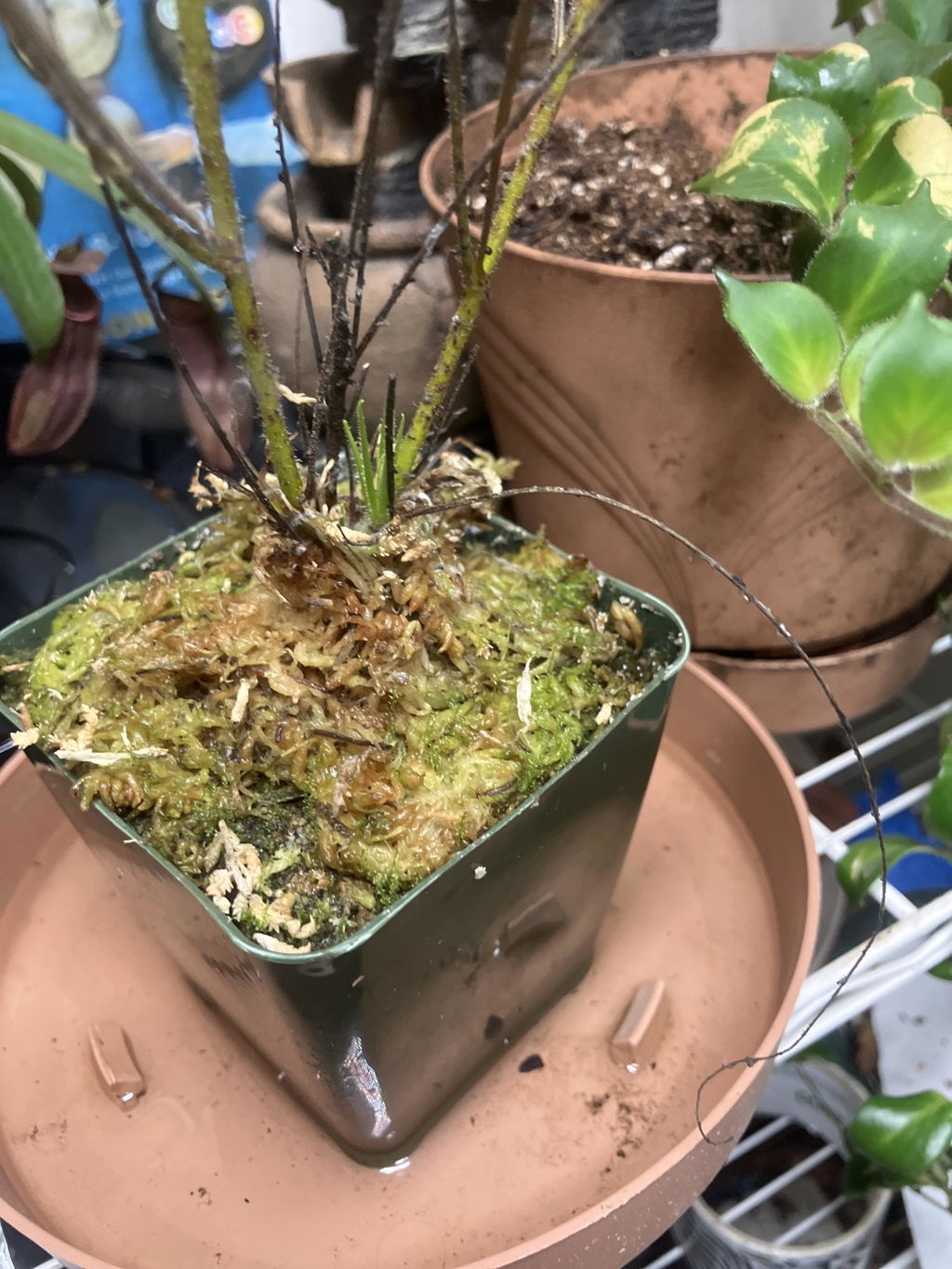
Plant arrived healthy with two large growth points. There is already a third growth point emerging!
Sign up for our newsletter!
Sort by:
379 products
379 products


Nepenthes spathulata x spectabilis is a proven winner! At maturity, they can have pitchers about a foot tall with wide, flared peristomes and red and green mottling! If you are looking for a plant that will be a showstopper but also easy to grow, this is the perfect plant!
This plant is from an assortment of clones from tissue culture from Borneo Exotics, BE-3314.
Growth Habit: Nepenthes are vines and start small; as the plant grows, each leaf will be larger than the last, as will the pitchers that develop from these leaves. It is normal for the pitchers and leaves to die back over time. As leaves and pitchers die back, the plant will continue to vine, turning brown and woody along the stem. Over time, these form large, sprawling vines that can be hung in baskets or trellised upright in large pots. Nepenthes have thin, black roots, and not many of them.
Sun: Nepenthes should be grown on a sunny windowsill where the plant receives direct light for at least four hours daily. Grow in a cooled greenhouse in full sun, but we recommend 30% shade cloth overhead in summer. Grow in a terrarium or shelf under grow lights for the best color and pitcher formation. When grown under lights, lights should be on a 10-12 hour day length, and the plants can be grown six to ten inches from the light, depending on the strength of the light. Poor pitcher formation is usually a sign of not enough light.
Water & Humidity: Water frequently with distilled, reverse osmosis, or rainwater. Do not let the pots sit in water for long periods. You can water from the bottom, fill trays with water, and let the plant dry out for a few days before watering again. Be careful not to dry the plants out completely. Watering overhead occasionally is also beneficial for the plants. Nepenthes appreciate humidity of at least 60% but can do very well in household conditions without increased humidity if watered regularly. Any added humidity will be enjoyed by your plant! Too little humidity is the second most likely cause of poor pitcher formation.
Temperature: Daytime temperatures should be in the 70s-80s, with a 10-20 degree drop in night temperatures. Never expose your plants to temperatures below 40 degrees or above 90 degrees, as this can damage or kill them. Nepenthes do best indoors and should not be grown outdoors in most areas unless you have very mild temperatures.
Dormancy: Nepenthes do not have a dormancy as they are tropical plants, but they can slow down growth in winter when photo periods shorten.
Fertilizer: Apply diluted Maxsea fertilizer once or twice a month to the leaves and inside the pitchers. Slow-release osmocote pellets can be added to the pitchers along with a bit of distilled water. Small pitchers may burn back upon feeding, but this will still greatly benefit the plant with nutrients. Small insects can also be fed to pitchers.
Soil & Repotting: Nepenthes should be grown in a mix of long-fibered New Zealand sphagnum moss, orchid bark, pumice, and perlite. We have all of our custom Nepenthes soil blends available to add to your order, but you do not need to repot your plant for at least a year after receiving it from us. Nepenthes appreciate frequent repotting every three years and only move to a slightly bigger pot.
More Information: For more information on repotting, pests, growing habits, and more, check out our FAQ page or our YouTube channel!


Nepenthes spathulata is a beautiful species! Mature plants grow green pitchers almost a foot tall! The peristome is wide and dark purple, topping the chartreuse-green pitchers. This species is renowned for both its beauty and ease of growth! It is an easy and vigorous plant, great for the beginner!
These plants are from Borneo Exotics, BE-3175, and are a select clone from tissue culture.
Sun: Nepenthes should be grown on a sunny windowsill where the plant receives direct light for at least four hours daily. Grow in a cooled greenhouse in full sun, but we recommend 30% shade cloth overhead in summer. Grow in a terrarium or shelf under grow lights for the best color and pitcher formation. When grown under lights, lights should be on a 10-12 hour day length, and the plants can be grown six to ten inches from the light, depending on the strength of the light. Poor pitcher formation is usually a sign of not enough light.
Water & Humidity: Water frequently with distilled, reverse osmosis, or rainwater. Do not let the pots sit in water for long periods. You can water from the bottom, fill trays with water, and let the plant dry out for a few days before watering again. Be careful not to dry the plants out completely. Watering overhead occasionally is also beneficial for the plants. Nepenthes appreciate humidity of at least 60% but can do very well in household conditions without increased humidity if watered regularly. Any added humidity will be enjoyed by your plant! Too little humidity is the second most likely cause of poor pitcher formation.
Temperature: Daytime temperatures should be in the 70s-80s, with a 10-20 degree drop in night temperatures. Never expose your plants to temperatures below 40 degrees or above 90 degrees, as this can damage or kill them. Nepenthes do best indoors and should not be grown outdoors in most areas unless you have very mild temperatures.
Dormancy: Nepenthes do not have a dormancy as they are tropical plants, but they can slow down growth in winter when photo periods shorten.
Fertilizer: Apply diluted Maxsea fertilizer once or twice a month to the leaves and inside the pitchers. Slow-release osmocote pellets can be added to the pitchers along with a bit of distilled water. Small pitchers may burn back upon feeding, but this will still greatly benefit the plant with nutrients. Small insects can also be fed to pitchers.
Soil & Repotting: Nepenthes should be grown in a mix of long-fibered New Zealand sphagnum moss, orchid bark, pumice, and perlite. We have all of our custom Nepenthes soil blends available to add to your order, but you do not need to repot your plant for at least a year after receiving it from us. Nepenthes appreciate frequent repotting every three years and only move to a slightly bigger pot.
More Information: For more information on repotting, pests, growing habits, and more, check out our FAQ page or our YouTube channel!


One of the best of the spectabilis, the plants from Sibuyatan are a little more beautiful than some of the others. It is also extremely prolific and makes lots of pitchers! Each pitcher is speckled, limey green, and deep red! It can be a compact grower, so it makes an excellent houseplant!
These are from a random selection of clones in tissue culture from Borneo Exotics, BE-3177. These plants can have splotches of red on the leaves.
Care Instructions
Growth Habit: Nepenthes are vines and start small; as the plant grows, each leaf will be larger than the last, as will the pitchers that develop from these leaves. It is normal for the pitchers and leaves to die back over time. As leaves and pitchers die back, the plant will continue to vine, turning brown and woody along the stem. Over time, these form large, sprawling vines that can be hung in baskets or trellised upright in large pots. Nepenthes have thin, black roots, and not many of them.
Sun: Nepenthes should be grown on a sunny windowsill where the plant receives direct light for at least four hours daily. Grow in a cooled greenhouse in full sun, but we recommend 30% shade cloth overhead in summer. Grow in a terrarium or shelf under grow lights for the best color and pitcher formation. When grown under lights, lights should be on a 10-12 hour day length, and the plants can be grown six to ten inches from the light, depending on the strength of the light. Poor pitcher formation is usually a sign of not enough light.
Water & Humidity: Water frequently with distilled, reverse osmosis, or rainwater. Do not let the pots sit in water for long periods. You can water from the bottom, fill trays with water, and let the plant dry out for a few days before watering again. Be careful not to dry the plants out completely. Watering overhead occasionally is also beneficial for the plants. Nepenthes appreciate humidity of at least 60% but can do very well in household conditions without increased humidity if watered regularly. Any added humidity will be enjoyed by your plant! Too little humidity is the second most likely cause of poor pitcher formation.
Temperature: Daytime temperatures should be in the 70s-80s, with a 10-20 degree drop in night temperatures. Never expose your plants to temperatures below 40 degrees or above 90 degrees, as this can damage or kill them. Nepenthes do best indoors and should not be grown outdoors in most areas unless you have very mild temperatures.
Dormancy: Nepenthes do not have a dormancy as they are tropical plants, but they can slow down growth in winter when photo periods shorten.
Fertilizer: Apply diluted Maxsea fertilizer once or twice a month to the leaves and inside the pitchers. Slow-release osmocote pellets can be added to the pitchers along with a bit of distilled water. Small pitchers may burn back upon feeding, but this will still greatly benefit the plant with nutrients. Small insects can also be fed to pitchers.
Soil & Repotting: Nepenthes should be grown in a mix of long-fibered New Zealand sphagnum moss, orchid bark, pumice, and perlite. We have all of our custom Nepenthes soil blends available to add to your order, but you do not need to repot your plant for at least a year after receiving it from us. Nepenthes appreciate frequent repotting every three years and only move to a slightly bigger pot.
More Information: For more information on repotting, pests, growing habits, and more, check out our FAQ page or our YouTube channel!


Growth Habit: Nepenthes are vines and start small; as the plant grows, each leaf will be larger than the last, as will the pitchers that develop from these leaves. It is normal for the pitchers and leaves to die back over time. As leaves and pitchers die back, the plant will continue to vine, turning brown and woody along the stem. Over time, these form large, sprawling vines that can be hung in baskets or trellised upright in large pots. Nepenthes have thin, black roots, and not many of them.
Sun: Nepenthes should be grown on a sunny windowsill where the plant receives direct light for at least four hours daily. Grow in a cooled greenhouse in full sun, but we recommend 30% shade cloth overhead in summer. Grow in a terrarium or shelf under grow lights for the best color and pitcher formation. When grown under lights, lights should be on a 10-12 hour day length, and the plants can be grown six to ten inches from the light, depending on the strength of the light. Poor pitcher formation is usually a sign of not enough light.
Water & Humidity: Water frequently with distilled, reverse osmosis, or rainwater. Do not let the pots sit in water for long periods. You can water from the bottom, fill trays with water, and let the plant dry out for a few days before watering again. Be careful not to dry the plants out completely. Watering overhead occasionally is also beneficial for the plants. Nepenthes appreciate humidity of at least 60% but can do very well in household conditions without increased humidity if watered regularly. Any added humidity will be enjoyed by your plant! Too little humidity is the second most likely cause of poor pitcher formation.
Temperature: Daytime temperatures should be in the 70s-80s, with a 10-20 degree drop in night temperatures. Never expose your plants to temperatures below 40 degrees or above 90 degrees, as this can damage or kill them. Nepenthes do best indoors and should not be grown outdoors in most areas unless you have very mild temperatures.
Dormancy: Nepenthes do not have a dormancy as they are tropical plants, but they can slow down growth in winter when photo periods shorten.
Fertilizer: Apply diluted Maxsea fertilizer once or twice a month to the leaves and inside the pitchers. Slow-release osmocote pellets can be added to the pitchers along with a bit of distilled water. Small pitchers may burn back upon feeding, but this will still greatly benefit the plant with nutrients. Small insects can also be fed to pitchers.
Soil & Repotting: Nepenthes should be grown in a mix of long-fibered New Zealand sphagnum moss, orchid bark, pumice, and perlite. We have all of our custom Nepenthes soil blends available to add to your order, but you do not need to repot your plant for at least a year after receiving it from us. Nepenthes appreciate frequent repotting every three years and only move to a slightly bigger pot.
More Information: For more information on repotting, pests, growing habits, and more, check out our FAQ page or our YouTube channel!


Nepenthes stenophylla is a completely distinctive Bornean species has tubular and hirsute, red-striped pitchers. The clone offered here was selected from among many for its vigour, as well as representing the typical form of the species.
These are from a single, select clone in tissue culture from Borneo Exotics, BE-3905.
Care Instructions
Growth Habit: Nepenthes are vines and start small; as the plant grows, each leaf will be larger than the last, as will the pitchers that develop from these leaves. It is normal for the pitchers and leaves to die back over time. As leaves and pitchers die back, the plant will continue to vine, turning brown and woody along the stem. Over time, these form large, sprawling vines that can be hung in baskets or trellised upright in large pots. Nepenthes have thin, black roots, and not many of them.
Sun: Nepenthes should be grown on a sunny windowsill where the plant receives direct light for at least four hours daily. Grow in a cooled greenhouse in full sun, but we recommend 30% shade cloth overhead in summer. Grow in a terrarium or shelf under grow lights for the best color and pitcher formation. When grown under lights, lights should be on a 10-12 hour day length, and the plants can be grown six to ten inches from the light, depending on the strength of the light. Poor pitcher formation is usually a sign of not enough light.
Water & Humidity: Water frequently with distilled, reverse osmosis, or rainwater. Do not let the pots sit in water for long periods. You can water from the bottom, fill trays with water, and let the plant dry out for a few days before watering again. Be careful not to dry the plants out completely. Watering overhead occasionally is also beneficial for the plants. Nepenthes appreciate humidity of at least 60% but can do very well in household conditions without increased humidity if watered regularly. Any added humidity will be enjoyed by your plant! Too little humidity is the second most likely cause of poor pitcher formation.
Temperature: Daytime temperatures should be in the 70s-80s, with a 10-20 degree drop in night temperatures. Never expose your plants to temperatures below 40 degrees or above 90 degrees, as this can damage or kill them. Nepenthes do best indoors and should not be grown outdoors in most areas unless you have very mild temperatures.
Dormancy: Nepenthes do not have a dormancy as they are tropical plants, but they can slow down growth in winter when photo periods shorten.
Fertilizer: Apply diluted Maxsea fertilizer once or twice a month to the leaves and inside the pitchers. Slow-release osmocote pellets can be added to the pitchers along with a bit of distilled water. Small pitchers may burn back upon feeding, but this will still greatly benefit the plant with nutrients. Small insects can also be fed to pitchers.
Soil & Repotting: Nepenthes should be grown in a mix of long-fibered New Zealand sphagnum moss, orchid bark, pumice, and perlite. We have all of our custom Nepenthes soil blends available to add to your order, but you do not need to repot your plant for at least a year after receiving it from us. Nepenthes appreciate frequent repotting every three years and only move to a slightly bigger pot.
More Information: For more information on repotting, pests, growing habits, and more, check out our FAQ page or our YouTube channel!


These two species, Nepenthes talangensis and Nepenthes glandulifera, were made to be crossed with each other! Both of them have tubby, charismatic pitchers that taper down to a little point at the base of the pitcher. The pitchers of this hybrid are incredibly talented elegant, tapering like wine glasses and with lovely, striped peristomes. These are nice compact plants as they mature; ideal for the terrarium or windowsill.
These are from a select clone in tissue culture from Borneo Exotics, BE-3665.
Growth Habit: Nepenthes are vines and start small; as the plant grows, each leaf will be larger than the last, as will the pitchers that develop from these leaves. It is normal for the pitchers and leaves to die back over time. As leaves and pitchers die back, the plant will continue to vine, turning brown and woody along the stem. Over time, these form large, sprawling vines that can be hung in baskets or trellised upright in large pots. Nepenthes have thin, black roots, and not many of them.
Sun: Nepenthes should be grown on a sunny windowsill where the plant receives direct light for at least four hours daily. Grow in a cooled greenhouse in full sun, but we recommend 30% shade cloth overhead in summer. Grow in a terrarium or shelf under grow lights for the best color and pitcher formation. When grown under lights, lights should be on a 10-12 hour day length, and the plants can be grown six to ten inches from the light, depending on the strength of the light. Poor pitcher formation is usually a sign of not enough light.
Water & Humidity: Water frequently with distilled, reverse osmosis, or rainwater. Do not let the pots sit in water for long periods. You can water from the bottom, fill trays with water, and let the plant dry out for a few days before watering again. Be careful not to dry the plants out completely. Watering overhead occasionally is also beneficial for the plants. Nepenthes appreciate humidity of at least 60% but can do very well in household conditions without increased humidity if watered regularly. Any added humidity will be enjoyed by your plant! Too little humidity is the second most likely cause of poor pitcher formation.
Temperature: Daytime temperatures should be in the 70s-80s, with a 10-20 degree drop in night temperatures. Never expose your plants to temperatures below 40 degrees or above 90 degrees, as this can damage or kill them. Nepenthes do best indoors and should not be grown outdoors in most areas unless you have very mild temperatures.
Dormancy: Nepenthes do not have a dormancy as they are tropical plants, but they can slow down growth in winter when photo periods shorten.
Fertilizer: Apply diluted Maxsea fertilizer once or twice a month to the leaves and inside the pitchers. Slow-release osmocote pellets can be added to the pitchers along with a bit of distilled water. Small pitchers may burn back upon feeding, but this will still greatly benefit the plant with nutrients. Small insects can also be fed to pitchers.
Soil & Repotting: Nepenthes should be grown in a mix of long-fibered New Zealand sphagnum moss, orchid bark, pumice, and perlite. We have all of our custom Nepenthes soil blends available to add to your order, but you do not need to repot your plant for at least a year after receiving it from us. Nepenthes appreciate frequent repotting every three years and only move to a slightly bigger pot.
More Information: For more information on repotting, pests, growing habits, and more, check out our FAQ page or our YouTube channel!


Nepenthes truncata (D) “Red Flush” x edwardsiana “giant” CalCarn TC Potted
Nepenthes truncata (D) “Red Flush” x edwardsiana “giant” CalCarn TC Potted
We are so excited to be offering our very own grex of Nepenthes truncata x edwardsiana. This cross has already been done so we know that it is a proven winner! We have redone this cross using two of the most exceptional clones available.
The Truncata ‘D’ is a well known beauty with reddish pitchers and our edwardsiana ‘giant’ is probably the best clone in cultivation. It has perfect big peristome ridges and consistently makes giant pitchers well over a foot tall! This is a must have cross for any Nepenthes collection!
The first photo is of the parents used in this cross, the second photo is Nepenthes edwardsiana “Giant” from CalCarn collection and the third photo is Nepenthes truncata “D Red Flush” from Carnivero.
These plants are from our tissue culture lab and there are multiple clones.
Care Instructions
Growth Habit: Nepenthes are vines and start small; as the plant grows, each leaf will be larger than the last, as will the pitchers that develop from these leaves. It is normal for the pitchers and leaves to die back over time. As leaves and pitchers die back, the plant will continue to vine, turning brown and woody along the stem. Over time, these form large, sprawling vines that can be hung in baskets or trellised upright in large pots. Nepenthes have thin, black roots, and not many of them.
Sun: Nepenthes should be grown on a sunny windowsill where the plant receives direct light for at least four hours daily. Grow in a cooled greenhouse in full sun, but we recommend 30% shade cloth overhead in summer. Grow in a terrarium or shelf under grow lights for the best color and pitcher formation. When grown under lights, lights should be on a 10-12 hour day length, and the plants can be grown six to ten inches from the light, depending on the strength of the light. Poor pitcher formation is usually a sign of not enough light.
Water & Humidity: Water frequently with distilled, reverse osmosis, or rainwater. Do not let the pots sit in water for long periods. You can water from the bottom, fill trays with water, and let the plant dry out for a few days before watering again. Be careful not to dry the plants out completely. Watering overhead occasionally is also beneficial for the plants. Nepenthes appreciate humidity of at least 60% but can do very well in household conditions without increased humidity if watered regularly. Any added humidity will be enjoyed by your plant! Too little humidity is the second most likely cause of poor pitcher formation.
Temperature: Daytime temperatures should be in the 70s-80s, with a 10-20 degree drop in night temperatures. Never expose your plants to temperatures below 40 degrees or above 90 degrees, as this can damage or kill them. Nepenthes do best indoors and should not be grown outdoors in most areas unless you have very mild temperatures.
Dormancy: Nepenthes do not have a dormancy as they are tropical plants, but they can slow down growth in winter when photo periods shorten.
Fertilizer: Apply diluted Maxsea fertilizer once or twice a month to the leaves and inside the pitchers. Slow-release osmocote pellets can be added to the pitchers along with a bit of distilled water. Small pitchers may burn back upon feeding, but this will still greatly benefit the plant with nutrients. Small insects can also be fed to pitchers.
Soil & Repotting: Nepenthes should be grown in a mix of long-fibered New Zealand sphagnum moss, orchid bark, pumice, and perlite. We have all of our custom Nepenthes soil blends available to add to your order, but you do not need to repot your plant for at least a year after receiving it from us. Nepenthes appreciate frequent repotting every three years and only move to a slightly bigger pot.
More Information: For more information on repotting, pests, growing habits, and more, check out our FAQ page or our YouTube channel!

We are so excited to be offering our very own grex of Nepenthes truncata x edwardsiana. This cross has already been done so we know that it is a proven winner! We have redone this cross using two of the most exceptional clones available.
The Truncata ‘D’ is a well known beauty with reddish pitchers and our edwardsiana ‘giant’ is probably the best clone in cultivation. It has perfect big peristome ridges and consistently makes giant pitchers well over a foot tall! This is a must have cross for any Nepenthes collection!
The first photo is of a small K8, second is of the parents used in this cross, the thits photo is Nepenthes edwardsiana “Giant” from CalCarn collection and the fourth photo is Nepenthes truncata “D Red Flush” from Carnivero.
These plants are from our tissue culture lab and this is a select clone, K8, that is extra vigorous.
Care Instructions
Growth Habit: Nepenthes are vines and start small; as the plant grows, each leaf will be larger than the last, as will the pitchers that develop from these leaves. It is normal for the pitchers and leaves to die back over time. As leaves and pitchers die back, the plant will continue to vine, turning brown and woody along the stem. Over time, these form large, sprawling vines that can be hung in baskets or trellised upright in large pots. Nepenthes have thin, black roots, and not many of them.
Sun: Nepenthes should be grown on a sunny windowsill where the plant receives direct light for at least four hours daily. Grow in a cooled greenhouse in full sun, but we recommend 30% shade cloth overhead in summer. Grow in a terrarium or shelf under grow lights for the best color and pitcher formation. When grown under lights, lights should be on a 10-12 hour day length, and the plants can be grown six to ten inches from the light, depending on the strength of the light. Poor pitcher formation is usually a sign of not enough light.
Water & Humidity: Water frequently with distilled, reverse osmosis, or rainwater. Do not let the pots sit in water for long periods. You can water from the bottom, fill trays with water, and let the plant dry out for a few days before watering again. Be careful not to dry the plants out completely. Watering overhead occasionally is also beneficial for the plants. Nepenthes appreciate humidity of at least 60% but can do very well in household conditions without increased humidity if watered regularly. Any added humidity will be enjoyed by your plant! Too little humidity is the second most likely cause of poor pitcher formation.
Temperature: Daytime temperatures should be in the 70s-80s, with a 10-20 degree drop in night temperatures. Never expose your plants to temperatures below 40 degrees or above 90 degrees, as this can damage or kill them. Nepenthes do best indoors and should not be grown outdoors in most areas unless you have very mild temperatures.
Dormancy: Nepenthes do not have a dormancy as they are tropical plants, but they can slow down growth in winter when photo periods shorten.
Fertilizer: Apply diluted Maxsea fertilizer once or twice a month to the leaves and inside the pitchers. Slow-release osmocote pellets can be added to the pitchers along with a bit of distilled water. Small pitchers may burn back upon feeding, but this will still greatly benefit the plant with nutrients. Small insects can also be fed to pitchers.
Soil & Repotting: Nepenthes should be grown in a mix of long-fibered New Zealand sphagnum moss, orchid bark, pumice, and perlite. We have all of our custom Nepenthes soil blends available to add to your order, but you do not need to repot your plant for at least a year after receiving it from us. Nepenthes appreciate frequent repotting every three years and only move to a slightly bigger pot.
More Information: For more information on repotting, pests, growing habits, and more, check out our FAQ page or our YouTube channel!


Growth Habit: Nepenthes are vines and start small; as the plant grows, each leaf will be larger than the last, as will the pitchers that develop from these leaves. It is normal for the pitchers and leaves to die back over time. As leaves and pitchers die back, the plant will continue to vine, turning brown and woody along the stem. Over time, these form large, sprawling vines that can be hung in baskets or trellised upright in large pots. Nepenthes have thin, black roots, and not many of them.
Sun: Nepenthes should be grown on a sunny windowsill where the plant receives direct light for at least four hours daily. Grow in a cooled greenhouse in full sun, but we recommend 30% shade cloth overhead in summer. Grow in a terrarium or shelf under grow lights for the best color and pitcher formation. When grown under lights, lights should be on a 10-12 hour day length, and the plants can be grown six to ten inches from the light, depending on the strength of the light. Poor pitcher formation is usually a sign of not enough light.
Water & Humidity: Water frequently with distilled, reverse osmosis, or rainwater. Do not let the pots sit in water for long periods. You can water from the bottom, fill trays with water, and let the plant dry out for a few days before watering again. Be careful not to dry the plants out completely. Watering overhead occasionally is also beneficial for the plants. Nepenthes appreciate humidity of at least 60% but can do very well in household conditions without increased humidity if watered regularly. Any added humidity will be enjoyed by your plant! Too little humidity is the second most likely cause of poor pitcher formation.
Temperature: Daytime temperatures should be in the 70s-80s, with a 10-20 degree drop in night temperatures. Never expose your plants to temperatures below 40 degrees or above 90 degrees, as this can damage or kill them. Nepenthes do best indoors and should not be grown outdoors in most areas unless you have very mild temperatures.
Dormancy: Nepenthes do not have a dormancy as they are tropical plants, but they can slow down growth in winter when photo periods shorten.
Fertilizer: Apply diluted Maxsea fertilizer once or twice a month to the leaves and inside the pitchers. Slow-release osmocote pellets can be added to the pitchers along with a bit of distilled water. Small pitchers may burn back upon feeding, but this will still greatly benefit the plant with nutrients. Small insects can also be fed to pitchers.
Soil & Repotting: Nepenthes should be grown in a mix of long-fibered New Zealand sphagnum moss, orchid bark, pumice, and perlite. We have all of our custom Nepenthes soil blends available to add to your order, but you do not need to repot your plant for at least a year after receiving it from us. Nepenthes appreciate frequent repotting every three years and only move to a slightly bigger pot.
More Information: For more information on repotting, pests, growing habits, and more, check out our FAQ page or our YouTube channel!


Nepenthes ventricosa is possibly the easiest highland species to grow! This is the red form of Nepenthes ventricosa and it's pitchers have a lovely red peristome. As they grow it's tubby pitchers may be constricted at the waist, turning pale green to red-infused with compact stems. This is the number one choice to try on a windowsill or tank, very easy, vigorous and attractive.
These plants are from tissue culture and are a single clone.
Care Instructions
Growth Habit: Nepenthes are vines and start small; as the plant grows, each leaf will be larger than the last, as will the pitchers that develop from these leaves. It is normal for the pitchers and leaves to die back over time. As leaves and pitchers die back, the plant will continue to vine, turning brown and woody along the stem. Over time, these form large, sprawling vines that can be hung in baskets or trellised upright in large pots. Nepenthes have thin, black roots, and not many of them.
Sun: Nepenthes should be grown on a sunny windowsill where the plant receives direct light for at least four hours daily. Grow in a cooled greenhouse in full sun, but we recommend 30% shade cloth overhead in summer. Grow in a terrarium or shelf under grow lights for the best color and pitcher formation. When grown under lights, lights should be on a 10-12 hour day length, and the plants can be grown six to ten inches from the light, depending on the strength of the light. Poor pitcher formation is usually a sign of not enough light.
Water & Humidity: Water frequently with distilled, reverse osmosis, or rainwater. Do not let the pots sit in water for long periods. You can water from the bottom, fill trays with water, and let the plant dry out for a few days before watering again. Be careful not to dry the plants out completely. Watering overhead occasionally is also beneficial for the plants. Nepenthes appreciate humidity of at least 60% but can do very well in household conditions without increased humidity if watered regularly. Any added humidity will be enjoyed by your plant! Too little humidity is the second most likely cause of poor pitcher formation.
Temperature: Daytime temperatures should be in the 70s-80s, with a 10-20 degree drop in night temperatures. Never expose your plants to temperatures below 40 degrees or above 90 degrees, as this can damage or kill them. Nepenthes do best indoors and should not be grown outdoors in most areas unless you have very mild temperatures.
Dormancy: Nepenthes do not have a dormancy as they are tropical plants, but they can slow down growth in winter when photo periods shorten.
Fertilizer: Apply diluted Maxsea fertilizer once or twice a month to the leaves and inside the pitchers. Slow-release osmocote pellets can be added to the pitchers along with a bit of distilled water. Small pitchers may burn back upon feeding, but this will still greatly benefit the plant with nutrients. Small insects can also be fed to pitchers.
Soil & Repotting: Nepenthes should be grown in a mix of long-fibered New Zealand sphagnum moss, orchid bark, pumice, and perlite. We have all of our custom Nepenthes soil blends available to add to your order, but you do not need to repot your plant for at least a year after receiving it from us. Nepenthes appreciate frequent repotting every three years and only move to a slightly bigger pot.
More Information: For more information on repotting, pests, growing habits, and more, check out our FAQ page or our YouTube channel!


Nepenthes Ventricosa x robcantleyi has pitchers that are huge and striking. As a big bonus, this item is a fast and easy grower! One of our favorite things about this plant is that the pitchers can get large and showy quite quickly. Damon recommends this for beginners who are hoping to get large pitchers!
These are Borneo Exotics tissue culture plants from assorted clones, BE-3923. Some of the leaves on this hybrid have a splotchy coloration, this is normal.
Care Instructions
Growth Habit: Nepenthes are vines and start small; as the plant grows, each leaf will be larger than the last, as will the pitchers that develop from these leaves. It is normal for the pitchers and leaves to die back over time. As leaves and pitchers die back, the plant will continue to vine, turning brown and woody along the stem. Over time, these form large, sprawling vines that can be hung in baskets or trellised upright in large pots. Nepenthes have thin, black roots, and not many of them.
Sun: Nepenthes should be grown on a sunny windowsill where the plant receives direct light for at least four hours daily. Grow in a cooled greenhouse in full sun, but we recommend 30% shade cloth overhead in summer. Grow in a terrarium or shelf under grow lights for the best color and pitcher formation. When grown under lights, lights should be on a 10-12 hour day length, and the plants can be grown six to ten inches from the light, depending on the strength of the light. Poor pitcher formation is usually a sign of not enough light.
Water & Humidity: Water frequently with distilled, reverse osmosis, or rainwater. Do not let the pots sit in water for long periods. You can water from the bottom, fill trays with water, and let the plant dry out for a few days before watering again. Be careful not to dry the plants out completely. Watering overhead occasionally is also beneficial for the plants. Nepenthes appreciate humidity of at least 60% but can do very well in household conditions without increased humidity if watered regularly. Any added humidity will be enjoyed by your plant! Too little humidity is the second most likely cause of poor pitcher formation.
Temperature: Daytime temperatures should be in the 70s-80s, with a 10-20 degree drop in night temperatures. Never expose your plants to temperatures below 40 degrees or above 90 degrees, as this can damage or kill them. Nepenthes do best indoors and should not be grown outdoors in most areas unless you have very mild temperatures.
Dormancy: Nepenthes do not have a dormancy as they are tropical plants, but they can slow down growth in winter when photo periods shorten.
Fertilizer: Apply diluted Maxsea fertilizer once or twice a month to the leaves and inside the pitchers. Slow-release osmocote pellets can be added to the pitchers along with a bit of distilled water. Small pitchers may burn back upon feeding, but this will still greatly benefit the plant with nutrients. Small insects can also be fed to pitchers.
Soil & Repotting: Nepenthes should be grown in a mix of long-fibered New Zealand sphagnum moss, orchid bark, pumice, and perlite. We have all of our custom Nepenthes soil blends available to add to your order, but you do not need to repot your plant for at least a year after receiving it from us. Nepenthes appreciate frequent repotting every three years and only move to a slightly bigger pot.
More Information: For more information on repotting, pests, growing habits, and more, check out our FAQ page or our YouTube channel!


Nepenthes lowii x ventricosa “red” has gourd-shaped pitchers, deep red, and finely toothed peristomes. This has the fantastic shape of lowii with the ease of ventricosa! Plants from this parentage are always fantastic: vigorous, bright red pitchers and unbelievably fun to grow!
Care Instructions
Growth Habit: Nepenthes are vines and start small; as the plant grows, each leaf will be larger than the last, as will the pitchers that develop from these leaves. It is normal for the pitchers and leaves to die back over time. As leaves and pitchers die back, the plant will continue to vine, turning brown and woody along the stem. Over time, these form large, sprawling vines that can be hung in baskets or trellised upright in large pots. Nepenthes have thin, black roots, and not many of them.
Sun: Nepenthes should be grown on a sunny windowsill where the plant receives direct light for at least four hours daily. Grow in a cooled greenhouse in full sun, but we recommend 30% shade cloth overhead in summer. Grow in a terrarium or shelf under grow lights for the best color and pitcher formation. When grown under lights, lights should be on a 10-12 hour day length, and the plants can be grown six to ten inches from the light, depending on the strength of the light. Poor pitcher formation is usually a sign of not enough light.
Water & Humidity: Water frequently with distilled, reverse osmosis, or rainwater. Do not let the pots sit in water for long periods. You can water from the bottom, fill trays with water, and let the plant dry out for a few days before watering again. Be careful not to dry the plants out completely. Watering overhead occasionally is also beneficial for the plants. Nepenthes appreciate humidity of at least 60% but can do very well in household conditions without increased humidity if watered regularly. Any added humidity will be enjoyed by your plant! Too little humidity is the second most likely cause of poor pitcher formation.
Temperature: Daytime temperatures should be in the 70s-80s, with a 10-20 degree drop in night temperatures. Never expose your plants to temperatures below 40 degrees or above 90 degrees, as this can damage or kill them. Nepenthes do best indoors and should not be grown outdoors in most areas unless you have very mild temperatures.
Dormancy: Nepenthes do not have a dormancy as they are tropical plants, but they can slow down growth in winter when photo periods shorten.
Fertilizer: Apply diluted Maxsea fertilizer once or twice a month to the leaves and inside the pitchers. Slow-release osmocote pellets can be added to the pitchers along with a bit of distilled water. Small pitchers may burn back upon feeding, but this will still greatly benefit the plant with nutrients. Small insects can also be fed to pitchers.
Soil & Repotting: Nepenthes should be grown in a mix of long-fibered New Zealand sphagnum moss, orchid bark, pumice, and perlite. We have all of our custom Nepenthes soil blends available to add to your order, but you do not need to repot your plant for at least a year after receiving it from us. Nepenthes appreciate frequent repotting every three years and only move to a slightly bigger pot.
More Information: For more information on repotting, pests, growing habits, and more, check out our FAQ page or our YouTube channel!


Nepenthes vogelii grows epiphytically in the highland rainforest of Borneo where it is endemic. It is probably most closely related to N. fusca. The lower pitchers are very narrow like spotted test tubes, but when it produces upper pitchers, they are funnel-shaped with a charming little bulge in the throat. An easy and wonderful plant to grow!
These are from selected clones in tissue culture from Borneo Exotics, BE-3256.
Care Instructions
Growth Habit: Nepenthes are vines and start small; as the plant grows, each leaf will be larger than the last, as will the pitchers that develop from these leaves. It is normal for the pitchers and leaves to die back over time. As leaves and pitchers die back, the plant will continue to vine, turning brown and woody along the stem. Over time, these form large, sprawling vines that can be hung in baskets or trellised upright in large pots. Nepenthes have thin, black roots, and not many of them.
Sun: Nepenthes should be grown on a sunny windowsill where the plant receives direct light for at least four hours daily. Grow in a cooled greenhouse in full sun, but we recommend 30% shade cloth overhead in summer. Grow in a terrarium or shelf under grow lights for the best color and pitcher formation. When grown under lights, lights should be on a 10-12 hour day length, and the plants can be grown six to ten inches from the light, depending on the strength of the light. Poor pitcher formation is usually a sign of not enough light.
Water & Humidity: Water frequently with distilled, reverse osmosis, or rainwater. Do not let the pots sit in water for long periods. You can water from the bottom, fill trays with water, and let the plant dry out for a few days before watering again. Be careful not to dry the plants out completely. Watering overhead occasionally is also beneficial for the plants. Nepenthes appreciate humidity of at least 60% but can do very well in household conditions without increased humidity if watered regularly. Any added humidity will be enjoyed by your plant! Too little humidity is the second most likely cause of poor pitcher formation.
Temperature: Daytime temperatures should be in the 70s-80s, with a 10-20 degree drop in night temperatures. Never expose your plants to temperatures below 40 degrees or above 90 degrees, as this can damage or kill them. Nepenthes do best indoors and should not be grown outdoors in most areas unless you have very mild temperatures.
Dormancy: Nepenthes do not have a dormancy as they are tropical plants, but they can slow down growth in winter when photo periods shorten.
Fertilizer: Apply diluted Maxsea fertilizer once or twice a month to the leaves and inside the pitchers. Slow-release osmocote pellets can be added to the pitchers along with a bit of distilled water. Small pitchers may burn back upon feeding, but this will still greatly benefit the plant with nutrients. Small insects can also be fed to pitchers.
Soil & Repotting: Nepenthes should be grown in a mix of long-fibered New Zealand sphagnum moss, orchid bark, pumice, and perlite. We have all of our custom Nepenthes soil blends available to add to your order, but you do not need to repot your plant for at least a year after receiving it from us. Nepenthes appreciate frequent repotting every three years and only move to a slightly bigger pot.
More Information: For more information on repotting, pests, growing habits, and more, check out our FAQ page or our YouTube channel!


Nepenthes x ‘Mimi’ is an easy-to-grow and beautiful hybrid!
The scientific name of the cross that gave rise to this great cultivar is Nepenthes ventricosa x (maxima x talangensis). Created in May 2008, for decades it was licensed exclusively to only a few large nurseries for production as a mass-market item in Europe. By popular request, it is available for worldwide distribution!
It was named for the wife of Dr. Rohan Pethiyagoda, who is a leading naturalist and conservationist, as well as a great friend to Borneo Exotics in our home country, Sri Lanka.
It’s s super-fast easy grower and a wonderful beginners plant. It kept pruned, it will produce hugely impressive clusters of pitchers.
These are a single clone from tissue culture, BE-3823.
Care Instructions
Growth Habit: Nepenthes are vines and start small; as the plant grows, each leaf will be larger than the last, as will the pitchers that develop from these leaves. It is normal for the pitchers and leaves to die back over time. As leaves and pitchers die back, the plant will continue to vine, turning brown and woody along the stem. Over time, these form large, sprawling vines that can be hung in baskets or trellised upright in large pots. Nepenthes have thin, black roots, and not many of them.
Sun: Nepenthes should be grown on a sunny windowsill where the plant receives direct light for at least four hours daily. Grow in a cooled greenhouse in full sun, but we recommend 30% shade cloth overhead in summer. Grow in a terrarium or shelf under grow lights for the best color and pitcher formation. When grown under lights, lights should be on a 10-12 hour day length, and the plants can be grown six to ten inches from the light, depending on the strength of the light. Poor pitcher formation is usually a sign of not enough light.
Water & Humidity: Water frequently with distilled, reverse osmosis, or rainwater. Do not let the pots sit in water for long periods. You can water from the bottom, fill trays with water, and let the plant dry out for a few days before watering again. Be careful not to dry the plants out completely. Watering overhead occasionally is also beneficial for the plants. Nepenthes appreciate humidity of at least 60% but can do very well in household conditions without increased humidity if watered regularly. Any added humidity will be enjoyed by your plant! Too little humidity is the second most likely cause of poor pitcher formation.
Temperature: Daytime temperatures should be in the 70s-80s, with a 10-20 degree drop in night temperatures. Never expose your plants to temperatures below 40 degrees or above 90 degrees, as this can damage or kill them. Nepenthes do best indoors and should not be grown outdoors in most areas unless you have very mild temperatures.
Dormancy: Nepenthes do not have a dormancy as they are tropical plants, but they can slow down growth in winter when photo periods shorten.
Fertilizer: Apply diluted Maxsea fertilizer once or twice a month to the leaves and inside the pitchers. Slow-release osmocote pellets can be added to the pitchers along with a bit of distilled water. Small pitchers may burn back upon feeding, but this will still greatly benefit the plant with nutrients. Small insects can also be fed to pitchers.
Soil & Repotting: Nepenthes should be grown in a mix of long-fibered New Zealand sphagnum moss, orchid bark, pumice, and perlite. We have all of our custom Nepenthes soil blends available to add to your order, but you do not need to repot your plant for at least a year after receiving it from us. Nepenthes appreciate frequent repotting every three years and only move to a slightly bigger pot.
More Information: For more information on repotting, pests, growing habits, and more, check out our FAQ page or our YouTube channel!


Nepenthes x ‘St Gaya’ is an interesting hybrid; khasiana x (ventricosa x maxima). This plant will do well indoors, on a sunny windowsill year round but will appreciate heat and humidity as a bonus. One of the fun things about ‘St Gaya’ is the amazing contrast between the outside of the bright red speckled pitchers and the lime green interiors! It also is a vigorous grower and can make tremendously large pitchers quickly. Grown under strong light the leaves will blush a reddish color! This is a perfect beginner plant!
This is a tissue culture plant.
Care Instructions
Growth Habit: Nepenthes are vines and start small; as the plant grows, each leaf will be larger than the last, as will the pitchers that develop from these leaves. It is normal for the pitchers and leaves to die back over time. As leaves and pitchers die back, the plant will continue to vine, turning brown and woody along the stem. Over time, these form large, sprawling vines that can be hung in baskets or trellised upright in large pots. Nepenthes have thin, black roots, and not many of them.
Sun: Nepenthes should be grown on a sunny windowsill where the plant receives direct light for at least four hours daily. Grow in a cooled greenhouse in full sun, but we recommend 30% shade cloth overhead in summer. Grow in a terrarium or shelf under grow lights for the best color and pitcher formation. When grown under lights, lights should be on a 10-12 hour day length, and the plants can be grown six to ten inches from the light, depending on the strength of the light. Poor pitcher formation is usually a sign of not enough light.
Water & Humidity: Water frequently with distilled, reverse osmosis, or rainwater. Do not let the pots sit in water for long periods. You can water from the bottom, fill trays with water, and let the plant dry out for a few days before watering again. Be careful not to dry the plants out completely. Watering overhead occasionally is also beneficial for the plants. Nepenthes appreciate humidity of at least 60% but can do very well in household conditions without increased humidity if watered regularly. Any added humidity will be enjoyed by your plant! Too little humidity is the second most likely cause of poor pitcher formation.
Temperature: Daytime temperatures should be in the 70s-90s, with a 10-20 degree drop in night temperatures. Never expose your plants to temperatures below 40 degrees or above 90 degrees, as this can damage or kill them. Nepenthes do best indoors and should not be grown outdoors in most areas unless you have very mild temperatures.
Dormancy: Nepenthes do not have a dormancy as they are tropical plants, but they can slow down growth in winter when photo periods shorten.
Fertilizer: Apply diluted Maxsea fertilizer once or twice a month to the leaves and inside the pitchers. Slow-release osmocote pellets can be added to the pitchers along with a bit of distilled water. Small pitchers may burn back upon feeding, but this will still greatly benefit the plant with nutrients. Small insects can also be fed to pitchers.
Soil & Repotting: Nepenthes should be grown in a mix of long-fibered New Zealand sphagnum moss, orchid bark, pumice, and perlite. We have all of our custom Nepenthes soil blends available to add to your order, but you do not need to repot your plant for at least a year after receiving it from us. Nepenthes appreciate frequent repotting every three years and only move to a slightly bigger pot.
More Information: For more information on repotting, pests, growing habits, and more, check out our FAQ page or our YouTube channel!


Growth Habit: Nepenthes are vines and start small; as the plant grows, each leaf will be larger than the last, as will the pitchers that develop from these leaves. It is normal for the pitchers and leaves to die back over time. As leaves and pitchers die back, the plant will continue to vine, turning brown and woody along the stem. Over time, these form large, sprawling vines that can be hung in baskets or trellised upright in large pots. Nepenthes have thin, black roots, and not many of them.
Sun: Nepenthes should be grown on a sunny windowsill where the plant receives direct light for at least four hours daily. Grow in a cooled greenhouse in full sun, but we recommend 30% shade cloth overhead in summer. Grow in a terrarium or shelf under grow lights for the best color and pitcher formation. When grown under lights, lights should be on a 10-12 hour day length, and the plants can be grown six to ten inches from the light, depending on the strength of the light. Poor pitcher formation is usually a sign of not enough light.
Water & Humidity: Water frequently with distilled, reverse osmosis, or rainwater. Do not let the pots sit in water for long periods. You can water from the bottom, fill trays with water, and let the plant dry out for a few days before watering again. Be careful not to dry the plants out completely. Watering overhead occasionally is also beneficial for the plants. Nepenthes appreciate humidity of at least 60% but can do very well in household conditions without increased humidity if watered regularly. Any added humidity will be enjoyed by your plant! Too little humidity is the second most likely cause of poor pitcher formation.
Temperature: Daytime temperatures should be in the 70s-80s, with a 10-20 degree drop in night temperatures. Never expose your plants to temperatures below 40 degrees or above 90 degrees, as this can damage or kill them. Nepenthes do best indoors and should not be grown outdoors in most areas unless you have very mild temperatures.
Dormancy: Nepenthes do not have a dormancy as they are tropical plants, but they can slow down growth in winter when photo periods shorten.
Fertilizer: Apply diluted Maxsea fertilizer once or twice a month to the leaves and inside the pitchers. Slow-release osmocote pellets can be added to the pitchers along with a bit of distilled water. Small pitchers may burn back upon feeding, but this will still greatly benefit the plant with nutrients. Small insects can also be fed to pitchers.
Soil & Repotting: Nepenthes should be grown in a mix of long-fibered New Zealand sphagnum moss, orchid bark, pumice, and perlite. We have all of our custom Nepenthes soil blends available to add to your order, but you do not need to repot your plant for at least a year after receiving it from us. Nepenthes appreciate frequent repotting every three years and only move to a slightly bigger pot.
More Information: For more information on repotting, pests, growing habits, and more, check out our FAQ page or our YouTube channel!
![Nepenthes {[(lowii x veitchii) x boschiana] x [(veitchii x maxima) x veitchii]} x edwardsiana - clone](http://www.californiacarnivores.com/cdn/shop/files/D075B6DD-B4C5-4AA6-A29C-DC3541ED2925.jpg?v=1779395545&width=1500)
![Nepenthes {[(lowii x veitchii) x boschiana] x [(veitchii x maxima) x veitchii]} x edwardsiana - clone](http://www.californiacarnivores.com/cdn/shop/files/E741C5C9-2537-4E85-86BD-B16FAAC8D7FC.jpg?v=1779395545&width=1500)
![Nepenthes {[(lowii x veitchii) x boschiana] x [(veitchii x maxima) x veitchii]} x edwardsiana - clone](http://www.californiacarnivores.com/cdn/shop/files/8EAD0BBB-DDCA-4988-A59B-BAAFE7F4F4BE.jpg?v=1759271457&width=1500)
This is the most complex hybrid Borneo Exotics has ever introduced and despite half of the parentage being the superlative, but slow-growing, Nepenthes edwardsiana, there's nothing slow or particularly difficult about this cross when it comes to growing it. This particular clone is #3 and is excellent with the pronounced peristome ribs of Nepenthes edwardsiana very evident atop hard dark pitchers.
We hope you enjoy growing this amazing cross as much as we do! Made in partnership with Florae, this is Florae number FC-145.
Sun: Nepenthes should be grown on a sunny windowsill where the plant receives direct light for at least four hours daily. Grow in a cooled greenhouse in full sun, but we recommend 30% shade cloth overhead in summer. Grow in a terrarium or shelf under grow lights for the best color and pitcher formation. When grown under lights, lights should be on a 10-12 hour day length, and the plants can be grown six to ten inches from the light, depending on the strength of the light. Poor pitcher formation is usually a sign of not enough light.
Water & Humidity: Water frequently with distilled, reverse osmosis, or rainwater. Do not let the pots sit in water for long periods. You can water from the bottom, fill trays with water, and let the plant dry out for a few days before watering again. Be careful not to dry the plants out completely. Watering overhead occasionally is also beneficial for the plants. Nepenthes appreciate humidity of at least 60% but can do very well in household conditions without increased humidity if watered regularly. Any added humidity will be enjoyed by your plant! Too little humidity is the second most likely cause of poor pitcher formation.
Temperature: Daytime temperatures should be in the 70s-80s, with a 10-20 degree drop in night temperatures. Never expose your plants to temperatures below 40 degrees or above 90 degrees, as this can damage or kill them. Nepenthes do best indoors and should not be grown outdoors in most areas unless you have very mild temperatures.
Dormancy: Nepenthes do not have a dormancy as they are tropical plants, but they can slow down growth in winter when photo periods shorten.
Fertilizer: Apply diluted Maxsea fertilizer once or twice a month to the leaves and inside the pitchers. Slow-release osmocote pellets can be added to the pitchers along with a bit of distilled water. Small pitchers may burn back upon feeding, but this will still greatly benefit the plant with nutrients. Small insects can also be fed to pitchers.
Soil & Repotting: Nepenthes should be grown in a mix of long-fibered New Zealand sphagnum moss, orchid bark, pumice, and perlite. We have all of our custom Nepenthes soil blends available to add to your order, but you do not need to repot your plant for at least a year after receiving it from us. Nepenthes appreciate frequent repotting every three years and only move to a slightly bigger pot.
More Information: For more information on repotting, pests, growing habits, and more, check out our FAQ page or our YouTube channel!

We only use this New Zealand sphagnum moss for all of our potting media. Cleaner, higher quality and long lasting; this is the best of the best. We highly recommend using it for Nepenthes, Heliamphora, Darlingtonia, and Drosera regia.
This 100g New Zealand sphagnum moss is compressed and we love it! It's compact size makes it far more cost effective to ship and, we can't lie, it's very fun to add water and watch it expand.

1 tablespoon per bag
You can place one pellet inside Nepenthes, Sarracenia, Cephalotus and Heliamphora pitchers to encourage the plant to have larger pitchers with more lovely peristomes! Place one pellet inside each pitcher as it opens. We like to add just a bit of distilled water to the pitchers if they are dry as this helps jump start digestion.

Pinguicula Sp Tonala ‘ANPA-C’ x elizabethiae is a beautiful plant with charming pink flowers, finely etched with darker pink venation.
These plants we are shipping out are about the size of a quarter, but will be 2-3” in full growth.
This plant will not come potted; you will need to pot it up upon arrival. Mexican/Tropical Pinguicula prefer our sandy PINGUICULA SOIL MIX.
IF YOU ORDER IN WINTER/EARLY SPRING YOUR PLANT MAY ARRIVE IN WINTER SUCCULENT MODE. DURING THIS TIME, IT WILL GROW SUBSTANTIALLY SMALLER, TIGHT, SUCCULENT LEAVES. DO NOT OVER WATER DURING THIS TIME. IT WILL GROW CARNIVOROUS LEAVES IN THE SPRING.
Care Instructions
Growth Habit: Pinguicula are generally small plants; depending on the species and growth phase, they can range from 1/2” to 8” across at maturity. Most are 2-4” across. They form rosettes of leaves covered in glistening dew, which have a high turnover rate, meaning that they die back frequently, and new leaves grow at the center from the plant. They have pretty leaves, some blush red or purple, and all are covered in sparkling dew. Their flowers are hummingbird and butterfly pollinated in the wild and because their pollinators are attracted to colorful flowers, they have beautiful flowers With long neck spurs! Many species will experience a winter succulent phase. A combination of shorter photo periods, cooler temperatures, and dryer conditions trigger this phase. While this phase is not necessary for the plant to thrive, it is often out of our control whether the plants do this or not. During their succulent phase, they grow small, rounded leaves that look very different from their large carnivorous leaves. Plants in this stage will be significantly smaller than they will be in carnivorous growth. The natural cycle of Pinguicula can lead them to be in succulent growth in spring, not starting their carnivorous growth until late spring sometimes even early summer. Watching them grow their carnivorous leaves is like watching a magic trick; tiny, tight leaves begin to transform into huge, sticky, carnivorous leaves! Pinguicula can easily propagate from leaf pullings, like a succulent. They will also form small clumps over time, dividing naturally. While they can have a long life, they won’t live forever, so it is a good idea to take pullings every year. They do not have significant root systems, and the roots they have are often minimal and very short. The roots can be white, transparent, or brown, and they use these roots mainly to anchor themselves to the soil's surface (they still offer benefits, though, so please do not cut them off).
Sun: Full to part sun. Sunny windowsills indoors, in a temperature-regulated greenhouse, or under grow lights. In tropical parts of the world or very mild climates, they can be grown outdoors in dappled sun, morning sun only, or under shade cloth. They must be protected from the full afternoon sun. It is best to grow under 30% shade cloth in the summer months when grown in a greenhouse. They can benefit from 30% shade cloth if grown outdoors as well. If your plant is much greener than it should be, developing larger, more elongated leaves than normal for the species or hybrid, and does not have much dew, it may need more light.
Water & Humidity: In the late spring, summer, and early autumn, Pinguicula can be kept in the tray system with overhead watering as long as they still have carnivorous foliage. This means setting the pots in a deep saucer or tray and routinely filling that with 1/4”-1/2” water. If grown in a non-draining pot, allow room to water and water overhead frequently to keep soil media moist, but do not water so deeply as to have standing water sitting on the surface of the soil; all the water should be absorbed. When the rosettes show their very first signs of growing their smaller, tighter succulent leaves immediately begin to dry out your plants. Keep the soil on the dry side, watering them only a little and let dry out in between watering. You can usually tell how dry a species enjoys its winter by the size of its succulent leaves. The tighter, smaller leafed rosettes such a Pinguicula gypsicola or the bulb-like heterophylla and macrophylla require bone-dry conditions. Species with larger winter leaves, like a few of the moranensis varieties or agnata, enjoy winters soils just slightly damp. Cuban species should be kept wet year-round, with only slight winter drying. When these plants are transitioning between carnivorous and succulent growth they are at the most risk of rotting, so it is better to air on the side of drier when the temperatures start to get colder and the photo periods shorten. In spring, as soon as the temperatures start to warm and the photo periods lengthen, start watering your plants more. When carnivorous leaves start to grow, begin the tray method again. (If your plant decides it does not want to make carnivorous leaves, don’t worry, sometimes they are stubborn! Water frequently and make sure your plant gets lots of light, preferably some natural light from the sun as well, to try to trigger carnivorous leaf growth. But don’t worry if your ping stays in succulent mode for a whole year, eventually it will grow carnivorous leaves again!) Pinguicula are extremely susceptible to dissolved minerals and salts in their water and poor water quality will directly contribute to decline of plants and death. Be sure to only use rainwater, reverse osmosis water, or distilled water. Pinguicula prefer drier conditions and do not require high humidity.
Temperature: 50 degrees - 90 degrees. While not ideal, Pinguicula can tolerate brief nighttime dips to 40 as long as daytime temperatures warm back up and can tolerate brief heat waves over 90 as long as they are protected from the sun and sitting in water AND nighttime temperatures decrease. Cold temperatures are likely to kill Pinguicula, so avoid exposing them to anything below 50 if possible.
Dormancy: No true dormancy but does have a winter succulent phase during which the plant will produce small succulent leaves instead of flat sticky leaves. Pinguicula do not need this period of succulent growth to grow well. If your plant does not grow succulent leaves, there is no need to try to induce the transition. See the section on watering for in depth care during this time.
Fertilizer: Apply Schultz Cactus Fertilizer once or twice a month to the leaves with a mister bottle, during the grow season. Do not apply in winter or during succulent winter mode. We use seven drops of fertilizer in 20 ounces of distilled water.
Soil & Repotting: Pinguicula grow in very dry and rocky soil mixes, do not use a mix that holds a lot of moisture. We use equal parts sand, peat moss, pumice, and perlite. You can order our custom Pinguicula soil mix! These plants ship bare-root so you will have to order potting media and pot them up upon arrival. Pinguicula do not have extensive roots and anchor to the surface of their soil making them ideal candidates for quirky, cute, small, non-draining planters like teacups or vintage pottery. You can plant them in all variety of pots as long as they are glazed ceramic, glazed terracotta, glass or plastic. Avoid un-glazed terracotta. They can be in small pots and do not need much room for roots. Pinguicula are one of the most sensitive plants to a build of minerals and salts in their soil or water. Repot every year to refresh soil.
More Information: For more information on repotting, pests, growing habits, and more, check out our FAQ page or our YouTube channel!
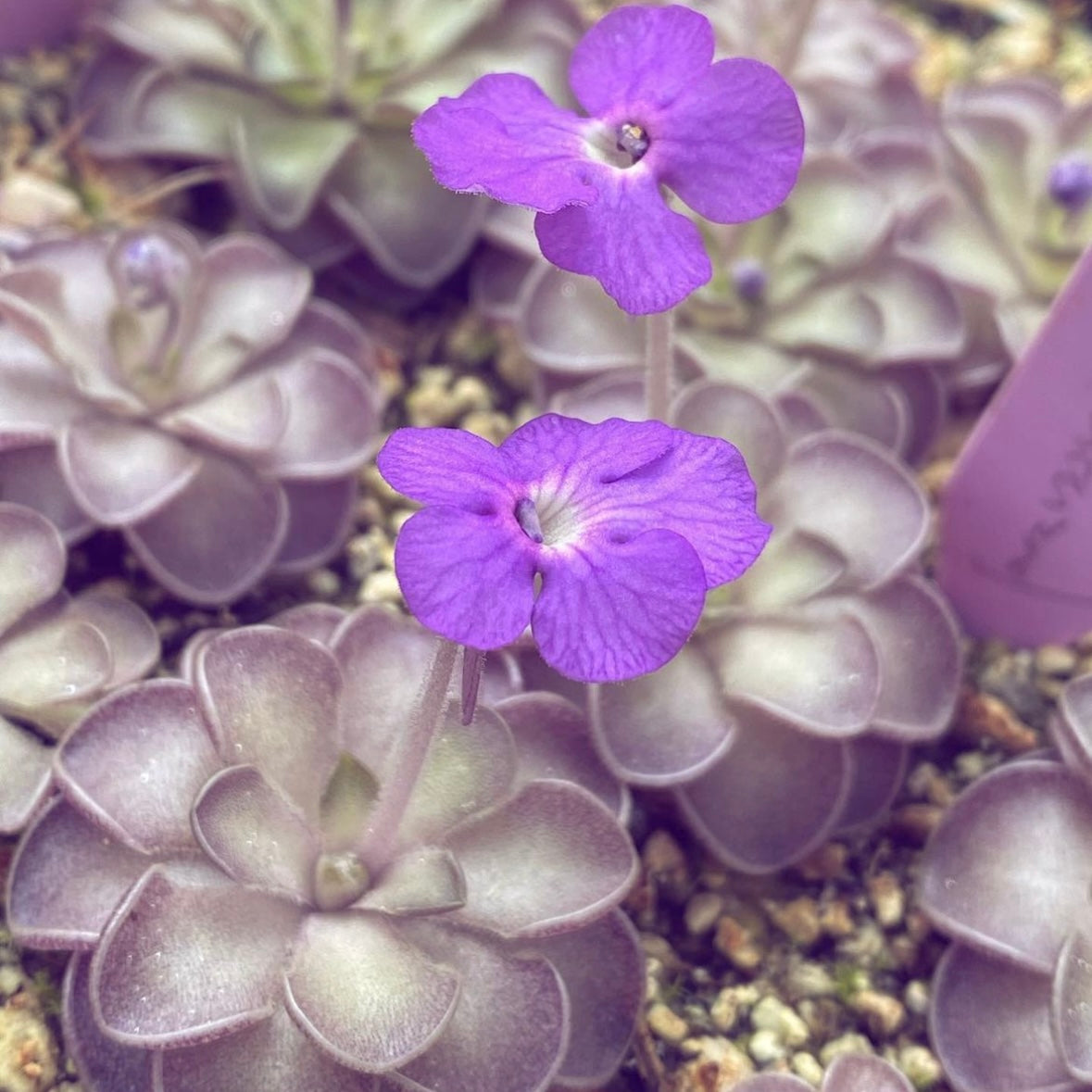
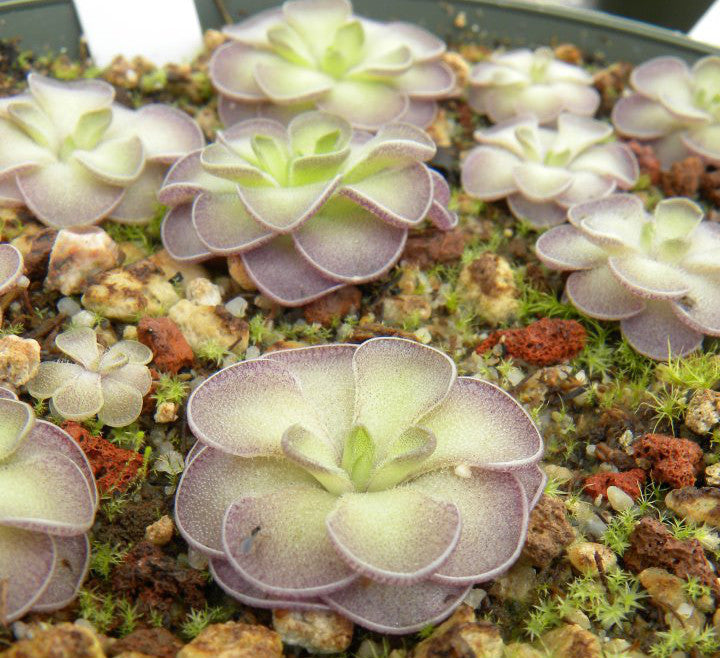
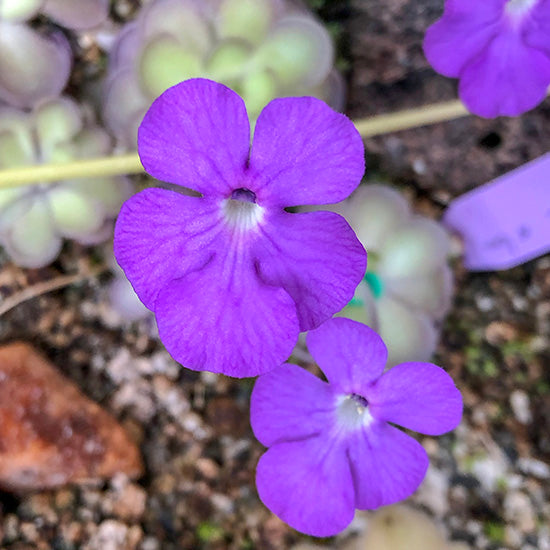
Pinguicula cyclosecta is probably one of the most beautiful of all the butterworts. It is a miniature species of flat rosettes, which usually get no bigger than a 50-cent piece. When grown in strong light, all of the leaves are actually purple! The metallic purple flowers are born on short scapes and are incredibly cheerful! The flowers are gorgeous, but it's pretty enough to grow just for the leaves! This plant is one of Damon's favorites, and he recommends it to all ping-obsessed growers!
These plants we are shipping are about the size of a nickel and will be 2-3” across at full growth.
This plant will not come potted; you will need to pot it up upon arrival. Mexican/Tropical Pinguicula prefer our sandy PINGUICULA SOIL MIX.
IF YOU ORDER IN WINTER/EARLY SPRING YOUR PLANT MAY ARRIVE IN WINTER SUCCULENT MODE. DURING THIS TIME, IT WILL GROW SUBSTANTIALLY SMALLER, TIGHT, SUCCULENT LEAVES. DO NOT OVER WATER DURING THIS TIME. IT WILL GROW CARNIVOROUS LEAVES IN THE SPRING. SEE THE FINAL PHOTO FOR AN EXAMPLE OF THIS WINTER SUCCULENT GROWTH.
Care Instructions
Growth Habit: Pinguicula are generally small plants; depending on the species and growth phase, they can range from 1/2” to 8” across at maturity. Most are 2-4” across. They form rosettes of leaves covered in glistening dew, which have a high turnover rate, meaning that they die back frequently, and new leaves grow at the center from the plant. They have pretty leaves, some blush red or purple, and all are covered in sparkling dew. Their flowers are hummingbird and butterfly pollinated in the wild and because their pollinators are attracted to colorful flowers, they have beautiful flowers With long neck spurs! Many species will experience a winter succulent phase. A combination of shorter photo periods, cooler temperatures, and dryer conditions trigger this phase. While this phase is not necessary for the plant to thrive, it is often out of our control whether the plants do this or not. During their succulent phase, they grow small, rounded leaves that look very different from their large carnivorous leaves. Plants in this stage will be significantly smaller than they will be in carnivorous growth. The natural cycle of Pinguicula can lead them to be in succulent growth in spring, not starting their carnivorous growth until late spring sometimes even early summer. Watching them grow their carnivorous leaves is like watching a magic trick; tiny, tight leaves begin to transform into huge, sticky, carnivorous leaves! Pinguicula can easily propagate from leaf pullings, like a succulent. They will also form small clumps over time, dividing naturally. While they can have a long life, they won’t live forever, so it is a good idea to take pullings every year. They do not have significant root systems, and the roots they have are often minimal and very short. The roots can be white, transparent, or brown, and they use these roots mainly to anchor themselves to the soil's surface (they still offer benefits, though, so please do not cut them off).
Sun: Full to part sun. Sunny windowsills indoors, in a temperature-regulated greenhouse, or under grow lights. In tropical parts of the world or very mild climates, they can be grown outdoors in dappled sun, morning sun only, or under shade cloth. They must be protected from the full afternoon sun. It is best to grow under 30% shade cloth in the summer months when grown in a greenhouse. They can benefit from 30% shade cloth if grown outdoors as well. If your plant is much greener than it should be, developing larger, more elongated leaves than normal for the species or hybrid, and does not have much dew, it may need more light.
Water & Humidity: In the late spring, summer, and early autumn, Pinguicula can be kept in the tray system with overhead watering as long as they still have carnivorous foliage. This means setting the pots in a deep saucer or tray and routinely filling that with 1/4”-1/2” water. If grown in a non-draining pot, allow room to water and water overhead frequently to keep soil media moist but do not water so deeply as to have standing water sitting on the surface of the soil, all the water should be absorbed. When the rosettes show their very first signs of growing their smaller, tighter succulent leaves immediately begin to dry out your plants. Keep the soil on the dry side, watering them only a little and let dry out in between watering. You can usually tell how dry a species enjoys its winter by the size of its succulent leaves. The tighter, smaller leafed rosettes such a Pinguicula gypsicola or the bulb-like heterophylla and macrophylla require bone-dry conditions. Species with larger winter leaves, like a few of the moranensis varieties or agnata, enjoy winters soils just slightly damp. Cuban species should be kept wet year-round, with only slight winter drying. When these plants are transitioning between carnivorous and succulent growth they are at the most risk of rotting, so it is better to air on the side of drier when the temperatures start to get colder and the photo periods shorten. In spring, as soon as the temperatures start to warm and the photo periods lengthen, start watering your plants more. When carnivorous leaves start to grow, begin the tray method again. (If your plant decides it does not want to make carnivorous leaves, don’t worry, sometimes they are stubborn! Water frequently and make sure your plant gets lots of light, preferably some natural light from the sun as well, to try to trigger carnivorous leaf growth. But don’t worry if your ping stays in succulent mode for a whole year, eventually it will grow carnivorous leaves again!) Pinguicula are extremely susceptible to dissolved minerals and salts in their water and poor water quality will directly contribute to decline of plants and death. Be sure to only use rainwater, reverse osmosis water, or distilled water. Pinguicula prefer drier conditions and do not require high humidity.
Temperature: 50 degrees - 90 degrees. While not ideal, Pinguicula can tolerate brief nighttime dips to 40 as long as daytime temperatures warm back up and can tolerate brief heat waves over 90 as long as they are protected from the sun and sitting in water AND nighttime temperatures decrease. Cold temperatures are likely to kill Pinguicula, so avoid exposing them to anything below 50 if possible.
Dormancy: No true dormancy but does have a winter succulent phase during which the plant will produce small succulent leaves instead of flat sticky leaves. Pinguicula do not need this period of succulent growth to grow well. If your plant does not grow succulent leaves, there is no need to try to induce the transition. See the section on watering for in depth care during this time.
Fertilizer: Apply Schultz Cactus Fertilizer once or twice a month to the leaves with a mister bottle, during the grow season. Do not apply in winter or during succulent winter mode. We use seven drops of fertilizer in 20 ounces of distilled water.
Soil & Repotting: Pinguicula grow in very dry and rocky soil mixes, do not use a mix that holds a lot of moisture. We use equal parts sand, peat moss, pumice, and perlite. You can order our custom Pinguicula soil mix! These plants ship bare-root so you will have to order potting media and pot them up upon arrival. Pinguicula do not have extensive roots and anchor to the surface of their soil making them ideal candidates for quirky, cute, small, non-draining planters like teacups or vintage pottery. You can plant them in all variety of pots as long as they are glazed ceramic, glazed terracotta, glass or plastic. Avoid un-glazed terracotta. They can be in small pots and do not need much room for roots. Pinguicula are one of the most sensitive plants to a build of minerals and salts in their soil or water. Repot every year to refresh soil.
More Information: For more information on repotting, pests, growing habits, and more, check out our FAQ page or our YouTube channel!


Pinguicula cyclosecta x gigantea is a killer hybrid between two of our favorite plants! The rounded, upturned leaves are purple-tinged and large; they almost seem to glow with their soft purple dewiness! The flowers are rounded, open, and bright purple!
These plants we are shipping are about the size of a quarter and will be 3-4” across at full growth.
This plant will not come potted; you will need to pot it up upon arrival. Mexican/Tropical Pinguicula prefer our sandy PINGUICULA SOIL MIX.
IF YOU ORDER IN WINTER/EARLY SPRING YOUR PLANT MAY ARRIVE IN WINTER SUCCULENT MODE. DURING THIS TIME, IT WILL GROW SUBSTANTIALLY SMALLER, TIGHT, SUCCULENT LEAVES. DO NOT OVER WATER DURING THIS TIME. IT WILL GROW CARNIVOROUS LEAVES IN THE SPRING. SEE THE FINAL PHOTO FOR AN EXAMPLE OF THIS WINTER SUCCULENT GROWTH.
Care Instructions
Growth Habit: Pinguicula are generally small plants; depending on the species and growth phase, they can range from 1/2” to 8” across at maturity. Most are 2-4” across. They form rosettes of leaves covered in glistening dew, which have a high turnover rate, meaning that they die back frequently, and new leaves grow at the center from the plant. They have pretty leaves, some blush red or purple, and all are covered in sparkling dew. Their flowers are hummingbird and butterfly pollinated in the wild and because their pollinators are attracted to colorful flowers, they have beautiful flowers With long neck spurs! Many species will experience a winter succulent phase. A combination of shorter photo periods, cooler temperatures, and dryer conditions trigger this phase. While this phase is not necessary for the plant to thrive, it is often out of our control whether the plants do this or not. During their succulent phase, they grow small, rounded leaves that look very different from their large carnivorous leaves. Plants in this stage will be significantly smaller than they will be in carnivorous growth. The natural cycle of Pinguicula can lead them to be in succulent growth in spring, not starting their carnivorous growth until late spring sometimes even early summer. Watching them grow their carnivorous leaves is like watching a magic trick; tiny, tight leaves begin to transform into huge, sticky, carnivorous leaves! Pinguicula can easily propagate from leaf pullings, like a succulent. They will also form small clumps over time, dividing naturally. While they can have a long life, they won’t live forever, so it is a good idea to take pullings every year. They do not have significant root systems, and the roots they have are often minimal and very short. The roots can be white, transparent, or brown, and they use these roots mainly to anchor themselves to the soil's surface (they still offer benefits, though, so please do not cut them off).
Sun: Full to part sun. Sunny windowsills indoors, in a temperature-regulated greenhouse, or under grow lights. In tropical parts of the world or very mild climates, they can be grown outdoors in dappled sun, morning sun only, or under shade cloth. They must be protected from the full afternoon sun. It is best to grow under 30% shade cloth in the summer months when grown in a greenhouse. They can benefit from 30% shade cloth if grown outdoors as well. If your plant is much greener than it should be, developing larger, more elongated leaves than normal for the species or hybrid, and does not have much dew, it may need more light.
Water & Humidity: In the late spring, summer, and early autumn, Pinguicula can be kept in the tray system with overhead watering as long as they still have carnivorous foliage. This means setting the pots in a deep saucer or tray and routinely filling that with 1/4”-1/2” water. If grown in a non-draining pot, allow room to water and water overhead frequently to keep soil media moist but do not water so deeply as to have standing water sitting on the surface of the soil, all the water should be absorbed. When the rosettes show their very first signs of growing their smaller, tighter succulent leaves immediately begin to dry out your plants. Keep the soil on the dry side, watering them only a little and let dry out in between watering. You can usually tell how dry a species enjoys its winter by the size of its succulent leaves. The tighter, smaller leafed rosettes such a Pinguicula gypsicola or the bulb-like heterophylla and macrophylla require bone-dry conditions. Species with larger winter leaves, like a few of the moranensis varieties or agnata, enjoy winters soils just slightly damp. Cuban species should be kept wet year-round, with only slight winter drying. When these plants are transitioning between carnivorous and succulent growth they are at the most risk of rotting, so it is better to air on the side of drier when the temperatures start to get colder and the photo periods shorten. In spring, as soon as the temperatures start to warm and the photo periods lengthen, start watering your plants more. When carnivorous leaves start to grow, begin the tray method again. (If your plant decides it does not want to make carnivorous leaves, don’t worry, sometimes they are stubborn! Water frequently and make sure your plant gets lots of light, preferably some natural light from the sun as well, to try to trigger carnivorous leaf growth. But don’t worry if your ping stays in succulent mode for a whole year, eventually it will grow carnivorous leaves again!) Pinguicula are extremely susceptible to dissolved minerals and salts in their water and poor water quality will directly contribute to decline of plants and death. Be sure to only use rainwater, reverse osmosis water, or distilled water. Pinguicula prefer drier conditions and do not require high humidity.
Temperature: 50 degrees - 90 degrees. While not ideal, Pinguicula can tolerate brief nighttime dips to 40 as long as daytime temperatures warm back up and can tolerate brief heat waves over 90 as long as they are protected from the sun and sitting in water AND nighttime temperatures decrease. Cold temperatures are likely to kill Pinguicula, so avoid exposing them to anything below 50 if possible.
Dormancy: No true dormancy but does have a winter succulent phase during which the plant will produce small succulent leaves instead of flat sticky leaves. Pinguicula do not need this period of succulent growth to grow well. If your plant does not grow succulent leaves, there is no need to try to induce the transition. See the section on watering for in depth care during this time.
Fertilizer: Apply Schultz Cactus Fertilizer once or twice a month to the leaves with a mister bottle, during the grow season. Do not apply in winter or during succulent winter mode. We use seven drops of fertilizer in 20 ounces of distilled water.
Soil & Repotting: Pinguicula grow in very dry and rocky soil mixes, do not use a mix that holds a lot of moisture. We use equal parts sand, peat moss, pumice, and perlite. You can order our custom Pinguicula soil mix! These plants ship bare-root so you will have to order potting media and pot them up upon arrival. Pinguicula do not have extensive roots and anchor to the surface of their soil making them ideal candidates for quirky, cute, small, non-draining planters like teacups or vintage pottery. You can plant them in all variety of pots as long as they are glazed ceramic, glazed terracotta, glass or plastic. Avoid un-glazed terracotta. They can be in small pots and do not need much room for roots. Pinguicula are one of the most sensitive plants to a build of minerals and salts in their soil or water. Repot every year to refresh soil.
More Information: For more information on repotting, pests, growing habits, and more, check out our FAQ page or our YouTube channel!


Pinguicula emarginata x gypsicola is a winner for the windowsill with its pink, sparkling rosettes!
These plants we are shipping are about the size of a quarter and will grow to 1-2” at full growth.
This plant will not come potted; you will need to pot it up upon arrival. Mexican/Tropical Pinguicula prefer our sandy PINGUICULA SOIL MIX.
IF YOU ORDER IN WINTER/EARLY SPRING YOUR PLANT MAY ARRIVE IN WINTER SUCCULENT MODE. DURING THIS TIME, IT WILL GROW SUBSTANTIALLY SMALLER, TIGHT, SUCCULENT LEAVES. DO NOT OVER WATER DURING THIS TIME. IT WILL GROW CARNIVOROUS LEAVES IN THE SPRING.
Care Instructions
Growth Habit: Pinguicula are generally small plants; depending on the species and growth phase, they can range from 1/2” to 8” across at maturity. Most are 2-4” across. They form rosettes of leaves covered in glistening dew, which have a high turnover rate, meaning that they die back frequently, and new leaves grow at the center from the plant. They have pretty leaves, some blush red or purple, and all are covered in sparkling dew. Their flowers are hummingbird and butterfly pollinated in the wild and because their pollinators are attracted to colorful flowers, they have beautiful flowers With long neck spurs! Many species will experience a winter succulent phase. A combination of shorter photo periods, cooler temperatures, and dryer conditions trigger this phase. While this phase is not necessary for the plant to thrive, it is often out of our control whether the plants do this or not. During their succulent phase, they grow small, rounded leaves that look very different from their large carnivorous leaves. Plants in this stage will be significantly smaller than they will be in carnivorous growth. The natural cycle of Pinguicula can lead them to be in succulent growth in spring, not starting their carnivorous growth until late spring, sometimes even early summer. Watching them grow their carnivorous leaves is like watching a magic trick; tiny, tight leaves begin to transform into huge, sticky, carnivorous leaves! Pinguicula can easily propagate from leaf pullings, like a succulent. They will also form small clumps over time, dividing naturally. While they can have a long life, they won’t live forever, so it is a good idea to take pullings every year. They do not have significant root systems, and the roots they have are often minimal and very short. The roots can be white, transparent, or brown, and they use these roots mainly to anchor themselves to the soil's surface (they still offer benefits, though, so please do not cut them off).
Sun: Full to part sun. Sunny windowsills indoors, in a temperature-regulated greenhouse, or under grow lights. In tropical parts of the world or very mild climates, they can be grown outdoors in dappled sun, morning sun only, or under shade cloth. They must be protected from the full afternoon sun. It is best to grow under 30% shade cloth in the summer months when grown in a greenhouse. They can benefit from 30% shade cloth if grown outdoors as well. If your plant is much greener than it should be, developing larger, more elongated leaves than normal for the species or hybrid, and does not have much dew, it may need more light.
Water & Humidity: In the late spring, summer, and early autumn, Pinguicula can be kept in the tray system with overhead watering as long as they still have carnivorous foliage. This means setting the pots in a deep saucer or tray and routinely filling that with 1/4”-1/2” water. If grown in a non-draining pot, allow room to water and water overhead frequently to keep soil media moist, but do not water so deeply as to have standing water sitting on the surface of the soil; all the water should be absorbed. When the rosettes show their very first signs of growing their smaller, tighter succulent leaves immediately begin to dry out your plants. Keep the soil on the dry side, watering them only a little and let dry out in between watering. You can usually tell how dry a species enjoys its winter by the size of its succulent leaves. The tighter, smaller leafed rosettes such a Pinguicula gypsicola or the bulb-like heterophylla and macrophylla require bone-dry conditions. Species with larger winter leaves, like a few of the moranensis varieties or agnata, enjoy winters soils just slightly damp. Cuban species should be kept wet year-round, with only slight winter drying. When these plants are transitioning between carnivorous and succulent growth they are at the most risk of rotting, so it is better to air on the side of drier when the temperatures start to get colder and the photo periods shorten. In spring, as soon as the temperatures start to warm and the photo periods lengthen, start watering your plants more. When carnivorous leaves start to grow, begin the tray method again. (If your plant decides it does not want to make carnivorous leaves, don’t worry, sometimes they are stubborn! Water frequently and make sure your plant gets lots of light, preferably some natural light from the sun as well, to try to trigger carnivorous leaf growth. But don’t worry if your ping stays in succulent mode for a whole year, eventually it will grow carnivorous leaves again!) Pinguicula are extremely susceptible to dissolved minerals and salts in their water and poor water quality will directly contribute to decline of plants and death. Be sure to only use rainwater, reverse osmosis water, or distilled water. Pinguicula prefer drier conditions and do not require high humidity.
Temperature: 50 degrees - 90 degrees. While not ideal, Pinguicula can tolerate brief nighttime dips to 40 as long as daytime temperatures warm back up and can tolerate brief heat waves over 90 as long as they are protected from the sun and sitting in water AND nighttime temperatures decrease. Cold temperatures are likely to kill Pinguicula, so avoid exposing them to anything below 50 if possible.
Dormancy: No true dormancy but does have a winter succulent phase during which the plant will produce small succulent leaves instead of flat sticky leaves. Pinguicula do not need this period of succulent growth to grow well. If your plant does not grow succulent leaves, there is no need to try to induce the transition. See the section on watering for in depth care during this time.
Fertilizer: Apply Schultz Cactus Fertilizer once or twice a month to the leaves with a mister bottle, during the grow season. Do not apply in winter or during succulent winter mode. We use seven drops of fertilizer in 20 ounces of distilled water.
Soil & Repotting: Pinguicula grow in very dry and rocky soil mixes, do not use a mix that holds a lot of moisture. We use equal parts sand, peat moss, pumice, and perlite. You can order our custom Pinguicula soil mix! These plants ship bare-root so you will have to order potting media and pot them up upon arrival. Pinguicula do not have extensive roots and anchor to the surface of their soil making them ideal candidates for quirky, cute, small, non-draining planters like teacups or vintage pottery. You can plant them in all variety of pots as long as they are glazed ceramic, glazed terracotta, glass or plastic. Avoid un-glazed terracotta. They can be in small pots and do not need much room for roots. Pinguicula are one of the most sensitive plants to a build of minerals and salts in their soil or water. Repot every year to refresh soil.
More Information: For more information on repotting, pests, growing habits, and more, check out our FAQ page or our YouTube channel!


Pinguicula primuliflora is a popular species in cultivation. In nature, it is found in coastal areas of the Florida panhandle west into Louisiana. It forms a handsome rosette of pale-green, pointed leaves up to four inches across. The plants are often found in mostly shaded areas of very wet peat and sphagnum, often along the edges of streams and ponds. While the plants are short-lived and prone to rot, they spread by producing plantlets at the tips of their leaves. Keep them shaded from hot sun. The beautiful flowers have incised petals that are pinkish violet with a white center and a yellow beard.
THESE PLANTS WILL COME BARE ROOT AND NOT IN POTS. YOU WILL NEED TO POT THEM UP UPON ARRIVAL. WARM TEMPERATE PINGUICULA DO BEST IN OUR PEAT AND PERLITE MIX.
Care Instructions
Sun: Full to part sun outdoors
Water: Always sitting in at least two inches of distilled or purified water, best grown in a bog garden
Temperature: 28 degrees - 100 degrees
Dormancy: No dormancy needed but may go semi dormant in winter


Pinguicula x ‘Tina’ is a cross between agnata and zecheri. It is an excellent butterwort for beginners or an exciting addition for the more advanced butterwort collector! It produces lots and lots of round flowers that are light lavender with a darker lavender interior. The large plants have rounded, lime-green leaves.
These plants we are shipping are about the size of a quarter and will grow to 2-4” at full growth.
This plant will not come potted; you will need to pot it up upon arrival. Mexican/Tropical Pinguicula prefer our sandy PINGUICULA SOIL MIX.
IF YOU ORDER IN WINTER/EARLY SPRING YOUR PLANT MAY ARRIVE IN WINTER SUCCULENT MODE. DURING THIS TIME, IT WILL GROW SUBSTANTIALLY SMALLER, TIGHT, SUCCULENT LEAVES. DO NOT OVER WATER DURING THIS TIME. IT WILL GROW CARNIVOROUS LEAVES IN THE SPRING.
Care Instructions
Growth Habit: Pinguicula are generally small plants; depending on the species and growth phase, they can range from 1/2” to 8” across at maturity. Most are 2-4” across. They form rosettes of leaves covered in glistening dew, which have a high turnover rate, meaning that they die back frequently, and new leaves grow at the center from the plant. They have pretty leaves, some blush red or purple, and all are covered in sparkling dew. Their flowers are hummingbird and butterfly pollinated in the wild and because their pollinators are attracted to colorful flowers, they have beautiful flowers With long neck spurs! Many species will experience a winter succulent phase. A combination of shorter photo periods, cooler temperatures, and dryer conditions trigger this phase. While this phase is not necessary for the plant to thrive, it is often out of our control whether the plants do this or not. During their succulent phase, they grow small, rounded leaves that look very different from their large carnivorous leaves. Plants in this stage will be significantly smaller than they will be in carnivorous growth. The natural cycle of Pinguicula can lead them to be in succulent growth in spring, not starting their carnivorous growth until late spring, sometimes even early summer. Watching them grow their carnivorous leaves is like watching a magic trick; tiny, tight leaves begin to transform into huge, sticky, carnivorous leaves! Pinguicula can easily propagate from leaf pullings, like a succulent. They will also form small clumps over time, dividing naturally. While they can have a long life, they won’t live forever, so it is a good idea to take pullings every year. They do not have significant root systems, and the roots they have are often minimal and very short. The roots can be white, transparent, or brown, and they use these roots mainly to anchor themselves to the soil's surface (they still offer benefits, though, so please do not cut them off).
Sun: Full to part sun. Sunny windowsills indoors, in a temperature-regulated greenhouse, or under grow lights. In tropical parts of the world or very mild climates, they can be grown outdoors in dappled sun, morning sun only, or under shade cloth. They must be protected from the full afternoon sun. It is best to grow under 30% shade cloth in the summer months when grown in a greenhouse. They can benefit from 30% shade cloth if grown outdoors as well. If your plant is much greener than it should be, developing larger, more elongated leaves than normal for the species or hybrid, and does not have much dew, it may need more light.
Water & Humidity: In the late spring, summer, and early autumn, Pinguicula can be kept in the tray system with overhead watering as long as they still have carnivorous foliage. This means setting the pots in a deep saucer or tray and routinely filling that with 1/4”-1/2” water. If grown in a non-draining pot, allow room to water and water overhead frequently to keep soil media moist, but do not water so deeply as to have standing water sitting on the surface of the soil; all the water should be absorbed. When the rosettes show their very first signs of growing their smaller, tighter succulent leaves immediately begin to dry out your plants. Keep the soil on the dry side, watering them only a little and let dry out in between watering. You can usually tell how dry a species enjoys its winter by the size of its succulent leaves. The tighter, smaller leafed rosettes such a Pinguicula gypsicola or the bulb-like heterophylla and macrophylla require bone-dry conditions. Species with larger winter leaves, like a few of the moranensis varieties or agnata, enjoy winters soils just slightly damp. Cuban species should be kept wet year-round, with only slight winter drying. When these plants are transitioning between carnivorous and succulent growth they are at the most risk of rotting, so it is better to air on the side of drier when the temperatures start to get colder and the photo periods shorten. In spring, as soon as the temperatures start to warm and the photo periods lengthen, start watering your plants more. When carnivorous leaves start to grow, begin the tray method again. (If your plant decides it does not want to make carnivorous leaves, don’t worry, sometimes they are stubborn! Water frequently and make sure your plant gets lots of light, preferably some natural light from the sun as well, to try to trigger carnivorous leaf growth. But don’t worry if your ping stays in succulent mode for a whole year, eventually it will grow carnivorous leaves again!) Pinguicula are extremely susceptible to dissolved minerals and salts in their water and poor water quality will directly contribute to decline of plants and death. Be sure to only use rainwater, reverse osmosis water, or distilled water. Pinguicula prefer drier conditions and do not require high humidity.
Temperature: 50 degrees - 90 degrees. While not ideal, Pinguicula can tolerate brief nighttime dips to 40 as long as daytime temperatures warm back up and can tolerate brief heat waves over 90 as long as they are protected from the sun and sitting in water AND nighttime temperatures decrease. Cold temperatures are likely to kill Pinguicula, so avoid exposing them to anything below 50 if possible.
Dormancy: No true dormancy but does have a winter succulent phase during which the plant will produce small succulent leaves instead of flat sticky leaves. Pinguicula do not need this period of succulent growth to grow well. If your plant does not grow succulent leaves, there is no need to try to induce the transition. See the section on watering for in depth care during this time.
Fertilizer: Apply Schultz Cactus Fertilizer once or twice a month to the leaves with a mister bottle, during the grow season. Do not apply in winter or during succulent winter mode. We use seven drops of fertilizer in 20 ounces of distilled water.
Soil & Repotting: Pinguicula grow in very dry and rocky soil mixes, do not use a mix that holds a lot of moisture. We use equal parts sand, peat moss, pumice, and perlite. You can order our custom Pinguicula soil mix! These plants ship bare-root so you will have to order potting media and pot them up upon arrival. Pinguicula do not have extensive roots and anchor to the surface of their soil making them ideal candidates for quirky, cute, small, non-draining planters like teacups or vintage pottery. You can plant them in all variety of pots as long as they are glazed ceramic, glazed terracotta, glass or plastic. Avoid un-glazed terracotta. They can be in small pots and do not need much room for roots. Pinguicula are one of the most sensitive plants to a build of minerals and salts in their soil or water. Repot every year to refresh soil.
More Information: For more information on repotting, pests, growing habits, and more, check out our FAQ page or our YouTube channel!
Showing 225/379